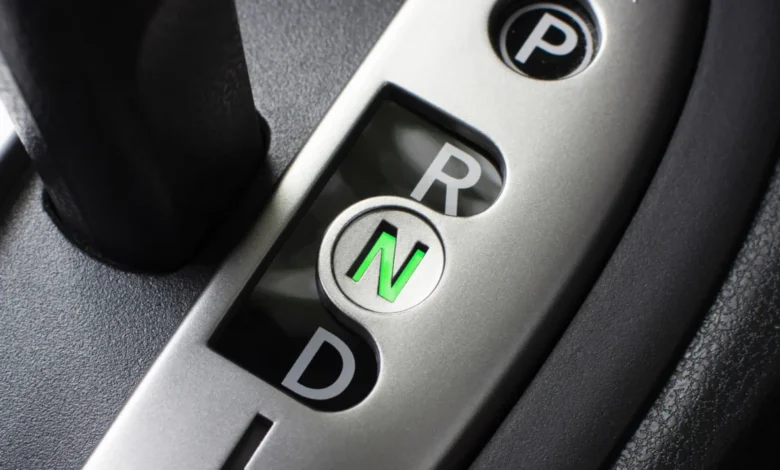
For more than seven decades, the automatic transmission has dominated the global automotive landscape, steadily replacing the manual gearbox as the default choice for everyday motorists. While purists and driving enthusiasts have long favored the tactile engagement of a traditional stick shift, the average consumer overwhelmingly prefers the convenience of an automatic. Modern automatic systems successfully eliminate the complexities of clutch modulation, precise gear selection, and engine stalling. Drivers simply shift into "Drive" and navigate their journeys with minimal mechanical intervention. Despite this widespread familiarity, certain aspects of automatic gearboxes remain widely misunderstood by the motoring public. Among the most frequent points of confusion is the "Neutral" (N) gear position. While decades have passed since clutch pedals began disappearing from standard passenger vehicles, the exact purpose and appropriate application of the neutral gear in an automatic transmission continue to elude many drivers. To fully understand why the neutral position exists and when it should—or should not—be used, it is necessary to examine the engineering evolution of automatic transmissions, the mechanical consequences of shifting into neutral, and the safety protocols recommended by automotive experts.
The Evolution and Mechanics of Automatic Transmissions
To comprehend the function of neutral, one must first understand how power travels from an internal combustion engine to the driven wheels of an automobile. Conventional automatic transmissions rely on a complex network of planetary gear sets, hydraulic control systems, and a torque converter. The torque converter replaces the traditional mechanical clutch used in manual vehicles, utilizing fluid coupling to transfer engine torque and allow the engine to spin independently of the transmission when the vehicle is stationary.
In recent decades, automotive engineering has expanded beyond the traditional planetary automatic to include alternative designs such as Dual-Clutch Transmissions (DCTs) and Continuously Variable Transmissions (CVTs). Dual-clutch gearboxes function similarly to manual transmissions but utilize two electronically controlled clutches—one managing odd gears and the other managing even gears—to execute lightning-fast gear changes. Continuously Variable Transmissions, meanwhile, abandon fixed gear ratios altogether, utilizing a steel push-belt running between two variable-diameter pulleys to create an infinite spectrum of gear ratios.
Regardless of whether a vehicle utilizes a conventional hydraulic automatic, a DCT, or a CVT, the underlying purpose of the neutral setting remains identical to that of a manual transmission. Selecting neutral physically or hydraulically decouples the engine’s rotating crankshaft from the drivetrain and driven wheels. When the transmission is in neutral, power flow is entirely interrupted, meaning that pressing the accelerator pedal will cause the engine to rev freely without propelling the vehicle forward or backward.
When to Use Neutral: Emergency Scenarios and Workshop Maneuvers
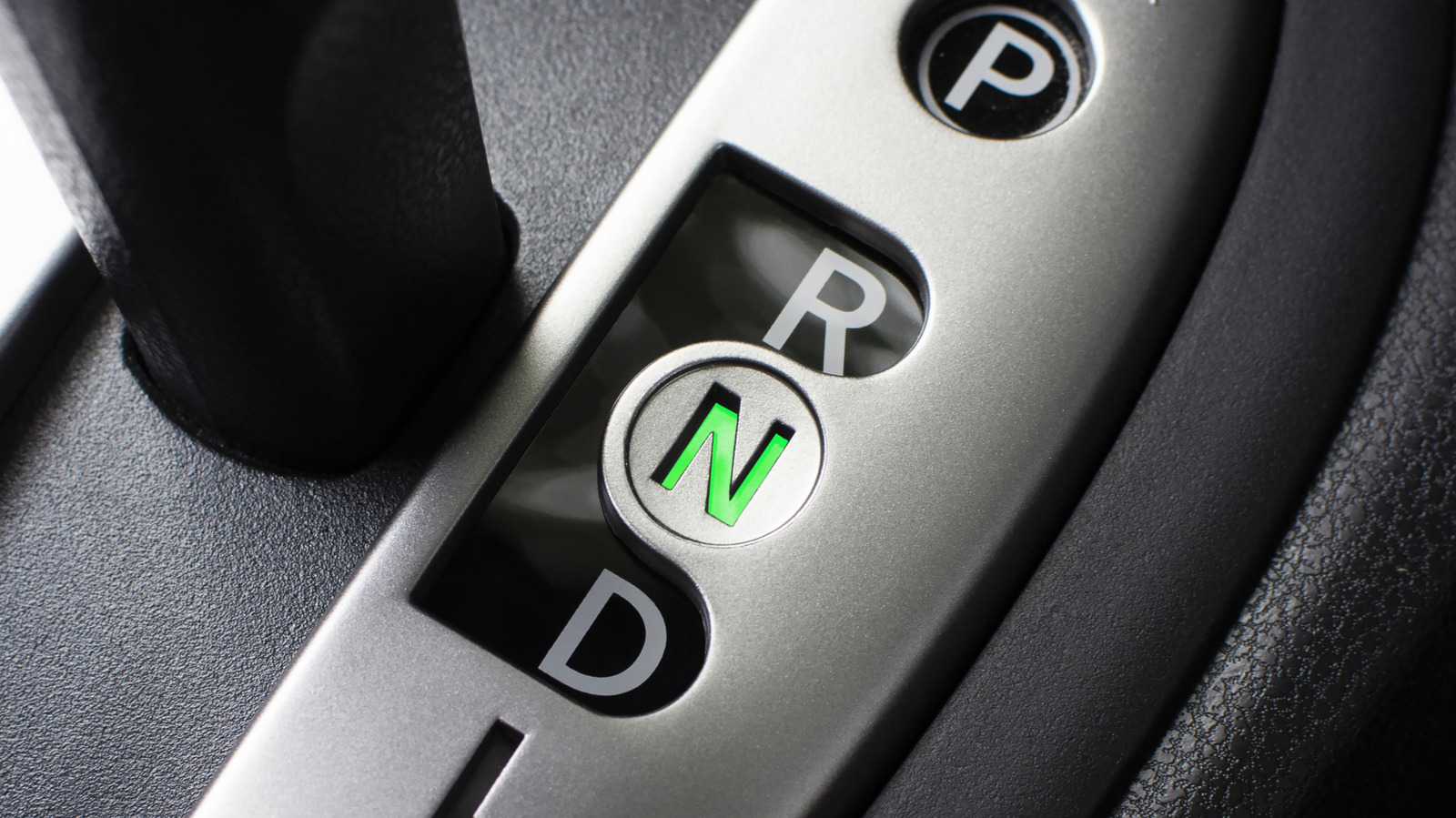
Given that everyday driving requires little more than shifting between "Park," "Drive," and "Reverse," the neutral position is frequently relegated to an incidental stepping stone used when moving the selector lever from one active gear to another. However, there are specific, critical scenarios where engaging neutral is not only useful but potentially life-saving.
The most common practical application of neutral occurs during vehicle maintenance, recovery, or towing operations. If an automatic vehicle experiences a severe mechanical failure and refuses to start, technicians often need to maneuver the dead vehicle around a workshop floor or onto a flatbed tow truck. Because a traditional automatic locks the output shaft when placed in "Park," shifting the vehicle into neutral is essential to allow the wheels to spin freely.
However, automotive technicians and manufacturers issue strict warnings regarding towing vehicles with automatic transmissions. Unlike manual gearboxes, which are typically splash-lubricated, conventional automatics rely on a continuous flow of pressurized transmission fluid driven by an engine-driven pump to cool and lubricate internal components. If a vehicle is towed with its drive wheels on the ground while the engine is turned off, the transmission pump cannot operate. The internal gears will continue to rotate without proper lubrication, generating catastrophic friction and heat that can permanently destroy the transmission in a matter of miles. Consequently, flatbed towing—where all four wheels are lifted off the ground—is universally recommended for automatic vehicles.
Beyond workshop utility, neutral serves a vital safety function in rare automotive emergencies, such as a sudden, unintended acceleration event. While modern electronic throttle control systems are heavily regulated and subject to rigorous fail-safe programming, electronic glitches or physical obstructions can occasionally cause a vehicle’s throttle to jam wide open. In such high-stress scenarios, braking alone may prove insufficient to halt a powerful engine fighting against the brakes. Shifting the transmission into neutral immediately breaks the connection between the engine and the wheels, allowing the driver to safely scrub off speed and pull to the side of the road without the powertrain working against the braking system.
While turning off the ignition is another theoretical option, automotive safety experts caution against shutting down a moving vehicle entirely. Doing so can deactivate critical driving aids, including the power steering pump and the brake booster, resulting in a heavy, unresponsive steering wheel and drastically reduced braking efficiency. Shifting to neutral preserves engine function, power steering, and braking assistance while completely neutralizing the vehicle’s forward momentum.
Common Misconceptions and Dangerous Driving Habits
Despite its utility in emergencies, numerous persistent myths surround the everyday use of neutral, many of which can lead to premature mechanical wear or compromised vehicle safety.
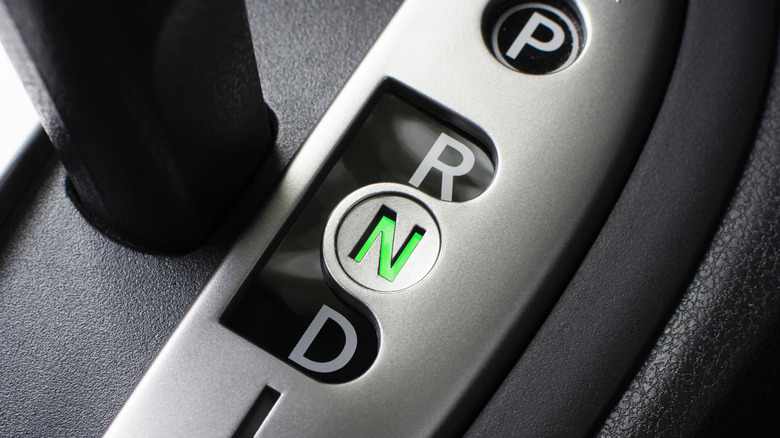
One prevalent myth is that shifting an automatic transmission into neutral while idling at a red light or sitting in heavy traffic will significantly improve fuel economy or reduce engine wear. Extensive automotive testing and engineering consensus confirm that modern electronic fuel-injection systems are so precisely calibrated that idling in "Drive" versus "Neutral" consumes a negligible amount of fuel. Furthermore, repeatedly shifting back and forth between neutral and drive introduces unnecessary wear and tear on the transmission’s internal solenoids, clutch packs, and linkage mechanisms, ultimately shortening the lifespan of the gearbox.
Another dangerous practice that persists among some drivers is coasting down steep mountain grades or highway exits in neutral in an attempt to save fuel. While this technique, known as "free-wheeling," was marginally effective in older carbureted vehicles, modern fuel-injected engines actually consume zero fuel when coasting in gear with the driver’s foot off the accelerator, as the momentum of the moving vehicle keeps the engine turning over. More importantly, coasting in neutral strips the driver of vital engine braking capabilities, forcing the friction brakes to shoulder the entire burden of decelerating the vehicle down a slope. This can lead to rapid brake fade, dangerously overheated rotors, and a severe loss of vehicle control.
Finally, drivers must avoid using neutral in place of the parking gear when leaving a vehicle unattended. Relying solely on the neutral position supplemented by the emergency handbrake is a recipe for rollaway accidents. Modern automatic transmissions feature a robust internal parking pawl—a mechanical locking pin that engages a toothed wheel on the transmission output shaft to physically lock the drive wheels. Experts emphasize that the parking gear must always be utilized when parking, providing an indispensable secondary layer of mechanical security.
Implications and Broad Automotive Context
The ongoing evolution of automotive technology continues to reshape how drivers interact with their drivetrains. The rapid rise of hybrid vehicles, plug-in hybrids, and fully electric vehicles (EVs) has introduced entirely new powertrain architectures. In many modern EVs, traditional multi-speed gearboxes have been replaced by single-speed reduction units, and physical shift levers are frequently giving way to push-button interfaces, rotary dials, or electronic stalks.
Despite these seismic shifts in propulsion technology, the fundamental concept of a neutral state remains an essential safety and regulatory requirement across all motorized vehicles. Global automotive safety standards mandate that every vehicle must feature a mechanism to immediately interrupt power transmission to the wheels in the event of an electrical failure, towing emergency, or mechanical malfunction.
Ultimately, while the average motorist may spend very little time utilizing the neutral position—treating it merely as a transitional corridor between reverse and drive—its presence in the modern automatic transmission remains a vital engineering safeguard. Understanding the precise mechanics of when to engage neutral, and equally importantly, when to avoid it, ensures both vehicle longevity and driver safety on an increasingly crowded roadway network.