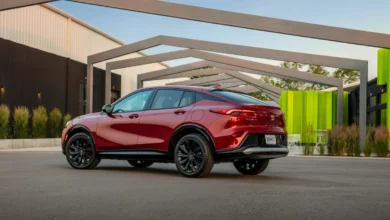
The vehicle’s design ethos focuses on utility and affordability, stripping away the complex digital ecosystems and premium creature comforts that have become standard in the modern EV segment. For Slate, the goal is to provide a workhorse tool for the modern era, one that favors mechanical simplicity and accessibility over the tech-centric "living room on wheels" trend.
The Rise of Minimalist Utility
The automotive market has seen a consistent upward trend in average transaction prices over the last decade. According to recent industry reports, the average cost of a new vehicle in the United States has frequently hovered near the $48,000 mark. This inflation has effectively priced out many consumers who require a vehicle for practical, vocational, or light-duty tasks.
Slate enters this space by offering a vehicle that is, by modern standards, stark. The interior lacks a traditional digital infotainment suite, opting instead for a mounting point for the driver’s personal smartphone. This design choice serves two purposes: it reduces the manufacturing cost of proprietary software and hardware, and it ensures the vehicle does not become "technologically obsolete" as quickly as its contemporaries. Manual windows and physical tactile controls further emphasize this philosophy, signaling to buyers that this is a machine intended for use, not a display of digital prowess.
James May’s Test Drive and the "Grand Tour" Context
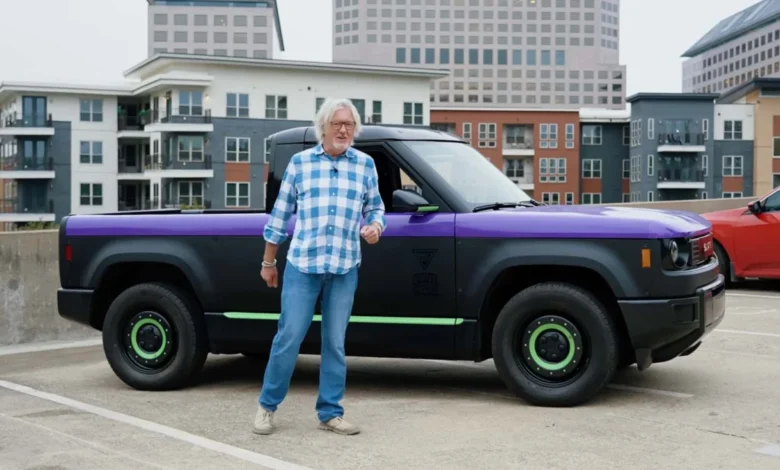
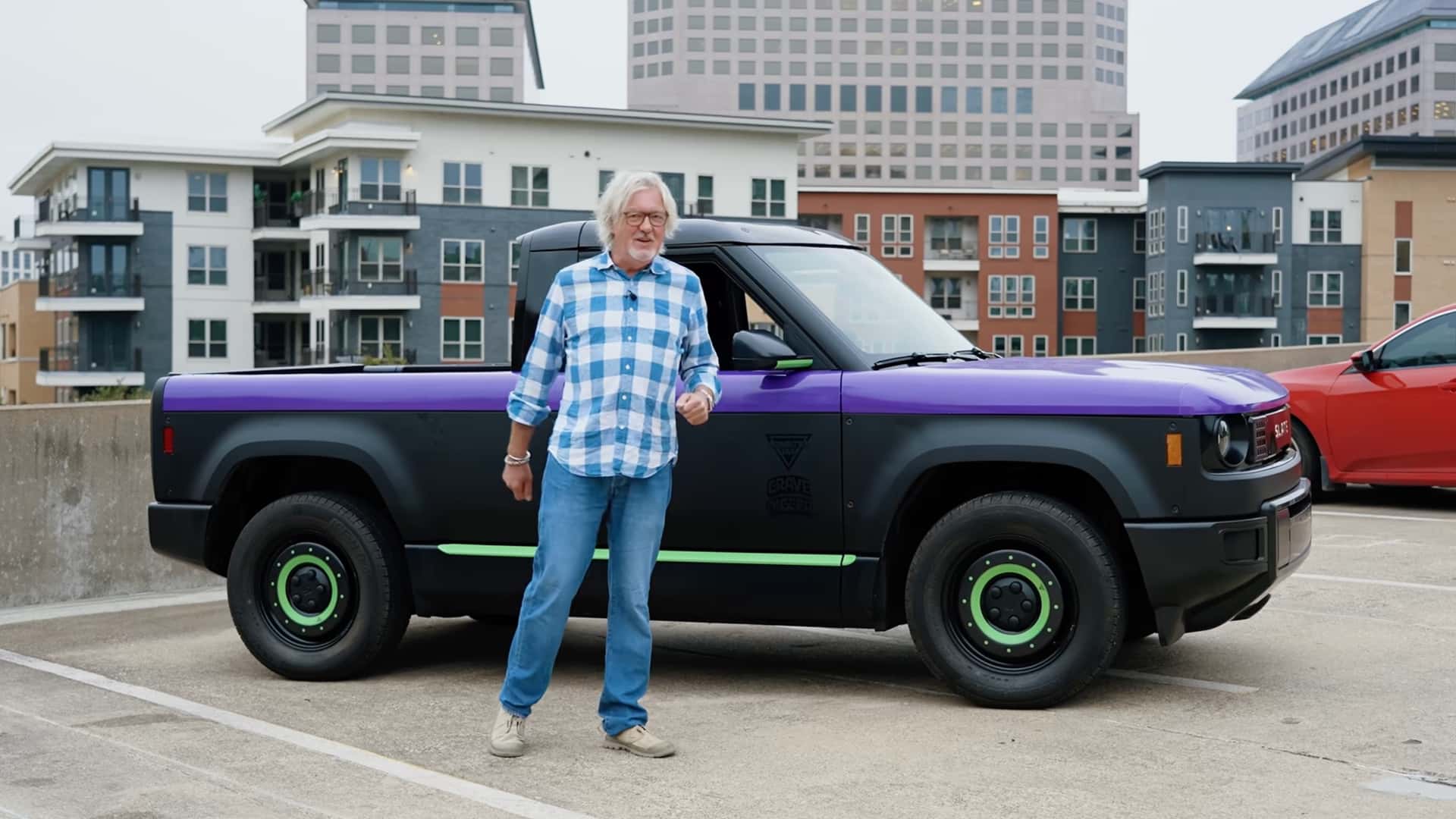
The visibility of the Slate truck reached a new height following a test drive by James May. Known for his tenure on Top Gear and The Grand Tour, May has spent decades evaluating every conceivable form of transportation, from high-performance supercars to unconventional utilitarian prototypes. His reaction to the Slate was notably positive, moving beyond mere curiosity to a genuine consideration of ownership.
"You know what, I think I would—I’d have one," May remarked during his evaluation. For a critic who has witnessed the industry’s shift toward increasingly complex and expensive platforms, his endorsement highlights a latent demand for simplicity. May’s perspective is particularly relevant because he has long advocated for vehicles that possess character and focus. By validating the Slate’s no-nonsense approach, he has provided a level of credibility to a segment that is often dismissed by mainstream manufacturers as "niche" or "underpowered."
Technical Specifications and Performance Metrics
The Slate truck is built on a compact, all-electric architecture designed to prioritize efficiency over raw towing capacity. Its powertrain consists of a single rear-mounted motor, which provides enough torque for urban and suburban tasks while keeping the vehicle’s curb weight low.
- Range: The standard battery configuration is estimated to provide approximately 150 miles of range. For users requiring greater versatility, a larger, long-range battery option is intended to extend that figure to roughly 240 miles.
- Dimensions: Unlike the full-size electric trucks currently dominating headlines, the Slate is built on a smaller footprint, making it ideal for narrow urban streets, confined worksites, or smaller parking spaces.
- Charging: While the company has yet to release final charging curve data, the focus on a smaller battery pack suggests that the vehicle will be optimized for home-charging cycles, fitting the "daily workhorse" model of usage.
A Chronology of the Slate Project
The journey of the Slate truck has been defined by rapid prototyping and a series of strategic announcements that have kept the brand in the public eye.
- Initial Concept Phase: Slate began by identifying the gap in the market for an affordable, electric-only work truck, distancing itself from the "lifestyle truck" branding adopted by major legacy automakers.
- Design Reveal: The unveiling of the high-roof variant and standard models showcased the company’s focus on modularity.
- Strategic Expansion: Throughout the last year, Slate has been navigating the complexities of production scaling. This included a well-publicized decision to limit market availability, with the company confirming that, for the time being, the vehicle will not be sold in the Canadian market due to regulatory and distribution constraints.
- Market Testing: The engagement with high-profile automotive personalities has been part of a broader effort to gauge consumer appetite before a full-scale commercial launch.
The Implications of a "No-Frills" EV
The success of the Slate hinges on a fundamental question: Are consumers actually willing to sacrifice convenience for cost?
The broader automotive industry is currently in a state of flux. With interest rates affecting financing options and the cost of raw materials for EV batteries remaining high, manufacturers are struggling to find a "sweet spot" for entry-level electric vehicles. Slate’s approach is a test case. If they can successfully deliver a vehicle for $25,000, they could theoretically corner a segment of the market that has been ignored by the "Big Three" automakers.
However, the lack of an integrated infotainment system and other creature comforts poses a potential barrier for the average consumer who has grown accustomed to advanced driver-assistance systems (ADAS), high-definition touchscreens, and over-the-air updates. Slate is effectively betting that for a segment of the population—tradespeople, farmers, or those living in small, dense urban areas—the "connected car" experience is secondary to the "functional car" experience.
Official Stance and Future Outlook
While Slate has faced challenges regarding production timelines and pricing adjustments—at times seeing its projected costs fluctuate due to supply chain pressures—the company remains committed to its core mission. Representatives have consistently emphasized that the truck is designed to be "repairable and resilient," moving away from the "disposable" nature of many modern electronic devices.
Industry analysts suggest that if Slate can maintain its price point, it could become a significant player in the fleet and municipal vehicle market. Many city councils and local businesses are under pressure to reduce their carbon footprints, and a low-cost, electric, compact truck fits the profile for last-mile delivery and maintenance operations perfectly.
The Broader Impact on the EV Market
The existence of the Slate truck is a signal to the industry that the "EV revolution" does not have to be an expensive one. By focusing on essential components and removing luxury bloat, Slate is highlighting the inefficiencies currently present in the design of many flagship electric vehicles.
Whether the Slate will move from a curious, well-received prototype to a staple of the American road remains to be seen. The regulatory hurdles, safety certification processes, and the logistical challenges of mass production are significant. Yet, the interest garnered from the public and experts alike suggests that the appetite for "honest" engineering is higher than ever.
As the automotive landscape continues to evolve, the Slate stands as a defiant alternative to the status quo. It is a vehicle that asks not what more it can add, but what it can strip away to provide the most value for the money. In an era of increasing complexity, the Slate’s simplicity may well be its most powerful competitive advantage. The coming months will be critical as the company moves toward production and delivery, with many eyes—including those of James May—waiting to see if the reality of the vehicle can match the promise of its design.