When Seabirds Race Home Across the Open Ocean, Their Internal Clocks Suffer from True Jet Lag

For centuries, travelers crossing vast expanses of the globe have understood the distinct, groggy disarray of jet lag. The sensation—where the human body insists it is the dead of night while the office clock reads high noon—has long been thought to be a uniquely modern human affliction, or at least a byproduct of rapid motorized transportation. However, groundbreaking new biological research published in the journal Science reveals that this phenomenon is not exclusive to humanity, nor does it require a commercial jet engine. In fact, remarkable seabirds undertaking arduous journeys across the North Atlantic routinely induce jet lag upon themselves, throwing their biological internal clocks entirely out of synchronization with local time.
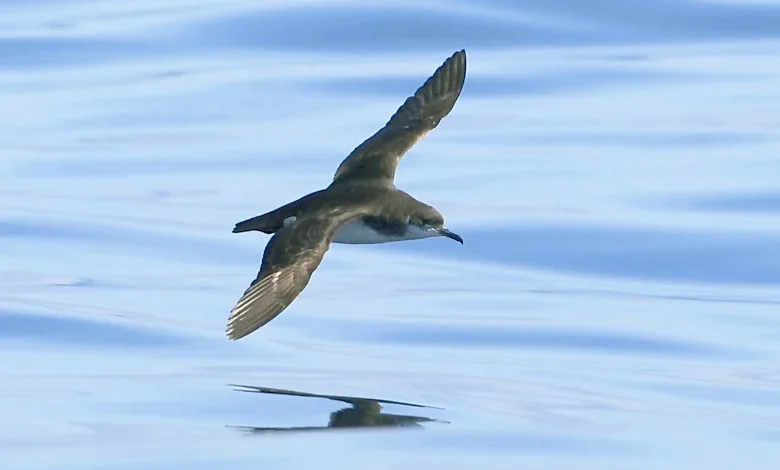
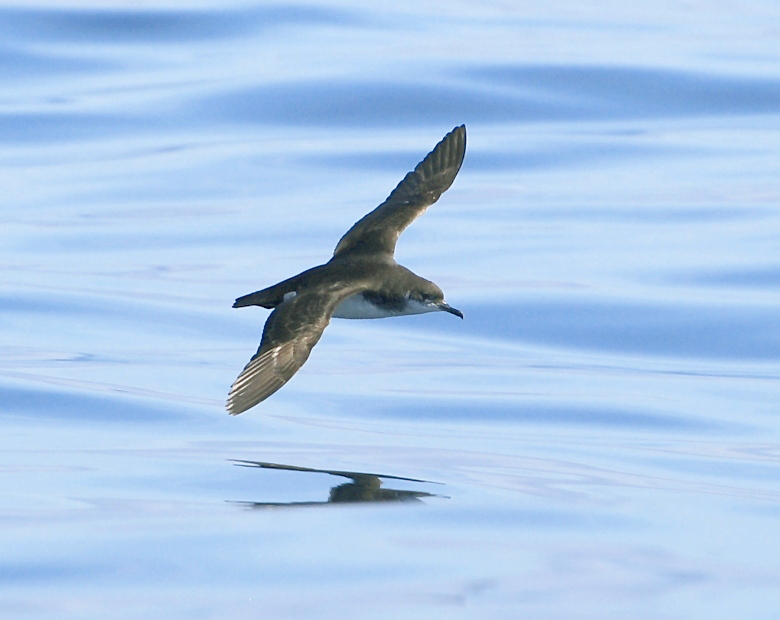
The study, led by behavioral and sensory ecologists at the University of Oxford, centers on the Manx shearwater, a medium-sized, ocean-faring bird bearing a striking resemblance to a pigeon with the elongated, graceful wingspan of an albatross. These remarkable creatures nest in underground burrows clustered along the coastal islands of the North Atlantic, with nearly half of the global population breeding in the rugged terrain of Wales, alongside colonies in the United Kingdom and Ireland. During their active breeding seasons, these birds routinely embark on grueling foraging excursions, flying hundreds or even more than a thousand kilometers daily into the open ocean to hunt for food before making the long, exhausting flight back to their nests.
It is during these high-speed homeward migrations that the birds encounter a hidden navigational trap. To successfully return to their specific burrows across vast, featureless expanses of ocean, Manx shearwaters rely on a sophisticated two-part navigation system. First, they utilize a map sense—hypothesized by scientists to be heavily reliant on olfactory cues—to determine their precise geographic coordinates relative to home. Once their position is established, they utilize the Sun as a celestial compass to chart a direct, unwavering flight path toward their destination.
The Clockwork Compass and the Problem of Longitude
Navigating by the Sun, however, presents a fundamental geometric challenge: the Sun is not a stationary beacon. Because the Earth rotates on its axis, the Sun appears to move continuously across the sky from east to west throughout the day. An animal attempting to travel due south at sunrise, when the Sun is positioned in the east, must maintain an angle 90 degrees clockwise from the solar disk. By midday, that same traveler must fly directly toward the Sun, and by sunset, 90 degrees counter-clockwise from it.
To maintain a straight vector using a moving celestial reference point, an animal must possess an accurate internal timepiece—a circadian clock—that tells it what time of day it is, thereby allowing it to calculate the Sun’s expected position. Like nearly all vertebrates, Manx shearwaters possess such a biological clock. Yet, this internal chronometer is not infallible.
To prevent drift, birds must constantly recalibrate their internal clocks at every dusk and dawn. Consequently, for every degree of longitude a shearwater traverses between sunrise and sunset as it flies across the globe, its internal clock falls approximately four minutes out of sync with the local time of its new location. When a bird flies rapidly eastward or westward across multiple lines of longitude in a single day, this cumulative discrepancy causes it to fundamentally misjudge where the Sun should be positioned in the sky. When flying east, the bird veers off course clockwise; when flying west, it drifts counter-clockwise.
Two Decades of Fieldwork and Data Collection
While ornithologists had previously demonstrated similar compass skewing in other avian species—such as penguins captured and experimentally transported rapidly across longitudinal lines—no study had successfully documented this phenomenon in wild, free-ranging animals navigating under their own power. The primary obstacle was the subtlety of the effect; the deviations are minor, requiring an immense, statistically robust volume of observational data to detect with absolute certainty.
Fortunately, the Oxford research team had spent twenty years compiling precisely the right database. The project’s origins date back to 2004, when Tim Guilford, a behavioral ecologist at Oxford, and long-time shearwater researcher Chris Perrins began outfitting Manx shearwaters with cutting-edge GPS tracking tags just as the technology became miniaturized enough to be safely carried by birds of their size. Over the next two decades, the team accumulated an unprecedented dataset tracking 3,688 individual foraging trips executed by 1,045 distinct birds originating from breeding colonies along the western coasts of the United Kingdom. These foraging expeditions varied in duration from a single day up to two full weeks.
By analyzing this massive repository of movement data, lead author Patrick Lewin and his colleagues were able to isolate homeward-bound flights with remarkable precision. While foraging, shearwaters engage in short, erratic flight patterns characterized by frequent dives and directional changes. However, once a bird decides to return to its colony, its behavior shifts dramatically. The shearwater locks into a high-speed, continuous trajectory, flying as straight as possible toward its burrow without stopping for prolonged periods.
For each identified homing flight, the researchers meticulously reconstructed the bird’s journey. They determined the exact geographic point where the animal last observed the sunrise—the moment its internal clock was most accurately synchronized with local solar time. From that baseline, at every subsequent GPS data fix, the researchers calculated how far east or west the bird had traveled and precisely how much that longitudinal shift would bend its solar compass. Because the destination—the bird’s specific nesting burrow—was known, the team could directly compare these mathematical predictions against the actual physical deviations observed in the birds’ flight paths.
Evaluating the Behavioral Impact
The temporal shifts observed by the researchers were exceptionally minor. The maximum time displacement recorded was approximately one hour, with the vast majority of observed discrepancies falling into windows of just 10 to 15 minutes. To a human observer, such a minor internal time shift would be virtually imperceptible. Yet, within the delicate mechanics of avian celestial navigation, these fractions of an hour produced a measurable and consistent distortion in compass orientation.
Across 335 homing flights conducted entirely out of sight of land, the shearwaters veered off course precisely in alignment with the predictions generated by the solar compass bias model. To ensure the accuracy of these findings, the research team rigorously tested alternative hypotheses. They calculated potential navigational biases that could be introduced by crosswinds, the Coriolis effect, or disruptions from the Earth’s magnetic field. None of these environmental variables correlated with the data as cleanly as the predicted solar compass errors. "Our observed biases match by far the best to the Sun compass biases that we would expect," Lewin noted.

Despite these predictable course deviations, the biological cost to the birds was remarkably low. The navigational errors induced by jet lag peaked at approximately 15 degrees. Because Manx shearwaters possess a robust secondary "map sense," they are capable of periodically checking their absolute geographic position, recognizing when they have drifted off course, and executing corrective maneuvers.
Mathematical modeling by the Oxford team revealed that for a shearwater flying 1,000 kilometers eastward in a single day—representing the upper limit of daily travel observed in the study—the average cumulative navigational error would result in a deviation of roughly seven degrees. When factoring in continuous positional checks and course corrections, this drift added a mere five kilometers to the total length of the journey.
Parallel Navigation Systems and Broader Implications
The study also yielded intriguing insights into how birds interact with physical geography. When shearwaters traveled along familiar coastlines, the researchers observed that the birds still exhibited slight positional drift toward or away from the shore, depending on their calculated compass error. This behavior mirrors findings from decades-old experiments at Oxford involving homing pigeons with experimentally shifted internal clocks, which exhibited identical coastal drift even when following familiar roadways.
This behavioral consistency has led evolutionary biologists to hypothesize that birds rely on two parallel, simultaneous navigation systems: one driven by a directional compass and the other by familiar landscape landmarks. The dynamic balance between these two systems appears remarkably stable, never tipping entirely to the exclusion of the other.
While the current study successfully mapped the directional consequences of avian jet lag, it left several physiological questions unanswered. The researchers were unable to determine whether Manx shearwaters experience secondary symptoms commonly associated with human jet lag, such as sleep deprivation, circadian exhaustion, or mistimed hunger pangs. Investigating these physiological dimensions represents the next major frontier for the research team, alongside evaluating whether these time shifts measurably impact foraging efficiency, the volume of food delivered to chicks, and overall breeding success.
Beyond seabirds, the implications of the study extend to a wide variety of migratory and foraging fauna. Any animal endowed with an internal circadian clock that covers significant longitudinal distance within a single 24-hour cycle is theoretically susceptible to the same phenomenon. This vulnerability applies primarily to high-speed flyers and animals inhabiting polar regions, where lines of longitude converge much more densely.
By understanding how wild species successfully cope with routine, self-inflicted circadian disruptions, scientists hope to gain valuable insights into biological resilience. While chronic jet lag is well-documented to inflict severe long-term health detriments on humans, observing how animals successfully mitigate these pressures over evolutionary timescales may ultimately inspire novel therapeutic strategies to protect human health in an increasingly interconnected, fast-paced world.