The Evolution of LimeWire: From Legacy File-Sharing to a Decentralized Generative AI Powerhouse

The landscape of digital content creation has undergone a seismic shift over the last decade, transitioning from passive consumption to active, AI-assisted participation. At the heart of this transformation sits a brand name that once defined the early internet era: LimeWire. Once synonymous with the peer-to-peer file-sharing revolution of the early 2000s, the platform has completed a radical pivot, re-emerging in the modern digital economy as a robust generative AI studio and content monetization platform. By leveraging blockchain technology and sophisticated machine learning models, the new LimeWire aims to bridge the gap between creative expression and financial viability for digital artists.
A Chronology of Transformation
The history of LimeWire is a case study in digital adaptation. Originally launched in 2000 as a Java-based peer-to-peer client, the platform became a cultural touchstone for music discovery and unauthorized file sharing. Following a high-profile legal battle with the Recording Industry Association of America (RIAA) that culminated in a permanent injunction in 2010, the original service was shuttered.
The brand remained dormant until 2022, when it was acquired by entrepreneurs Paul and Julian Zehetmayr. Their vision was to repurpose the recognizable brand identity into a regulated, web3-native platform. Initially launching as an NFT marketplace, the company quickly recognized that the true value lay in the creation process itself. By mid-2023, LimeWire began integrating generative AI tools, effectively transitioning from a marketplace for existing assets to a comprehensive studio where users could generate, publish, and monetize original digital media.
The Technical Infrastructure of LimeWire Studio
The core offering of the platform is the LimeWire AI Studio, a centralized hub for content creation that integrates some of the most advanced generative models available today. Unlike many standalone tools that require technical expertise, LimeWire offers a streamlined interface designed to accommodate both novices and professional digital artists.
The platform currently supports high-performance models including Stable Diffusion 2.1, Stable Diffusion XL, and DALL-E 2. By providing a unified interface, users can transition between these models to achieve specific aesthetic outcomes, ranging from hyper-realistic photography and cinematic visuals to stylized anime and pixel art. This flexibility is complemented by a suite of customization tools, including samplers and prompt guidance, which allow for granular control over the quality and detail of the output.
According to technical documentation from the platform, the strategy involves a continuous integration of proprietary models. This development roadmap is intended to maintain the platform’s competitive edge as the generative AI sector matures. The company has publicly signaled that its next phase of development includes the integration of AI-driven music and video generation, a move that would significantly widen its addressable market among multimedia creators.
Monetization and the Tokenized Economy
One of the most significant departures from traditional creator platforms is LimeWire’s integration of the LMWR token, an ERC-20 utility token that powers the platform’s internal economy. This structure addresses a long-standing issue in the creative economy: the difficulty of monetizing digital art without relying solely on platform-dependent ad revenue.
When a creator publishes content on LimeWire, they have the option to mint that content as a Non-Fungible Token (NFT) on the Polygon or Algorand blockchains. This process provides a cryptographically verifiable record of ownership. The monetization model is multifaceted:
- Ad Revenue Sharing: Creators earn a percentage of ad revenue generated by their content. Depending on the subscription tier, creators can retain between 50% and 70% of the revenue generated from views.
- Royalties: A 2.5% royalty is hardcoded into the smart contract for every secondary sale of an asset, ensuring that creators benefit from the appreciation of their work in the resale market.
- Subscription Models: Creators can gate content behind premium paywalls, allowing for direct-to-fan monetization that bypasses the volatility of ad-based models.
- Token Utility: The LMWR token is tradeable on major global exchanges, including Kraken, ByBit, and Uniswap, providing a bridge between the platform’s ecosystem and the broader cryptocurrency market.
Competitive Positioning and Market Impact
The current generative AI market is dominated by behemoths such as Midjourney, OpenAI, and Adobe Firefly. However, LimeWire’s unique value proposition lies in its "community-first" approach. While competitors focus primarily on the toolset, LimeWire focuses on the ecosystem. By automating the transition from "AI prompt" to "tradable asset," the platform lowers the barrier to entry for users who wish to participate in the digital collectibles market without needing to understand the complexities of blockchain deployment.
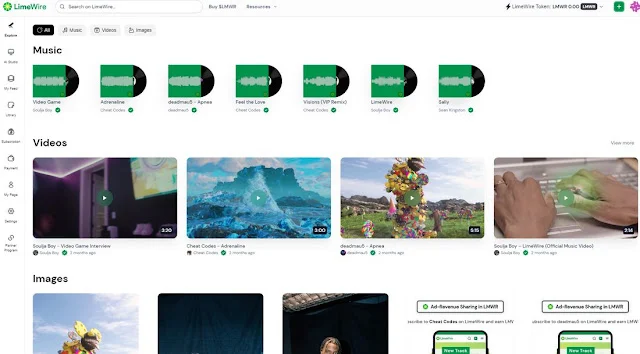
Industry analysts observe that this model is particularly attractive to a new wave of creators—musicians, digital illustrators, and influencers—who are looking to cultivate loyal fanbases. High-profile endorsements from figures such as Deadmau5, Soulja Boy, and Sean Kingston have underscored the platform’s intent to attract professional-grade talent. By allowing artists to publish music and video as NFTs, LimeWire is effectively creating a new distribution channel that operates independently of traditional streaming services.
Pricing Tiers and Accessibility
LimeWire maintains a freemium model to ensure high user acquisition rates. The entry-level tier provides 10 free credits daily, enabling users to generate approximately 20 images. This "try-before-you-buy" approach has been instrumental in growing the platform’s user base. For power users, the platform offers tiered subscription plans ranging from $9.99 to $99.00 per month. These tiers offer increased credit allocations, ranging from 1,000 to over 11,000 credits, and provide additional benefits such as priority generation speeds, early access to new AI models, and the removal of platform-wide advertisements.
Broader Implications for the Creative Industry
The rise of platforms like LimeWire signals a broader shift in how intellectual property (IP) is handled in the age of generative AI. By embedding metadata and blockchain verification into the creation process, LimeWire is attempting to address the growing concerns regarding AI-generated art ownership and copyright.
However, the platform also faces challenges. As the legal environment surrounding generative AI continues to evolve, companies in this space must navigate complex issues regarding the training data used for their models and the rights of original artists. LimeWire’s commitment to transparency and its development of proprietary models will be critical in navigating these regulatory landscapes.
Furthermore, the integration of cryptocurrency-based rewards introduces a layer of financial risk and complexity for the average user. While the ability to earn LMWR tokens offers a compelling incentive, the volatility of the crypto market remains a factor that differentiates this platform from traditional creator economy tools like Patreon or Substack.
Conclusion
LimeWire’s evolution from a file-sharing application to an AI-powered content studio represents a unique convergence of web2 legacy and web3 innovation. By democratizing access to high-end generative tools and providing a tangible path toward monetization, the platform is attempting to redefine the role of the creator in the digital age.
As the platform prepares to launch its anticipated music and video generation capabilities, it sits at a critical juncture. The success of its model will likely depend on its ability to sustain user growth, maintain the value of its token ecosystem, and navigate the increasingly stringent regulatory framework surrounding AI content. For now, LimeWire stands as a notable example of how legacy brands can successfully pivot to align with the future of decentralized, AI-driven creativity, offering a glimpse into a future where every user is not just a consumer, but a participant in the digital economy.