SpaceX Targets September 22 for Historic First Orbital Starship Test Flight Pending Regulatory Approval

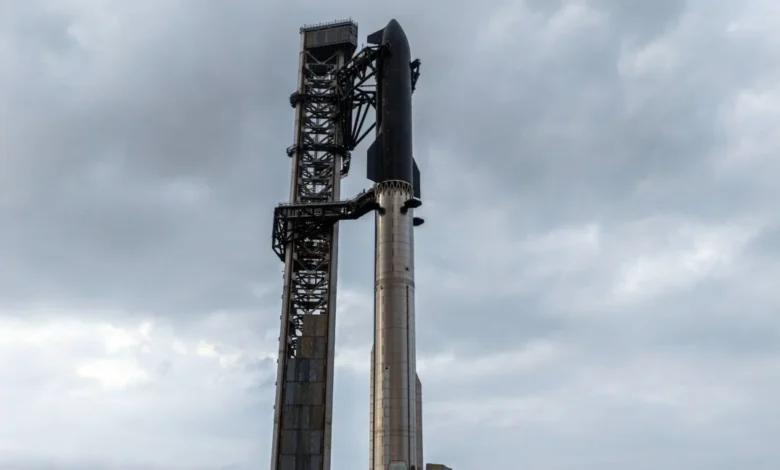
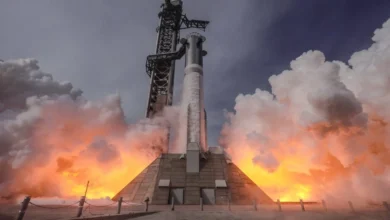
SpaceX has announced its intention to conduct the fourteenth integrated flight test of its massive Starship launch vehicle as early as September 22, pending final regulatory clearance from the Federal Aviation Administration (FAA). This upcoming mission represents a monumental threshold for the aerospace manufacturer, as it marks the very first time the company will attempt to insert the experimental spacecraft into Earth orbit. The target liftoff is scheduled for 7:15 a.m. local time (12:15 UTC) from the company’s Starbase facility in Boca Chica, Texas. With a designated 75-minute launch window and sunrise in nearby Brownsville occurring at 7:17 a.m. Central Time, aerospace observers anticipate that the early morning ascent could produce striking visual imagery across the South Texas coastline.
The two-stage super heavy-lift launch system will carry a commercial payload consisting of 26 next-generation V3 Starlink satellites. These larger, more capable spacecraft are destined for a targeted circular orbit approximately 275 kilometers above the Earth. According to mission parameters shared by SpaceX in a recent mission profile update, the Starship upper stage will attempt to execute a prolonged mission profile involving six complete orbits around the globe. The entire flight is projected to last approximately 10 hours from liftoff to conclusion, culminating in a controlled ocean splashdown. Reaching orbital velocity and successfully executing a multi-orbit profile would decisively shift Starship from a development-stage flight test program into a functional orbital vehicle, validating the core architecture required for deep-space exploration and high-cadence commercial deployment.
Chronology of the Starship Development Program
The path to this historic orbital attempt has been characterized by rapid iteration, high-profile anomalies, and continuous engineering refinements. The Starship development campaign officially commenced its flight-test phase on April 20, 2023, with the inaugural integrated test flight from Starbase. That initial flight ended in a controlled self-destruction over the Gulf of Mexico after the vehicle suffered multiple engine failures and a failure of the upper stage to separate cleanly from the Super Heavy booster.
Subsequent test flights over the following years yielded vital empirical data that allowed SpaceX to implement a "fail fast, learn faster" iterative design philosophy. Flight 2 introduced hot-staging, a technique where the upper stage engines ignite while the booster is still attached, which successfully demonstrated a mechanical workaround for stage separation. Flights 3 through 6 systematically expanded the flight envelope, testing payload door deployment, in-space propellant transfer demonstrations, and high-altitude thermal protection system (TPS) tile resilience during atmospheric reentry.
By the time of the most recent mission on July 24, the vehicle demonstrated unprecedented structural and aerodynamic consistency during ascent. However, the subsequent descent phase exposed lingering vulnerabilities in the Super Heavy first stage. While the booster performed a successful boostback burn to reverse its momentum toward the launch site, it encountered severe operational challenges during the terminal atmospheric interface. SpaceX engineers later traced the anomaly to ice accumulation. In the terminal phase of the descent burn, three center engines showed definitive signs of ice clogging, which triggered an abrupt and early end to the maneuver. Despite this setback, the booster attempted its landing burn, managing to reignite 8 of the 13 planned engines before executing a hard splashdown in the Gulf of Mexico.
Engineering Modifications and Technical Upgrades
To ensure the safety and reliability of the upcoming flight, SpaceX engineering teams have incorporated substantial hardware and software modifications derived from the lessons of the July mission. The Super Heavy booster assigned to Flight 14 features redesigned plumbing and upgraded filtration systems designed to prevent the formation and ingestion of ice within the critical Raptor engine feed lines. Furthermore, advanced software patches have been integrated to enhance relight reliability during the high-stress dynamic environments of atmospheric reentry and landing burns.
Beyond the booster upgrades, the third-generation Starship upper stage continues to receive targeted thermal protection enhancements. Engineers have refined the placement and bonding agents of the hexagonal silica tiles that shield the stainless-steel hull from the extreme plasma temperatures encountered during hypersonic reentry. These modifications are critical not only for the success of Flight 14 but also for the long-term objective of achieving rapid reusability. SpaceX leadership has repeatedly emphasized that true economic viability for Starship hinges on the ability to land, inspect, and relaunch both the Super Heavy booster and the Starship upper stage with minimal refurbishment, mirroring the operational model established by the Falcon 9 and Falcon House rocket fleets.
Payload Significance and Operational Deployment
The inclusion of 26 V3 Starlink satellites on this experimental flight underscores the dual-purpose nature of the campaign. Historically, aerospace manufacturers separate developmental test flights from operational payload deployment until a vehicle achieves man-rated or high-reliability status. However, SpaceX’s aggressive operational cadence relies on merging testing with utility. The V3 Starlink satellites represent a substantial leap in bandwidth, power efficiency, and direct-to-device communication capabilities compared to the current V2 Mini constellation.
Deploying these massive satellites into a 275 km orbit will test the upper stage’s orbital deployment mechanisms under microgravity and thermal vacuum conditions. Once released from the payload bay, the satellites will utilize their own onboard propulsion systems to raise their orbits to operational altitudes. The success of this deployment mechanism is paramount, as future iterations of Starship will be entirely responsible for launching the next generation of global broadband infrastructure, as well as heavy national security payloads for the United States Space Force.
Regulatory and Environmental Oversight
The green light for Flight 14 remains contingent upon the final authorization of the Federal Aviation Administration’s Office of Commercial Space Transportation. The regulatory framework governing Starbase operations has been a subject of intense coordination between SpaceX, the FAA, the U.S. Fish and Wildlife Service, and the Texas Commission on Environmental Quality. Environmental impact reviews, marine life monitoring, and airspace closure protocols are rigorously evaluated prior to each launch license modification.
Industry analysts note that while the FAA maintains strict oversight regarding public safety, environmental protection, and mishap investigation closures, the regulatory body has increasingly aligned its evaluation processes with the rapid pace of commercial aerospace innovation. A successful regulatory approval for an orbital attempt signals a growing level of confidence between federal regulators and SpaceX engineers regarding vehicle telemetry, trajectory safety margins, and autonomous flight termination systems.
Broader Impact and Strategic Implications for the Aerospace Industry
The implications of a successful orbital Starship mission extend far beyond the commercial success of SpaceX or its Starlink subsidiary. As the world’s most powerful operational launch vehicle, Starship is the foundational transport architecture for NASA’s Artemis program, which aims to return human astronauts to the surface of the lunar South Pole. NASA has contracted SpaceX to develop a Human Landing System (HLS) variant of Starship, requiring numerous uncrewed orbital test flights, propellant transfer demonstrations in low-Earth orbit, and uncrewed lunar landing simulations before astronauts step foot onto the spacecraft.
Furthermore, the defense and geopolitical implications of achieving a fully reusable, super heavy-lift capability are profound. The ability to place upwards of 150 metric tons of payload into low-Earth orbit—or recover equivalent masses from orbit—disrupts traditional cost-per-kilogram metrics established by legacy space programs. Department of Defense agencies have expressed growing interest in utilizing Starship for point-to-point global logistics, potentially enabling the rapid transport of heavy cargo anywhere on Earth within hours.
As the launch window approaches on September 22, the global aerospace community will be watching the skies over South Texas. Whether Flight 14 achieves its ambitious ten-hour, six-orbit objective or encounters new engineering hurdles, the data gathered will undoubtedly shape the future of interplanetary transit, satellite telecommunications, and the commercialization of low-Earth orbit.