The landscape of Texas politics is undergoing a tectonic shift, with Tarrant County serving as the epicenter of a high-stakes struggle for ideological control. Once considered a reliably conservative bastion, the county—home to Fort Worth and nearly 2.2 million residents—has emerged as the most critical battleground in the state. As the November election approaches, a collision between entrenched Republican authority and a revitalized Democratic grassroots movement is defining the future of the state’s political trajectory.
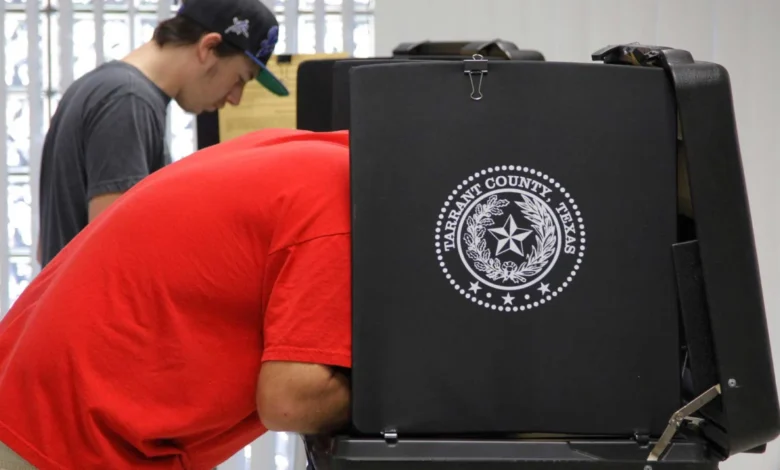
At the heart of this confrontation is a series of administrative decisions that have sparked intense debate over voting access. In September 2026, the Tarrant County Commissioners Court, led by a Republican majority, voted to eliminate 92 Election Day polling sites. This reduction represents nearly one-third of the county’s total capacity from the 2024 election cycle. Critics and voting rights advocates contend that the closures disproportionately impact minority-majority neighborhoods, raising concerns about the potential for voter suppression in areas where Democratic turnout is historically concentrated.
The political climate in Tarrant County is further complicated by the local Republican Party’s rightward drift. The county has long provided a home to influential conservative organizations like the True Texas Project, formerly known as the Northeast Tarrant Tea Party. These groups have played an instrumental role in shaping the state’s legislative agenda, often championing controversial rhetoric that has polarized the electorate. For instance, the prominence of figures like Bo French, a former Tarrant GOP chair and a recent nominee for the Texas Railroad Commission, illustrates the ideological divide. French’s public stances on immigration and national identity have drawn sharp criticism, yet they underscore the base-level energy fueling the local Republican establishment.
The Personal Cost of Political Maneuvering
No individual better embodies the friction between state authority and individual rights than Crystal Mason. A Fort Worth resident, Mason became a national figure after being sentenced to five years in prison for casting a provisional ballot in the 2016 presidential election while on supervised release for a prior felony conviction. Mason maintained that she was unaware of her ineligibility at the time and that her ballot was never counted.
Following an exhaustive legal battle that spanned nearly a decade, the Texas judiciary finally vacated Mason’s conviction in 2024. Despite the victory, the local District Attorney’s office continued to challenge the acquittal, pushing for reinstatement until the case was formally resolved in September 2026. Rather than retreating from the public sphere, Mason has channeled her experience into activism, founding the organization Crystal Mason: The Fight. She now leads door-knocking campaigns and voter registration drives, framing her work as a necessary response to what she describes as systemic efforts to discourage Black and Hispanic voters from participating in the democratic process.
The Chronology of the Tarrant Conflict
The current tension in Tarrant County is the culmination of years of institutional friction:
2016: Crystal Mason casts a provisional ballot in the presidential election, triggering a voter fraud investigation.
2018: A Tarrant County jury sentences Mason to five years in prison, sparking a national conversation on the criminalization of voting errors.
2024: A state appellate court overturns Mason’s conviction, citing a lack of evidence regarding criminal intent.
2025: Tarrant County Judge Tim O’Hare initiates a controversial redistricting process for county commissioner seats, which critics argue is an attempt to cement a 4-1 Republican majority.
September 2026: The county commission officially eliminates 92 polling sites, leading to multiple lawsuits from voting rights groups.
October 2026: As the general election nears, voter outreach efforts reach a fever pitch, with both parties mobilizing resources to capture the county’s shifting electorate.
Data and Institutional Dynamics
The significance of Tarrant County lies in its demographic and electoral volatility. While the county has consistently voted for Republican candidates in statewide races for decades, the margins have tightened significantly. Political analysts note that for a Democratic candidate to secure a statewide victory in Texas, they must win Tarrant County by a margin of three to eight percentage points.
The Democratic Party, currently headquartered in a modest office park, faces an uphill climb. Reyne Telles, the executive director of the Tarrant County Democratic Party, acknowledges the historical challenges, noting that the office serves as a hub for those seeking to overcome a long history of electoral defeats. However, there are signs of shifting allegiances. The successful campaign of union leader Taylor Rehmet in a recent special election—where he flipped a state Senate district that had previously favored Donald Trump by 17 points—suggests that persuasion, rather than merely turnout, is becoming a viable strategy.
Furthermore, a growing number of moderate Republicans have begun to distance themselves from the party’s far-right wing. Mayor Mattie Parker, a Republican, has notably endorsed Democratic candidates for state-level offices, and former County Judge Glen Whitley has publicly supported Democratic candidates in federal races. These defections suggest that the "culture war" approach favored by the local GOP may be alienating segments of the electorate that prioritize economic stability and traditional governance.
Implications for Local Governance
Beyond the national and state-level implications, the daily functioning of Tarrant County government has become a flashpoint. County Judge Tim O’Hare, an ally of the conservative wing, has implemented policies that have drawn significant public backlash. These include limiting public comment at meetings to one minute, restricting meeting frequency, and increasing the presence of law enforcement at public gatherings.
Public sentiment regarding these tactics is split. Supporters of the current administration argue that the measures are necessary for administrative efficiency and fiscal responsibility, particularly regarding tax rate adjustments for the county hospital system. Conversely, opponents point to the rising death toll in the Tarrant County jail system as evidence of a failure in basic service delivery. Commissioner Alisa Simmons, a Democrat, has become a vocal critic of these policies, arguing that the current leadership is neglecting essential public services in favor of partisan posturing.
The Broader Impact of the Tarrant Struggle
The battle for Tarrant County is more than just a local dispute; it is a microcosm of the national struggle for the future of the American electoral system. If the Democratic Party can successfully mobilize in a historically Republican urban center, it could provide a blueprint for similar efforts across the Sun Belt. Conversely, if the Republican Party succeeds in maintaining its control through strategic redistricting and the consolidation of polling locations, it will likely entrench its influence for the next decade.
The role of activists like Crystal Mason underscores the human element of this institutional struggle. For many voters, the debate over access and representation is not abstract; it is tied to their personal experiences with the justice system and their perceptions of fairness. As the election cycle draws to a close, the voters of Tarrant County find themselves at a crossroads. The outcome of the local commission races and the broader turnout metrics will send a clear message about whether the county is ready to embrace a more progressive, diverse political identity or if it will remain a cornerstone of the Texas conservative movement.
As candidates ramp up their final outreach efforts, the contrast between the two parties has never been clearer. Whether it is through the distribution of campaign literature or the high-profile endorsements of moderate figures, both sides are operating with the understanding that every vote in Tarrant County is, quite literally, a vote for the future of the state. The intensity of this cycle is a testament to the fact that, in the eyes of both the establishment and the grassroots, the era of predictable politics in Tarrant County has come to an end.
Related posts: