Trump Administration Advances $2.8 Billion Military Package to Fund Over 40,000 Heavy Bombs for Israel Using U.S. Taxpayer Dollars

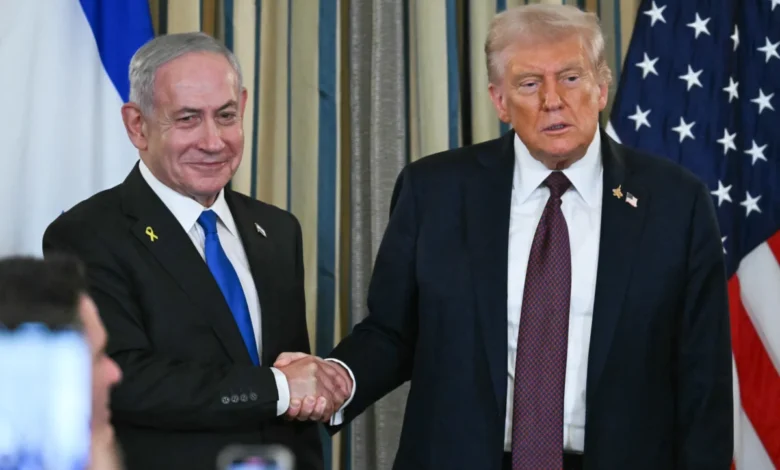
The United States government is advancing a massive $2.8 billion military assistance package designed to supply Israel with a substantial cache of heavy-duty ordnance. While formally framed as a foreign military sale, the transaction relies entirely on U.S. taxpayer-funded mechanisms, meaning American financial resources are being directly utilized to purchase and transfer more than 40,000 heavy bombs to the Israeli military. This latest defense initiative comes amid heightened geopolitical instability across the Middle East, ongoing regional conflicts involving Iran, and sustained military campaigns in Gaza and Lebanon.
The proposed package, notifications for which have been transmitted to relevant congressional oversight committees, highlights a deep continuity and acceleration of strategic military support for Israel. However, the decision to finance the munitions entirely through American government coffers—rather than requiring a standard purchasing commitment from foreign capital reserves—has reignited intense debates regarding foreign policy priorities, domestic public opinion, and the ethical implications of sustained military aid amidst widespread civilian casualties.
The Mechanics of Foreign Military Financing and Taxpayer Funding
Traditional international arms transfers generally operate under agreements where a sovereign nation agrees to purchase U.S.-manufactured defense equipment using its own financial resources, or through structured commercial contracts that inject a portion of the proceeds back into the domestic American defense manufacturing economy. However, the current initiative being prepared by the Trump administration utilizes the Foreign Military Financing (FMF) program.
Under this specific statutory framework, the U.S. government essentially allocates funds directly from its own federal budget to grant or credit a foreign government the necessary capital to acquire American-made weaponry. Consequently, U.S. taxpayers are shouldering the total financial burden of rearming the Israeli military with tens of thousands of newly minted munitions.
Critics and policy analysts point out that this distinction fundamentally alters the nature of the transaction. Rather than a commercial export boosting domestic manufacturing profits under standard market conditions, the deal represents a direct fiscal expenditure of federal tax revenues to procure and deliver heavy offensive weaponry directly to an active foreign conflict zone.
Scope and Destructive Capabilities of the Munitions
The core of the $2.8 billion package comprises a staggering inventory of over 40,000 heavy-duty munitions, primarily consisting of 2,000-pound and heavier ordnance. Among the primary weapons designated for delivery are MK-84 general-purpose unguided bombs and BLU-117 variants, alongside specialized bunker-busting munitions equipped with heavy penetrator warheads.
The MK-84 stands as one of the largest unguided, gravity-dropped "dumb" bombs in the active inventory of the United States military, though these systems are routinely fitted with precision-guidance kits to transform them into smart targeted munitions. Weighing approximately 2,000 pounds, with roughly half of that mass consisting of high explosives, the MK-84 possesses catastrophic destructive power. Upon detonation, such ordnance is capable of generating massive craters, leveling multistory reinforced concrete structures, and propelling lethal fragmentation hundreds of yards through the air.
Military analysts and human rights organizations have repeatedly documented the devastating humanitarian consequences of deploying 2,000-pound bombs in densely populated urban environments. Throughout the prolonged military campaigns in the Gaza Strip and Lebanon, international monitors and investigative reports highlighted the severe civilian toll exacted by the extensive use of heavy ordnance in crowded residential neighborhoods, refugee camps, and urban centers.
The deployment of these specific weapons has also intersected with high-profile military developments in the region. Defense officials and lawmakers previously confirmed that heavy American-made MK-84 munitions were utilized in major targeted strikes, including the 2024 operation that resulted in the assassination of Hezbollah Secretary-General Hassan Nasrallah in Lebanon. During the latter stages of the prior administration, the temporary withholding of certain 2,000-pound bomb shipments by former President Joe Biden represented a rare point of public policy friction regarding the conduct of the war. That restriction, however, has been entirely undone by the returning Trump administration, which has prioritized the swift replenishment and expansion of allied military stockpiles.
Chronology and Legislative Review Processes
The pathway toward this $2.8 billion military transfer reflects a compressed and tightly controlled administrative review process.
- Early Conflicts and Stockpile Depletion: Following the outbreak of widespread hostilities involving Israel, Hamas, Hezbollah, and subsequently direct engagements with Iran, both U.S. and Israeli military stockpiles experienced significant depletion, particularly regarding precision interceptor rockets, strategic missile defense interceptors, and standard conventional munitions.
- Prior Policy Restrictions: Throughout late 2023 and 2024, debates within Washington centered on the humanitarian impact of heavy munitions. The previous administration enacted temporary pauses on specific shipments of 2,000-pound bombs to encourage greater mitigation of civilian casualties in dense urban environments.
- Transitional Policy Shifts: Following the transition of executive leadership, the Trump administration moved rapidly to dismantle prior delivery restrictions, aligning defense policies with an expedited posture of unconditioned military replenishment.
- Congressional Notification: Senior administration officials formally notified key congressional committees regarding the preparation of the $2.8 billion FMF-backed package. Observers note that prior arms transactions managed under similar executive protocols have frequently minimized traditional legislative friction or extended debate windows, leaving lawmakers with limited avenues to block or substantively alter the delivery schedule.
When pressed regarding the legislative oversight procedures governing the multi-billion-dollar transfer, a senior administration official maintained that all foreign arms sales adhere to established legal protocols, while declining to offer specific commentary on pending transactions.
Public Opinion and Domestic Political Landscape
The acceleration of unconditioned military aid stands in stark contrast to shifting trends in American public opinion regarding U.S. involvement in Middle Eastern conflicts. Over recent years, multiple independent and media-sponsored opinion polls have registered a profound evolution in how domestic voters view the nation’s foreign military commitments.
Data compiled by organizations such as the Center for Economic and Policy Research (CEPR) in 2024 indicated that a slight majority—approximately 52 percent—of surveyed Americans believed the federal government should halt or condition weapons shipments to Israel. Subsequent polling conducted by major journalistic institutions, including The New York Times and Siena College, reinforced these findings, demonstrating that a majority of the American electorate opposed authorizing additional rounds of substantial economic or military aid absent stringent accountability frameworks. Furthermore, tracking data from institutions like Quinnipiac University revealed that nearly half of all registered U.S. voters consistently express the view that United States foreign policy has become overly supportive of Israeli military operations without demanding adequate strategic or humanitarian safeguards.
Despite these measurable domestic reservations, executive branch decision-making has continued to prioritize traditional alliance frameworks and military deterrence strategies, bypassing public skepticism in favor of maintaining robust security ties.
Broader Strategic Implications and Geopolitical Analysis
The execution of this $2.8 billion military aid package carries far-reaching implications for regional stability, military readiness, and international diplomacy.
From a strategic standpoint, the infusion of over 40,000 heavy bombs ensures that the Israeli military retains an uninterrupted operational capacity for sustained high-intensity combat operations across multiple theaters. This comes at a time when the United States itself has expended vast quantities of strategic defense resources, interceptor missiles, and logistical support to assist regional allies against direct threats from Iran and its network of regional proxies.
However, defense analysts caution that flooding an active conflict zone with massive quantities of unguided and heavy precision ordnance risks entrenching military solutions over diplomatic resolutions. By insulating allied military planning from resource constraints, the transfer removes potential leverage that Washington might otherwise employ to encourage ceasefire negotiations, humanitarian concessions, or adherence to international humanitarian law.
Furthermore, the reliance on Foreign Military Financing to gift these weapons directly impacts federal budgetary priorities at home. At a time when domestic infrastructure, healthcare, and economic pressures remain prominent concerns for American voters, committing billions of tax dollars to procure heavy offensive weaponry for foreign deployment highlights an enduring divergence between executive foreign policy objectives and domestic fiscal preferences.
As the administrative notification period concludes and logistics channels prepare for the physical transfer of the munitions, the transaction cements a definitive return to unreserved, fully subsidized American military backing for Israel’s ongoing and future security operations.
Related posts: