Luxembourg Bolsters Global Health Security Through Landmark €47.5 Million Partnership with the World Health Organization

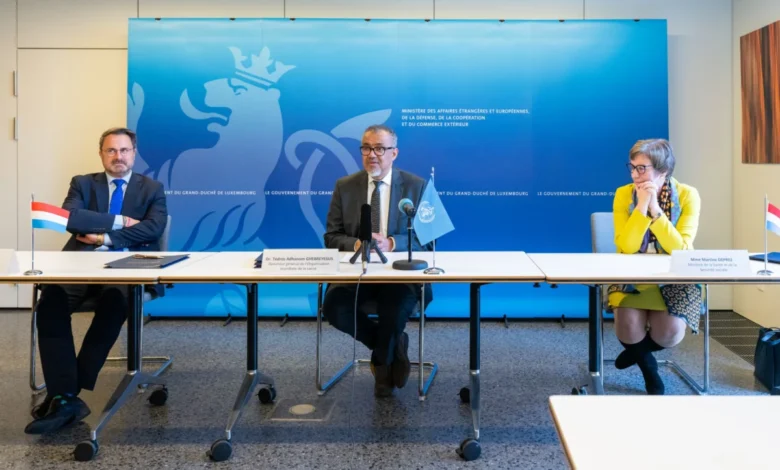
In a landmark development for international public health, the Grand Duchy of Luxembourg has finalized its most significant financial commitment to the World Health Organization (WHO) to date. On December 20, 2024—a date coinciding with the International Day of Solidarity—Luxembourgish officials and WHO leadership formalized a new Strategic Partnership Framework (SPF) worth €46.5 million, alongside a inaugural €1 million multiyear agreement. These combined investments signal a strategic pivot toward strengthening multilateral health governance as the global community approaches the 2025–2028 cycle, a critical window for accelerating progress toward the United Nations Sustainable Development Goals (SDGs).
A New Chapter in Diplomatic Health Cooperation
The agreements were signed during a high-level bilateral meeting featuring Dr. Tedros Adhanom Ghebreyesus, the WHO Director-General, and two senior members of the Luxembourgish government: Xavier Bettel, Deputy Prime Minister and Minister of Foreign and European Affairs, Cooperation and Foreign Trade; and Martine Deprez, Minister of Health and Social Safety.
The primary pillar of this collaboration is the €46.5 million Strategic Partnership Framework, which represents the largest single agreement ever brokered between the Grand Duchy and the WHO. This funding is designed to provide the WHO with both thematic and fully flexible capital. While thematic allocations are earmarked for specific areas such as the Universal Health Coverage (UHC) Partnership, tropical disease research, and the ongoing global effort to eradicate polio, the flexible component is perhaps more significant. By providing non-earmarked funding, Luxembourg allows the WHO the agility to redirect resources toward emerging health crises and the highest-priority operational needs in real-time, an essential capability in an era of unpredictable epidemiological threats.
Complementing this, the Ministry of Health and Social Safety has launched its first-ever multiyear agreement with the WHO, valued at €1 million. This marks a milestone in Luxembourg’s domestic health policy, serving as the nation’s first official voluntary contribution specifically linked to the Ministry’s health mandate.
Contextualizing the Funding Priorities
The financial support provided by Luxembourg is not merely a quantitative increase in aid but a qualitative shift in how the nation approaches its role in global health. Minister Martine Deprez emphasized that the funding is strategically mapped to address systemic vulnerabilities.

"From now till 2028, this contribution will help finance priority areas in Luxembourg’s collaboration with WHO," stated Minister Deprez during the signing ceremony. "This is particularly vital for sanitary crisis preparedness and response and the fight against health inequalities, with a special focus on gender."
The prioritization of gender-based health outcomes reflects a growing consensus in the international public health community that health disparities are often rooted in social and gendered inequities. By focusing on these areas, the funding aims to ensure that health services are not only accessible but equitable, particularly in regions that have historically been marginalized or under-served by traditional global health interventions.
The Philosophy of Prevention
Deputy Prime Minister Xavier Bettel offered insight into the political logic underpinning the investment. For Luxembourg, the partnership is a tangible expression of its commitment to multilateralism—an approach that views global health not as a series of isolated domestic concerns, but as a shared responsibility requiring collective action.
"By signing two new partnership agreements, we have reaffirmed Luxembourg’s continued support for the WHO and its mission," said Minister Bettel. "This reflects our strong commitment to promoting global health and multilateralism. We launch these agreements with WHO because we believe the best way to avoid is to prevent."
This "prevention-first" philosophy is the cornerstone of the new partnership. It aligns with the broader goals of the WHO’s Thirteenth General Programme of Work, which emphasizes proactive health management rather than reactive crisis response. By supporting the development of technical guidelines, norms, and standards, Luxembourg’s contribution facilitates the creation of a global baseline for high-quality healthcare. These standards are the "hidden" architecture of modern medicine, providing the framework upon which countries, regardless of their economic standing, build their national health systems.
A Chronology of Collaboration and Commitment
The December 2024 agreements did not materialize in a vacuum; they are the result of years of consistent engagement between the Grand Duchy and the WHO.

- 2020–2023: During the height of the COVID-19 pandemic, Luxembourg emerged as a vocal proponent of vaccine equity and strengthened global pandemic preparedness. The nation consistently met or exceeded its commitments to the COVAX facility and other international health initiatives.
- Early 2024: Preliminary discussions began between the Ministry of Foreign Affairs and the WHO regarding the 2025–2028 funding cycle. The objective was to move from ad-hoc contributions to a more predictable, multiyear framework.
- December 20, 2024: The formal signing ceremony took place on the International Day of Solidarity. Dr. Tedros noted the symbolism of the timing, characterizing the move as "a strong statement of solidarity by Luxembourg, not just with WHO, but with the people of the world."
Analytical Perspectives: The Impact of Flexible Funding
From an economic and operational standpoint, the move toward flexible funding is highly significant. In recent years, the WHO has faced criticism regarding the high proportion of "earmarked" funds in its budget—money that donors restrict to specific projects or regions. While earmarking provides transparency, it can inhibit the organization’s ability to pivot during an emergency or address "neglected" health issues that lack public or donor visibility.
By providing a significant portion of the €46.5 million as flexible capital, Luxembourg is essentially providing the WHO with "organizational resilience." This allows the WHO to maintain its core functions—such as the setting of global norms and standards—even when global attention is drawn elsewhere. Furthermore, supporting the UHC Partnership (a platform that assists countries in developing sustainable, universal health systems) ensures that the funding has a long-term, structural impact on the ground rather than being consumed by short-term projects.
Implications for the 2025–2028 Strategic Cycle
As the world looks toward 2025, the challenges facing global health are multifaceted: climate change-induced health risks, the rising burden of non-communicable diseases, and the ever-present threat of antimicrobial resistance. The Luxembourg-WHO partnership is explicitly designed to address these long-term threats.
The inclusion of polio eradication efforts and tropical disease research in the funding portfolio demonstrates a commitment to "finishing the job" on diseases that have been targeted for elimination for decades. Simultaneously, the focus on sanitary crisis preparedness ensures that the lessons learned from the COVID-19 pandemic are institutionalized rather than forgotten.
For the WHO, this influx of support serves as a vote of confidence in its leadership and mandate. In an era where multilateral institutions are frequently under pressure to demonstrate relevance and efficiency, the scale and structure of this agreement provide a template for how middle-power nations can exert significant influence in the global health arena.
Conclusion
The partnership between Luxembourg and the World Health Organization, solidified in the final days of 2024, is more than a financial transaction; it is a strategic alignment of values. By anchoring its support in a multiyear, flexible framework, Luxembourg has positioned itself as a sophisticated partner in the global health ecosystem. As the world enters a new period of transition in 2025, the stability provided by this funding will be instrumental in the WHO’s mission to promote, provide, and protect health for all, ensuring that the foundations of global security remain robust in the face of future uncertainties. The agreement stands as a testament to the idea that in a globalized world, national security and global health are inextricably linked, and that the only way to successfully navigate the future is through sustained, principled, and proactive solidarity.