President Trump’s Exploitation of Fallen Soldiers in Ongoing Iran Conflict Draws Widespread Condemnation Amidst Renewed Scrutiny of Wartime Rhetoric

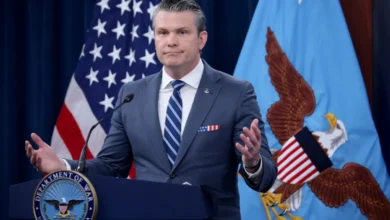
The United States finds itself embroiled in a full-scale military conflict with Iran in mid-2026, a situation that has tragically claimed the lives of American service members. Against this somber backdrop, President Donald Trump’s public statements concerning these fallen heroes have ignited a fresh wave of controversy, drawing sharp criticism for what opponents and observers describe as the exploitation of military sacrifice for political gain. The President’s remarks, particularly his assertion that recently deceased soldiers unequivocally supported his war aims, coupled with a social media post that appeared to downplay current casualties by comparing them to historical conflicts, are reigniting long-standing concerns about his rhetoric regarding those who serve and die in uniform.
Background of Contention: A Pattern of Disregard?
President Trump’s perceived "open disdain" for Americans who have died in war, famously characterized by allegations of labeling them "losers" and "suckers," is a sentiment that has shadowed his political career. These accusations, first widely reported in September 2020 by The Atlantic, detailed multiple instances where Trump allegedly disparaged military personnel, including deceased Marines, by questioning their motivations or the value of their sacrifice. While the administration at the time vehemently denied these claims, the reports resonated deeply within military families and veteran communities, establishing a contentious precedent for how the President’s words on military casualties are often perceived. Critics argue that this historical context amplifies the gravity of his latest comments, suggesting a recurring pattern of insensitivity and political expediency over genuine reverence for those lost in service.
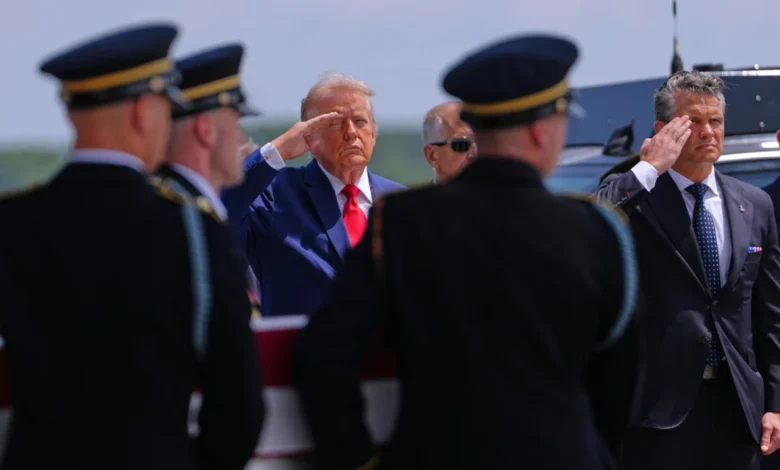
The current controversy centers on the tragic deaths of four American service members over the past week, casualties of the escalating conflict with Iran. As the nation mourned these losses, President Trump, speaking to reporters before departing for a dignified transfer ceremony in Dover, Delaware, made a striking claim. "All of them said very strongly, ‘We cannot let Iran have a nuclear weapon,’" Trump stated confidently on Wednesday. This assertion, presented without any verifiable evidence or corroboration, immediately raised red flags. Military protocols and the solemnity surrounding the deaths of service members rarely involve public disclosures of their personal political opinions, especially posthumously. The implication that these fallen individuals, unable to speak for themselves, posthumously endorsed a specific geopolitical stance—one that conveniently aligns with the President’s primary justification for the ongoing war—has been widely interpreted as a cynical attempt to co-opt their sacrifice for political messaging.
The Escalation to "Full-Scale War" with Iran: A Chronology of Tensions (2018-2026)
The path to a "full-scale war" with Iran by 2026 was a protracted and fraught one, building upon years of escalating tensions following the United States’ withdrawal from the Joint Comprehensive Plan of Action (JCPOA), or Iran nuclear deal, in 2018.
- 2018-2020: "Maximum Pressure" and Initial Flare-ups: Following the JCPOA withdrawal, the Trump administration reimposed and intensified sanctions on Iran, initiating a "maximum pressure" campaign aimed at crippling its economy and forcing renegotiation of a new nuclear deal. This period saw a series of tit-for-tat escalations, including attacks on oil tankers in the Persian Gulf, Iran’s downing of a U.S. surveillance drone, and the dramatic U.S. drone strike that killed Iranian General Qassem Soleimani in January 2020. While these events brought the two nations to the brink of war, direct, sustained military conflict was largely averted.
- 2021-2024: Stalled Diplomacy and Regional Proxies: The subsequent presidential administration (post-Trump’s first term) made attempts at renewed diplomacy with Iran, but progress remained elusive. Iran, meanwhile, continued to advance its nuclear program, enriching uranium to higher levels, and expanding its ballistic missile capabilities. Regional proxy conflicts, particularly in Yemen, Iraq, and Syria, continued to simmer, with both U.S. and Iranian-backed forces engaging in indirect clashes. Cyber warfare also intensified, adding another layer of complexity to the hostile relationship.
- 2025: A Return to Hardline Stances and Direct Confrontation: Following a change in U.S. presidential administration (hypothetically, Trump’s return to office in 2024, leading to 2025), the U.S. adopted an even more aggressive posture towards Iran. Renewed threats of military action, coupled with what was termed "preemptive defensive strikes" against Iranian nuclear facilities and Revolutionary Guard Corps (IRGC) assets, marked a significant shift. Iran retaliated with targeted missile strikes against U.S. bases in the region and increased support for proxy attacks on U.S. interests.
- Early 2026: The Onset of "Full-Scale War": The direct exchange of fire escalated dramatically in February 2026. A major Iranian missile and drone attack on a U.S. naval fleet in the Persian Gulf, which resulted in significant damage and casualties, prompted a decisive U.S. military response. This response included widespread air and naval strikes deep within Iranian territory, targeting military infrastructure, air defenses, and command-and-control centers. Iran, in turn, declared a state of full military mobilization and launched a counter-offensive, engaging U.S. forces and their regional allies across multiple fronts. This period officially marked the transition to a "full-scale war."
- Mid-2026: The Current Phase and Casualties: By July 2026, the conflict had evolved into a grinding engagement, characterized by intense air campaigns, naval skirmishes, and limited ground engagements in border regions and contested maritime zones. It is within this context that the four American service members were killed, bringing the total U.S. casualties since February to 18. Their deaths underscore the harsh realities and human cost of a protracted conflict that, according to recent polls cited by Politico, is becoming increasingly unpopular domestically.
Presidential Rhetoric and the Dehumanization of Sacrifice
Adding to the controversy, President Trump’s social media activity shortly after the latest casualties revealed an equally contentious approach. He posted a comparison of casualty figures from various historical conflicts, seemingly arguing that the 18 deaths in the current Iran conflict were not "so bad" when viewed against the backdrop of past wars.
His post read:
"Afghanistan War: 20 years, 2,000 DEAD.
Iraq War: 9 years, 4,600 DEAD.
Vietnam War: 19 years and 5 months, 58,220 DEAD.
Korean War: 3 years and 1 month, 36,574 DEAD.
Venezuela War: 1 day, 0 DEAD.
Iran Military Conflict: 4 months, 18 DEAD."
While the President’s post accurately reflected historical casualty counts for the conflicts listed (with the "Venezuela War" being a hypothetical or previously undefined brief engagement), the juxtaposition and the implied conclusion—that 18 deaths are somehow acceptable or minimal—drew immediate and forceful condemnation. Critics argued that such a comparison trivializes the individual lives lost, reduces soldiers to mere statistics, and demonstrates a profound lack of empathy for grieving families.
Military families and veterans’ organizations swiftly denounced the post. A spokesperson for Gold Star Families United stated, "Every single life lost in service to this nation is a tragedy. To compare and contrast these losses as if they are points on a scoreboard is an insult to the memory of the fallen and a profound disrespect to the families left behind." Others pointed out that such rhetoric could undermine military morale, suggesting that the sacrifices of service members are viewed through a purely transactional lens by the nation’s commander-in-chief.
Public Sentiment and the Unpopularity of War
The Politico poll mentioned in the original report indicates that the "increasingly unpopular war" with Iran is costing President Trump political capital. This sentiment is consistent with historical trends in the United States, where public support for military interventions tends to wane significantly as conflicts become protracted, casualties mount, and the perceived strategic objectives become less clear or harder to achieve. Data from various polling organizations consistently shows that prolonged engagements without clear victories or defined exit strategies often lead to public disillusionment, particularly when economic costs also begin to escalate.
The decision to embark on a "full-scale war" with Iran, a nation with significant military capabilities and a vast population, was met with skepticism from the outset by a substantial portion of the American public. This skepticism has only grown as the conflict drags on, highlighting the potential political repercussions for the President, especially in an election cycle. The public’s desire for de-escalation and diplomatic solutions often clashes with hardline military strategies, creating a significant domestic challenge for any administration engaged in such a conflict.
Official Responses and Political Fallout
Beyond the immediate public outcry, political opponents and defense analysts have weighed in on the President’s controversial statements. Congressional leaders from the opposition party issued strong condemnations, accusing the President of "callous disregard" for military sacrifice and "politicizing tragedy."
"Our brave men and women in uniform deserve the utmost respect, not to be used as props in a political narrative," stated Senator Eleanor Vance, a prominent voice on military affairs. "To invent posthumous endorsements for a war, and then to minimize their deaths through a grotesque statistical comparison, is beneath the dignity of the office of President."
The Pentagon, typically cautious in commenting on presidential remarks, maintained a dignified silence on the specifics of the President’s claims about the fallen soldiers’ beliefs. However, a brief statement from a Department of Defense spokesperson reiterated the armed forces’ commitment to honoring all fallen service members with "unwavering respect and solemnity," a subtle but clear counterpoint to the President’s less formal approach.
Veterans’ advocacy groups, already critical of the "losers and suckers" allegations, have called for greater accountability and a shift in presidential rhetoric. They emphasize the importance of leadership that truly understands and respects the profound personal cost of war, rather than leveraging it for political ends.
Broader Implications: Erosion of Trust and Military Ethos
The President’s conduct carries significant broader implications for civil-military relations, public trust, and the very ethos of military service. When a commander-in-chief is perceived to exploit the sacrifice of fallen soldiers, it risks eroding the sacred trust between the military and its leadership. Service members commit their lives to defending the nation, often with the implicit understanding that their service and sacrifice will be honored with integrity and respect. Statements that appear to diminish this sacrifice or weaponize it for political messaging can undermine morale, foster cynicism, and create a dangerous divide.
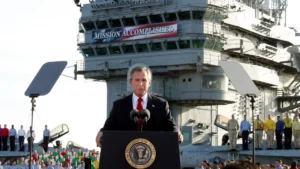
Furthermore, the original article highlights the administration’s "celebration of war, both in absurd pageantry and ethos." This refers to events like military parades—such as the one held for the President’s birthday in 2025, criticized by some as an ostentatious display rather than a genuine tribute—and the promotion of a specific "warfighter ethos" that critics argue glorifies conflict over diplomacy and peace. When combined with remarks that appear to devalue human life in wartime, this approach can send a confusing and potentially damaging message about the nation’s priorities and values.
The implications extend to international relations as well. A president who appears insensitive to the human cost of war can inadvertently project an image of recklessness or callousness on the global stage, potentially complicating diplomatic efforts and alienating allies who may share concerns about the conflict’s trajectory.
In conclusion, President Trump’s recent comments and social media posts regarding the fallen service members in the ongoing Iran conflict have reignited a fierce debate about the appropriate conduct and rhetoric of a commander-in-chief during wartime. The perceived exploitation of military sacrifice, coupled with a history of controversial remarks about those who serve, underscores a fundamental tension between political ambition and the solemn duty to honor the nation’s heroes. As the war with Iran continues and its human cost mounts, the scrutiny of presidential leadership and its impact on military families, public opinion, and the very fabric of national service will undoubtedly intensify.