U.S. Lawmakers Press Secretary of State Marco Rubio to Block Colombia’s Resumption of Aerial Coca Spraying

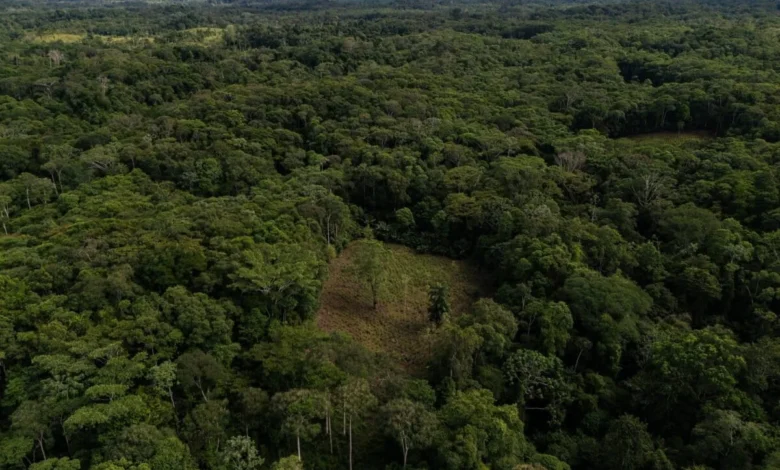
A bipartisan coalition of U.S. lawmakers has formally petitioned Secretary of State Marco Rubio, demanding that the United States withhold support for the Colombian government’s controversial proposal to resume the aerial fumigation of coca crops within the Amazon basin. The request comes amid escalating tensions between the Biden-era security policies and the evolving counternarcotics strategy proposed by Bogotá, which seeks to aggressively curb the nation’s record-breaking cocaine production. The lawmakers’ letter warns that restarting the use of herbicides, such as glyphosate, poses existential risks to local human health, biodiversity, and the fragile ecological integrity of the Amazon rainforest.
For decades, the United States has served as the primary financial and logistical architect behind Colombia’s drug war. However, as the region faces a dual crisis of illicit drug proliferation and accelerating climate change, the debate over aerial spraying has moved from a tactical disagreement to a fundamental clash over environmental policy and human rights. Critics argue that the reliance on aerial eradication is a "failed relic" of the 20th century that has historically displaced rural communities while failing to meaningfully reduce the global supply of cocaine.
The Historical Context of Aerial Eradication in Colombia
To understand the current impasse, one must look back to the inception of Plan Colombia in the late 1990s. Initially designed as a comprehensive aid package to combat drug trafficking and civil insurgency, the plan facilitated the widespread aerial spraying of coca crops using glyphosate—a herbicide famously linked to various health concerns and environmental degradation.
Throughout the early 2000s, the Colombian government, supported by U.S. State Department funding, sprayed millions of acres of rural territory. The campaign reached its zenith in 2006, when over 170,000 hectares were fumigated. However, in 2015, the World Health Organization’s International Agency for Research on Cancer (IARC) classified glyphosate as "probably carcinogenic to humans." This discovery, coupled with a landmark ruling by Colombia’s Constitutional Court, led the administration of then-President Juan Manuel Santos to suspend aerial operations in 2015.
The suspension remained largely in effect for years, though subsequent administrations have repeatedly attempted to reinstate the practice. Proponents argue that manual eradication—the process of sending police or military personnel to pull up crops by hand—is too slow and puts security forces at high risk of attack from armed groups, such as the ELN (National Liberation Army) and various dissident FARC factions that guard the crops.
Data Trends: A Surge in Coca Cultivation
Despite billions of dollars in U.S. assistance, Colombia remains the world’s undisputed leader in cocaine production. According to data from the United Nations Office on Drugs and Crime (UNODC), coca cultivation reached an all-time high in 2023, with land dedicated to the crop expanding by 10% to approximately 253,000 hectares.
This expansion has not occurred in a vacuum. The persistence of coca cultivation is deeply tied to the lack of viable economic alternatives for rural farmers, known as cocaleros. In many parts of the Amazon and the Catatumbo region, coca is the only crop that provides a guaranteed buyer and a sustainable income in areas where the state lacks a meaningful presence.
Lawmakers opposing the resumption of spraying point to these figures as evidence that traditional eradication methods are ineffective. They argue that spraying destroys the ecosystem without addressing the underlying socio-economic drivers of the drug trade. If the crop is destroyed, the farmers—often pushed into poverty—simply move deeper into the forest to clear new land, further accelerating the deforestation that is already threatening the Amazon’s role as a carbon sink.
The Legislative Pushback and Diplomatic Pressure
The letter sent to Secretary Rubio represents a significant effort by members of Congress to influence the Trump administration’s foreign policy priorities. The signatories include members of both chambers who emphasize that the United States must pivot toward "comprehensive development" rather than "punitive eradication."

"Resuming aerial spraying will not solve the cocaine crisis; it will only create a public health disaster for the indigenous and peasant communities living in the Amazon," noted one legislative aide familiar with the correspondence. The lawmakers are specifically urging Rubio to leverage U.S. aid conditions to ensure that no funding is diverted toward chemical fumigation. Instead, they are advocating for the strengthening of the 2016 Peace Accords’ voluntary substitution programs, which incentivize farmers to switch to legal crops like cacao, coffee, or tropical fruits.
Secretary Rubio, known for a hardline stance on regional security and combating organized crime, faces a delicate balancing act. While he has historically favored aggressive tactics against drug cartels, the current administration is also under pressure from environmental lobbyists and human rights organizations that have become increasingly influential in Washington.
Environmental and Health Implications
The biological cost of restarting aerial spraying is a point of intense concern for conservationists. The Amazon is a biodiversity hotspot, and the indiscriminate nature of aerial spraying means that chemical agents do not target only coca plants. Food crops, water sources, and protected wildlife habitats are often contaminated during the drift of the herbicide.
In 2024, the Colombian Ministry of Environment released a report suggesting that the impact of synthetic herbicides on the Amazonian soil composition could be irreversible, leading to a loss of microbial life essential for the forest’s regeneration. Furthermore, community health studies conducted in departments such as Nariño and Putumayo have long documented increased rates of skin diseases, respiratory issues, and miscarriages among populations exposed to frequent aerial spraying.
Official Responses and Future Outlook
The Colombian government, led by the current administration’s security apparatus, maintains that the state is losing control over rural territories. Officials argue that armed groups are using the proceeds from cocaine to fund territorial expansions, leading to an increase in violence and kidnappings. For these officials, aerial spraying is a necessary "surgical tool" that can be used precisely and safely with modern, drone-based technology.
However, critics remain skeptical of these assurances. They argue that no amount of technological refinement can mitigate the inherent risks of dropping thousands of gallons of chemicals over a dense tropical rainforest.
As the debate continues, the international community is watching closely. The European Union, a major consumer of illicit drugs, has previously expressed concerns over the environmental footprint of Colombian counternarcotics efforts, suggesting that a greener, more social-oriented approach is the only way to achieve lasting peace in the region.
Implications for U.S.-Colombia Relations
The potential decision by Secretary Rubio will serve as a bellwether for U.S. foreign policy in Latin America. If the State Department chooses to support the resumption of spraying, it may deepen the divide between the U.S. and progressive leaders in the region who are calling for a "New Deal" for the Amazon. Conversely, if Washington denies funding for the program, it may force Bogotá to accelerate its transition toward sustainable, non-chemical alternatives, albeit at a slower pace in terms of crop destruction.
The current trajectory suggests that the conflict is far from settled. With the drug trade becoming increasingly decentralized and resilient, the reliance on mid-20th-century tactical responses like aerial fumigation appears increasingly out of step with 21st-century environmental realities. The coming months will likely see a flurry of diplomatic activity as both nations weigh the cost of their security strategies against the preservation of the world’s most vital ecosystem.
For the rural communities at the heart of this conflict, the stakes could not be higher. Their livelihoods, their health, and the future of the rainforest hang in the balance, caught between the persistent demand for narcotics in the global North and the complex, often violent, realities of the rural South. As the correspondence between Congress and the State Department continues, the world waits to see whether the United States will double down on a policy of eradication or commit to a new path of regional development and environmental stewardship.
Related posts: