Leaders grapple with finance and harmful subsidies at UN’s COP17 biodiversity conference

Visitors entering the main thoroughfare of the 2026 United Nations Biodiversity Conference (COP17) in Yerevan, Armenia, are greeted by an imposing mural of a herd of elephants. While the artwork might at first glance appear to be a tribute to wildlife conservation, the installation, commissioned by the NGO Friends of the Earth International, serves a more pointed purpose. It invokes the “elephant in the room” idiom to highlight the systemic, often-ignored financial architecture that continues to drive global biodiversity collapse. Despite the gravity of the ecological crisis, delegates are finding that the most difficult conversations in Yerevan are not about biology, but about the flow of capital.
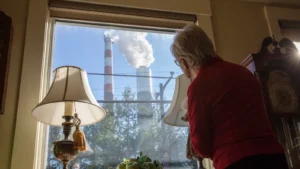
The central tension at COP17 revolves around a staggering discrepancy in global spending. According to the United Nations Environment Programme’s (UNEP) "State of Finance for Nature 2026" report, the global economy currently allocates $30 to activities that degrade nature for every $1 spent on protection. This lopsided ratio underscores a fundamental misalignment in economic incentives. While world leaders have committed to the ambitious Kunming-Montreal Global Biodiversity Framework (GBF)—a pact designed to stem the tide of extinction—the economic reality remains tethered to industries that actively dismantle the ecosystems upon which human civilization depends.

The Magnitude of the Biodiversity Crisis
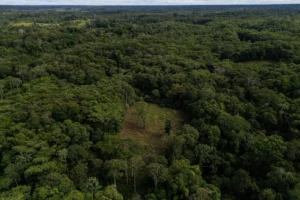
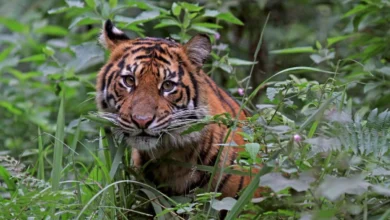
The context for these financial negotiations is provided by the sobering data found in the most recent Living Planet report from WWF International. The report reveals that monitored populations of wild vertebrates have plummeted by an average of 73% between 1970 and 2022. This decline is not merely a consequence of natural cycles; it is a direct result of anthropogenic pressures, specifically climate change, industrial-scale agriculture, and a global financial system that rewards nature-averse practices.
The urgency of this situation was underscored by Inger Andersen, Executive Director of UNEP, who addressed the assembly in Yerevan. "Nature is not a luxury we protect when economies can afford it," Andersen stated. "Nature is what makes economies possible. The arrival of finance ministers at COP17 sends an important signal: biodiversity loss is not simply an environmental problem. It is an economic problem, and the solutions must reach into the heart of economic decision-making."
A Disconnect Between Ambition and Reality
In 2022, the 196 parties to the Convention on Biological Diversity (CBD) adopted the Kunming-Montreal GBF, establishing a roadmap to halt and reverse biodiversity loss by 2030. Target 18 of the framework specifically mandates the reduction of annual subsidies and financial support that harm biodiversity by at least $500 billion. Despite this, UNEP data indicates that "nature-negative" activities continue to receive approximately $7.3 trillion in annual global financial support.

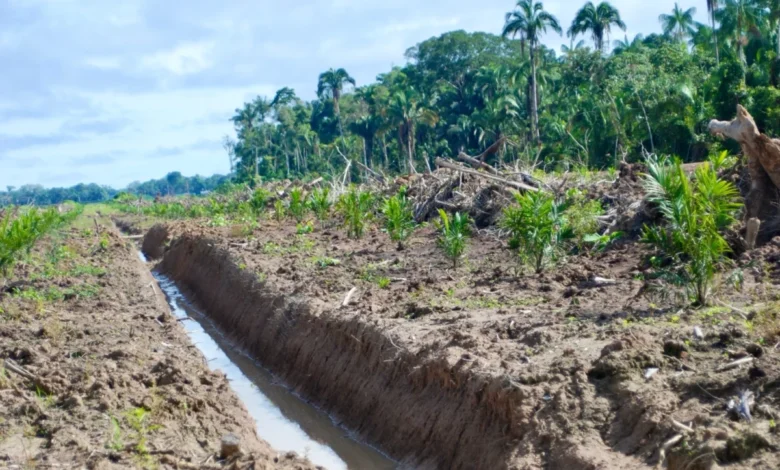
This massive influx of capital into environmentally destructive sectors—ranging from industrial logging and overfishing to fossil fuel extraction—creates an insurmountable hurdle for conservation efforts. The GBF also set a target to mobilize at least $200 billion per year from all sources to fund biodiversity restoration. However, an analysis by the Organisation for Economic Co-operation and Development (OECD) estimates that total annual biodiversity finance as of 2025 has reached no more than $92 billion, less than half of the required benchmark.
Chronology of Pledges and Financial Hurdles
Throughout the duration of COP17, which concluded on October 31, 2026, several high-profile financial announcements were made, though analysts remain cautious about their long-term efficacy:
- October 16, 2026: The Species Recovery Alliance, a coalition of private donors, pledged $500 million to assist in the recovery of threatened species.
- October 26, 2026: Armenia’s Environment Minister and COP17 President, Hambardzum Matevosyan, announced that the conference had successfully mobilized roughly $1.8 billion in new financing.
- October 26, 2026: The Netherlands committed $500 million to the Tropical Forest Forever Facility (TFFF), designed to reward nations that maintain low deforestation rates, with a 20% mandate for Indigenous and local community inclusion.
- October 26, 2026: The Global Environment Facility (GEF) announced an additional $500 million for nature, including $60 million specifically for the Global Biodiversity Framework Fund.
- October 27, 2026: Germany unveiled a 300 million Euro ($334 million) package to support the Legacy Landscapes Fund, focusing on National Biodiversity Strategies and Action Plans (NBSAPs).
Despite these headline figures, the distribution of funds remains a point of contention. The NGO Campaign for Nature reported that international funding for the "30 by 30" target—the goal of protecting 30% of global land and sea by 2030—actually fell from $1.2 billion in 2023 to $1 billion in 2025. Furthermore, the "Cali Fund," established to capture revenue from companies utilizing genetic resources from nature, has struggled to gain traction, receiving a mere $10,000 in deposits since its inception, far below its $1 billion annual goal.

The Subsidy Reform Imperative
The most critical debate at COP17 has been the reform of harmful subsidies. Environmental economists argue that as long as governments continue to provide tax breaks and direct subsidies to extractive industries, conservation funding will remain a drop in the ocean.
"We cannot continue subsidizing the destruction of nature at the same time as trying to find the money that is needed for implementation of action," said Guido Broekhoven, interim global director of multilateral policy at WWF International. The sentiment is shared by observers who note that currently, only about 25% of the National Biodiversity Strategies and Action Plans submitted by signatory nations include concrete measures to address these destructive financial flows.
Armenia’s leadership has attempted to bring this issue to the forefront through the "Yerevan Call on Incentives Positive to Biodiversity." By analyzing its own national programs—24 in total—to determine their impact on biodiversity, Armenia has attempted to lead by example. This domestic audit, conducted via the UNDP’s BIOFIN initiative, serves as a template for other nations to identify where their own public funds might be inadvertently driving environmental degradation.

Looking Ahead: A Steep Climb
As the curtains closed on COP17, the mood among delegates and civil society was a mixture of cautious optimism and profound concern. A U.N. review published just prior to the conference noted that 22 of the 23 targets set by the GBF remain off-track. The "30 by 30" target, a centerpiece of global conservation strategy, is increasingly viewed as an aspirational goal rather than a guaranteed outcome, given the current pace of protected area establishment and the shortfall in funding.
The consensus in the corridors of the Yerevan conference center is that the era of treating biodiversity finance as a side issue is over. Alfred DeGemmis, director of international policy at the Wildlife Conservation Society, captured the shifting mood: "I think there is consensus that [harmful subsidies] are no longer an elephant in the room that we can’t speak of, or it’s too complex to take on. But rather, it’s something that we have to figure out."
The challenge for the coming years is translating these discussions into structural reform. For the global financial system to pivot toward sustainability, it must confront the reality that the "invisible hand" of the market has been, for decades, steering humanity toward ecological insolvency. Whether the commitments made in Yerevan will evolve into systemic change remains the defining question of this decade. The delegates have identified the problem, mapped the financial gaps, and acknowledged the role of harmful incentives; the success of the 2030 goals now rests on the political courage to dismantle the financial status quo and replace it with a model that recognizes the intrinsic value of the natural world.