The AI Investment Gold Rush: How Congressional Portfolios Are Tethered to the Data Center Boom

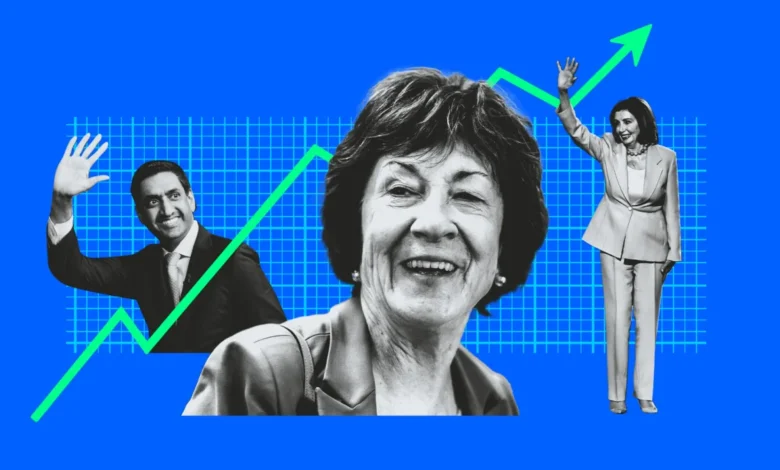
The intersection of artificial intelligence policy and personal financial gain has become a defining feature of the current legislative landscape, as a significant portion of the U.S. Congress finds its own wealth tied to the rapid expansion of the data center industry. Recent financial disclosures reveal that 105 members of Congress—62 Republicans and 43 Democrats—maintain household investments in AI developers, semiconductor manufacturers, cloud infrastructure providers, and specialized data center firms. As the United States maneuvers through an unprecedented $10 trillion infrastructure buildout, the line between public oversight and private profit has blurred, raising fundamental questions about the impartiality of legislative decision-making.
The scale of this industry’s growth is historically significant. According to data from the Brookings Institution, the total investment in AI-related infrastructure through 2032 is projected to reach approximately $10 trillion. As a percentage of national GDP, the current AI infrastructure boom has already eclipsed the economic footprint of the late-1990s dot-com bubble. This massive capital injection has transformed data centers from niche industrial assets into essential pillars of the modern economy, prompting intense lobbying efforts and, consequently, direct legislative action.
A Flashpoint in Maine: The Human Cost of Infrastructure
The tension between the industrial promise of AI and the concerns of local communities reached a boiling point on October 15, during a high-stakes debate between Senator Susan Collins (R-Maine) and her challenger, Troy Jackson. The event was briefly interrupted by a heckler who shouted, "Senator Collins, I’m so sorry to interrupt, but I’m terrified. AI data centers, they’re destroying our climate, they’re poisoning our water!"
While Senator Collins dismissed the protest as a partisan stunt orchestrated by her opponent, the underlying grievances reflect a growing national skepticism regarding the environmental footprint of large-scale computing facilities. Data centers are notoriously power-hungry and water-intensive, often straining local grids and municipal water supplies.
Financial records indicate that the concern expressed by the protestor may have been rooted in a tangible conflict of interest. According to Forbes, Senator Collins’ husband, Thomas Daffron, holds between $300,000 and $800,000 in investments linked to the AI and data center sectors. This makes the Collins household the fifth-largest investor in the Senate regarding this specific industry. While a spokesperson for the Senator noted that she utilizes diversified index funds and does not engage in individual stock trading, the optics of the situation highlight the inherent difficulty in separating personal net worth from legislative committee work, particularly as Senator Collins has utilized her role as chair of the Appropriations Committee to secure $6.2 million in federal funding for a high-performance computing hub in central Maine.
Legislative Patterns and Financial Alignment
The correlation between legislative advocacy and personal investment portfolios is becoming increasingly difficult for watchdog groups to ignore. Rep. Rob Wittman (R-Va.) serves as a primary example of this phenomenon. In the current session of the National Defense Authorization Act (NDAA), Wittman championed a clause designed to facilitate the construction of data centers and small-scale modular nuclear reactors on military installations. Financial disclosures from 2025 reveal that Wittman held between $100,000 and $300,000 in stocks directly related to the data center surge.
The local impact of this development is stark. In Henrico County, Virginia—part of Wittman’s district—residents faced the irony of being instructed by local officials to conserve electricity by dimming lights during a record-breaking heatwave. Simultaneously, the county’s 37 operational data centers were permitted to continue running at full capacity, underscoring the prioritization of industrial AI infrastructure over residential power stability. While Rep. Wittman’s office maintains that his investments are managed by third-party financial advisors without his direct consultation, the alignment between his legislative initiatives and his portfolio remains a point of contention for his constituents.
The Rhetoric-Reality Gap
The bipartisan nature of these investments is notable. Representative Ro Khanna (D-Calif.), a vocal critic of the "extractive" nature of the AI industry, has found himself under scrutiny for his family’s holdings. Khanna introduced the "Data Center Bill of Rights" in August, which seeks to implement strict zoning regulations, including a 2,500-foot buffer zone between data centers and sensitive areas like schools, hospitals, and residential homes.
However, reports indicate that Khanna’s wife and dependent children hold between $3.4 million and $8.4 million in assets tied to AI infrastructure, including significant stakes in chip giant Nvidia. This creates a complex political narrative: a lawmaker advocating for the regulation of an industry that simultaneously serves as a primary driver of his own family’s financial growth. Similar contradictions appear across the aisle, with Rep. Diana Harshbarger (R-Tenn.) publicly stating that the "AI race" should not come at the expense of "hardworking families," despite holding as much as $4.6 million in major tech corporations that benefit directly from the proliferation of data centers.
Executive Perspectives and Political Strategy
The executive branch has not remained immune to these trends. President Donald Trump has been remarkably transparent regarding his support for the industry, framing data center expansion as a matter of national competitiveness. "The only reason that communities throughout the USA should not want data centers is if they want to end up being backwards and poor," he stated during an address in August.
Financial investigations by Citizens for Responsibility and Ethics in Washington (CREW) confirm that President Trump’s stake in companies involved in data center infrastructure has increased by 600 percent over the past year, currently estimated between $2.9 million and $9.5 million. This has led to a peculiar political dynamic where the President advocates for industry deregulation while his affiliated political action committees, such as the "No Going Back" PAC, weaponize the data center investments of Democratic opponents in campaign messaging. This suggests that the issue is being treated as both a policy priority and a tactical political cudgel.
Implications for Governance and Public Trust
The systemic nature of these investments raises profound questions regarding the efficacy of current congressional ethics rules. The Stop Trading on Congressional Knowledge (STOCK) Act, passed in 2012, was intended to prevent insider trading, yet critics argue it does little to address the broader issue of "conflict of interest" inherent in owning assets that fluctuate based on the specific legislative committees a member sits on.
The implications of this financial entanglement are three-fold:
- Policy Distortions: When legislators hold significant capital in the industries they are tasked with regulating, there is a risk that policy is crafted to protect market value rather than public utility.
- Erosion of Public Confidence: As citizens witness local infrastructure—such as water and power—being diverted to support data centers while their representatives profit from that same diversion, the perceived legitimacy of the government’s decision-making process suffers.
- Regulatory Capture: By holding large stakes in the same firms they oversee, members of Congress may inadvertently foster a regulatory environment that prioritizes the interests of tech conglomerates over the long-term environmental and economic health of their districts.
As the AI infrastructure buildout continues to accelerate, the pressure for increased transparency will likely mount. The challenge remains whether current disclosure requirements are sufficient to maintain public trust or if more stringent measures—such as mandatory divestment or the use of blind trusts for members of key committees—will be required to ensure that the legislative process remains independent of the very industries it is intended to regulate. For now, the "gold rush" continues, leaving the public to grapple with the consequences of a political class whose personal fortunes are tied to the machines that are rapidly transforming the American landscape.