Inside the Producer’s Playbook: Navigating Modern Media Landscapes at the SCAD Savannah Film Festival

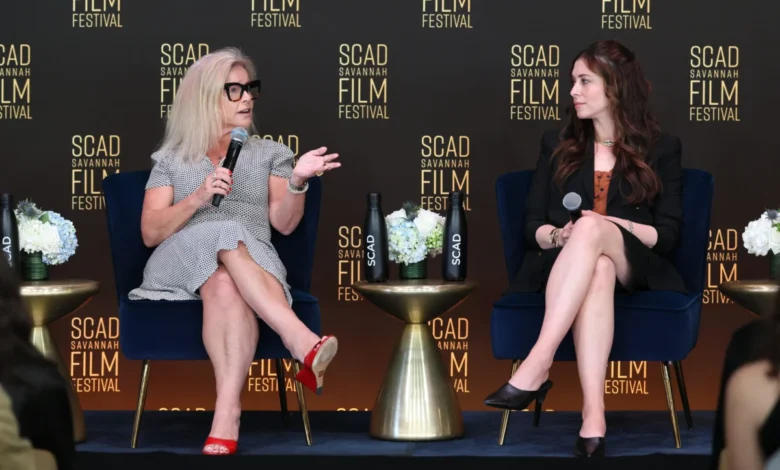
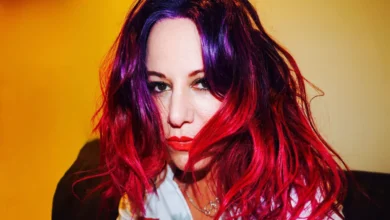
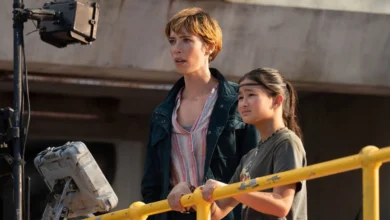
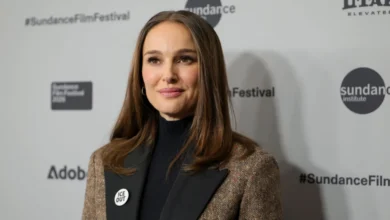
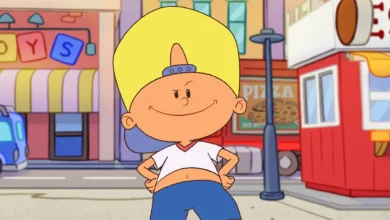
The 2026 SCAD Savannah Film Festival served as a major nexus for industry talent, hosting an array of specialized panel discussions organized by IndieWire’s Future of Filmmaking team. Among the most anticipated events of the multi-day festival was the "Behind Their Lens" producers panel, which brought together a trio of powerhouse industry veterans: Lauren Miller Rogen, producer of the upcoming animated feature "Tangles"; Alison Owen, known for her work on "Ghosts" and "Harlots"; and Carla Hacken, the veteran producer behind "The Devil Wears Prada."
Speaking before an attentive audience of film students, aspiring creators, and industry guests, the panel unpacked the complex realities of modern filmmaking. Their discussion ranged from the art of giving constructive story notes to navigating a rapidly consolidating media landscape. Beyond the technical mechanics of development and financing, the conversation underscored a fundamental truth of the entertainment industry: enduring a career in motion pictures requires unwavering persistence in the face of persistent structural obstacles.
Humble Beginnings and the Value of Peer Networks
The journey from aspiring creative to established producer rarely follows a linear path, a reality illustrated by Alison Owen as she recounted her entry into the British film ecosystem during the early 1980s. Before earning her stripes on major international productions, Owen’s de facto film school education took place entirely on location, forged through serendipitous encounters and a willingness to learn on the job.
"This was the early ’80s, when things were a lot looser, but they said, ‘There are no producers there. But if you want to learn about producing, go to Notting Hill, where the bus stops outside the Coronet in the morning and just stand there and get on the bus,’" Owen told the audience. She explained that she would ride out to the National Film School, where graduating students desperately needed reliable hands to help produce their final projects.
"They didn’t care that you hadn’t done anything," Owen recalled. "I didn’t know what a call sheet was or what PAs were or anything. But they were happy to have a pair of hands."
This grassroots hustle eventually brought her to a remote village in Wales to work on a senior graduation project. More importantly, it laid the foundation for a lifelong professional network. The peers she slept on mattresses with above pubs—including celebrated cinematographers like John Mathieson, who frequently collaborates with director Joe Wright—became the bedrock of her professional career.

"I always say to students, ‘Network with your peers,’" Owen emphasized. "They’re the people of the future that you’re going to want to get jobs from or hire."
The DIY Revolution and the Power of Reference
While Owen’s entry into the industry relied on physical proximity to film schools, contemporary creators often find their catalyst in disruptive independent cinema. For Lauren Miller Rogen, the turning point for her directorial and producing debut came from observing the low-budget, DIY ethos of the American indie scene.
Miller Rogen had written the script for her feature debut, "For a Good Time, Call…", years before it finally went into production. However, it was witnessing the micro-budget success of Lena Dunham’s "Tiny Furniture" that shattered her perception of what was required to get a film made.
"I saw ‘Tiny Furniture,’ and I thought, ‘Well, I could do that,’" Miller Rogen recounted. "And so I took the movie from the big producer, and I emailed my team and my writing partner, and I said, ‘We’re gonna make this on our own, and I’m gonna star in it.’ And they were like, ‘Whoa.’ And I was like, ‘No, that’s what we’re doing.’"
Driven by this conviction—and bolstered by financial connections through her brother, who worked in the finance sector—Miller Rogen successfully raised a $750,000 budget. The production schedule was remarkably compressed, shooting entirely in just 16 days.
The gamble paid off. The film secured a coveted slot at the Sundance Film Festival, where it was swiftly acquired by Focus Features for a theatrical release. Reflecting on the whirlwind experience, Miller Rogen admitted to a mixture of shock, pride, and fear regarding the film’s wide distribution, noting that while the theatrical landscape has contracted significantly since then, the digital era has opened unprecedented alternative pathways for independent creators.
Adapting to Consolidation and Emerging Distribution Channels
The challenges of getting a feature-length project financed and distributed have grown increasingly complex amid ongoing corporate consolidation across major studios and streaming services. Traditional financing models, once reliant on mid-budget theatrical returns, have largely vanished, forcing producers to rethink how stories are developed, packaged, and delivered to audiences.

Carla Hacken addressed these structural shifts directly, encouraging emerging filmmakers to look beyond traditional gatekeepers and embrace alternative mediums. Pointing to the viral success of independently produced internet horror phenomena like "Backrooms," Hacken argued that modern creators have unprecedented autonomy.
"I think you just said the most important thing for all of them is there’s so many ways for you guys to get your work out there now," Hacken noted, building upon Miller Rogen’s remarks. "The success of ‘Backrooms’ and all these YouTube horror shows should give you hope that, you know, write something good, produce something good, find a great story, and there are other ways to get it made than the way it used to be."
This sentiment highlights a broader paradigm shift within the entertainment industry. While legacy studio slates have grown more risk-averse, focusing heavily on intellectual property and franchise pre-sales, digital platforms and decentralized funding models have lowered the barrier to entry for creators who possess strong concepts and digital savvy.
Broader Implications for the Future of Filmmaking
The insights shared during the SCAD Savannah Film Festival panel arrive at a critical juncture for the global entertainment sector. With artificial intelligence, algorithmic content curation, and shifting consumer habits transforming media consumption, the foundational role of the producer is undergoing a profound evolution.
No longer functioning merely as logistical managers or financial intermediaries, today’s independent producers must act as entrepreneurial navigators capable of identifying multi-platform monetization strategies, fostering direct-to-consumer communities, and maintaining creative integrity within a volatile corporate climate.
Furthermore, the emphasis placed by Owen, Miller Rogen, and Hacken on peer collaboration underscores the enduring importance of human networks. As automated tools and virtual production technologies streamline the technical execution of filmmaking, the ability to build cohesive, trust-based creative teams remains an irreplaceable asset.
For the students and aspiring professionals gathered in Savannah, the panel offered both a sobering reality check regarding the persistence required to survive in the business and an empowering roadmap for the future. By combining the old-school hustle of grassroots networking with the agile utilization of modern digital distribution, the next generation of producers may find that the path to the screen is more flexible—and more democratic—than ever before.