Criminal Minds Evolution Cancellation Marks the End of a Two-Decade Procedural Drama Legacy

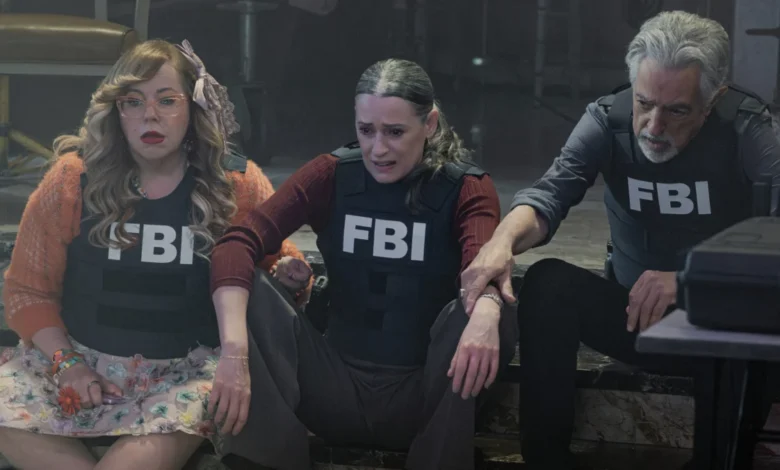
The television landscape is preparing to bid farewell to one of its most enduring and resilient franchises as Paramount+ officially confirms that Criminal Minds: Evolution will conclude with its upcoming twentieth season. The announcement brings down the curtain on a remarkable twenty-year television journey that spanned two distinct network eras, weathered numerous industry shifts, and cultivated one of the most dedicated fanbases in modern procedural television history. Following the official cancellation news, members of the beloved ensemble cast, creative leadership, and industry observers have begun reflecting on the profound impact of the series, the legacy of the Behavioral Analysis Unit, and what the ultimate conclusion means for the future of serialized crime dramas in the streaming era.
Cast and Crew Reactions to the Final Season Announcement
As the reality of the impending series finale sets in, stars of the Paramount+ procedural have taken to social media to share their gratitude, humor, and emotional farewells with the global audience that supported them for two decades. Paget Brewster, who commands the screen as BAU Unit Chief Emily Prentiss, offered a characteristically tongue-in-cheek response to her sudden transition, posting a selfie accompanied by the succinct caption, “Free Agent…” Brewster’s leadership on screen has served as the anchor of the team through multiple casting overhauls, network transitions, and narrative reinventions.
Meanwhile, Kirsten Vangsness, whose portrayal of quirky, brilliant technical analyst Penelope Garcia became the emotional heartbeat of the series, shared a deeply reflective message on Instagram. “My heart fireworks in appreciation for the time at this job @criminalminds and my cohorts at fake murder camp,” Vangsness wrote. In an accompanying video breaking down the news for her followers, Vangsness pointed out the bittersweet phrasing surrounding the announcement, noting a glimmer of hope for the future of the intellectual property. “This has happened,” she remarked while displaying headlines of the cancellation. “It’s being canceled, but then it says right there, ‘It’s ending for now.’”
Vangsness further highlighted comments from longtime showrunner Erica Messer, who indicated that the narrative universe still holds boundless potential. “There’s so many more stories to tell,” Vangsness added. “So, if we get to keep telling them somewhere, that would be amazing. And I know all of us feel the same way.”
RJ Hatanaka, who brought sharp tactical skills and emotional depth to the later iterations of the series as Special Agent Tyler Green, shared a poignant cast photograph capturing the camaraderie behind the scenes. “Just the finest group of people,” Hatanaka captioned his post, echoing the sentiment of a tight-knit ensemble that weathered intense thematic subject matter and rigorous production schedules together.
A Historic Television Chronology: From CBS to Paramount+
To fully understand the magnitude of the Criminal Minds: Evolution cancellation, one must look back at the extraordinary longevity and adaptability of the franchise. The original Criminal Minds premiered on September 22, 2005, on the CBS television network, quickly establishing itself as a dominant force in the procedural landscape. Centered on an elite team of FBI profilers tasked with delving into the darkest corners of criminal psychology to anticipate the next moves of unpardonable offenders before they struck again, the series became a Sunday-night staple for millions of households.
Throughout its initial fifteen-season run on CBS, which concluded on February 19, 2020, the series underwent numerous high-profile casting changes. Beloved characters came and went, including iconic turns by Mandy Patinkin, Thomas Gibson, Shemar Moore, Matthew Gray Gubler, Joe Mantegna, A.J. Cook, and Aisha Tyler. Despite behind-the-scenes turmoil, budget negotiations, and shifting television trends, the series maintained remarkable syndication value and linear ratings stability.
However, as traditional broadcast viewing habits evolved, the franchise found a lucrative second wind in the burgeoning streaming ecosystem. In July 2022, Paramount+ officially greenlit a revival titled Criminal Minds: Evolution, designed to serve as a serialized, darker, and more mature continuation of the original premise. Dropping episodic constraints in favor of a season-long serialized arc tracking a sophisticated network of serial killers cultivated during the COVID-19 pandemic, the revival successfully captured both nostalgic long-term viewers and a new demographic of streaming enthusiasts.
The announcement of the cancellation on Friday marks a significant transitional milestone for the platform, arriving as the first major scripted decision under Skydance-appointed leadership following recommendations set forth by the previous Paramount+ regime.
Showrunner Erica Messer Reflects on Two Decades of Storytelling
Erica Messer, who has steered the ship of the franchise through its various iterations as showrunner and executive producer, released a heartfelt statement addressing the milestone conclusion.
“It’s hard to put into words what Criminal Minds has meant to all of us who have been fortunate enough to be part of this extraordinary journey, first on CBS for 15 seasons and then on Paramount+ for five,” Messer stated. “While suddenly navigating the end of this chapter, I’m filled with gratitude for our remarkable cast, writers, directors and crew who have poured their hearts into this show, and for the incredible fans around the world whose unwavering loyalty has kept Criminal Minds going for two decades. We’re looking forward to sharing Season 20 with everyone, and celebrating the legacy of this special show we’ve all built together.”
Production on the twentieth season wrapped earlier this fall, positioning the upcoming run—slated to premiere in 2027—as a meticulously crafted farewell designed to honor the rich history of the characters and provide a definitive, emotionally resonant conclusion for the audience. Because the episodes were completed ahead of the cancellation announcement, the writers and producers approached the season with narrative intention, ensuring that the sprawling arcs of the BAU operatives receive the dramatic weight they deserve.
Broader Industry Implications and the Changing Face of Streaming Procedurals
The conclusion of Criminal Minds: Evolution underscores a broader, rapidly accelerating shift within the television industry regarding long-running intellectual properties and streaming economics. In the early days of the streaming boom, subscription-based platforms actively courted established broadcast hits with built-in global fanbases to drive subscriber acquisition and retention. Revivals of older properties offered a low-risk, high-reward strategy for platforms seeking immediate engagement.
However, as the streaming market has matured and companies face mounting pressure to achieve profitability, budgetary constraints have tightened considerably. Prestige-budgeted streaming revivals often face escalating talent costs as shows progress into later seasons. While Criminal Minds: Evolution maintained strong engagement metrics, the economic realities of producing high-end serialized television in an era of corporate consolidation and leadership restructuring have led to a more disciplined approach to content commissioning.
Furthermore, the cancellation reflects the finite nature of serialized storytelling on modern platforms. Unlike traditional broadcast networks, where successful procedurals could comfortably push past the 300-episode mark through syndication incentives, streaming series frequently cap their runs to manage long-term residuals, escalating backend costs, and audience fatigue.
The Legacy of the Behavioral Analysis Unit
As the countdown to the final season begins, the cultural footprint of Criminal Minds remains undeniable. Over twenty years, the series popularized the vernacular of criminal profiling, forensic psychology, and behavioral analysis within popular culture. It educated viewers on the nuances of geographic profiling, victimology, and signature behaviors, all while anchoring its narrative weight in the psychological resilience required of law enforcement professionals who confront humanity’s deepest depravities on a daily basis.
Beyond the procedural mechanics, the enduring appeal of the franchise has always rested on the palpable sense of family among the BAU agents. The phrase "We are the BAU," frequently invoked by characters as a reminder of their shared solidarity and mutual protection, transcended the screen to become a rallying cry for an exceptionally passionate global fan community.
Looking ahead to the 2027 premiere of Season 20, the cast, crew, and audience share a bittersweet anticipation. While the closure of the division marks the end of an era for network and streaming television alike, the foundational impact of the series ensures that the legacy of Emily Prentiss, Penelope Garcia, David Rossi, Jennifer Jareau, Tara Lewis, Luke Alvez, and Tyler Green will continue to resonate in syndication and streaming libraries for generations to come.
Related posts: