The World Health Organization (WHO) officially announced that Timor-Leste has successfully eliminated indigenous malaria transmission, a monumental public health victory for a country that faced significant obstacles in the wake of its independence in 2002. This certification follows years of rigorous assessment, confirming that the nation has successfully interrupted the chain of indigenous transmission for at least three consecutive years. With this achievement, Timor-Leste joins a select group of nations that have successfully eradicated the disease, becoming the third country in the WHO South-East Asia region to reach this status, following the Maldives in 2015 and Sri Lanka in 2016.
A Journey from High Burden to Zero Cases
The trajectory of malaria control in Timor-Leste is a testament to the efficacy of sustained political will and targeted medical intervention. In 2006, the country faced a severe crisis, reporting over 223,000 clinically diagnosed malaria cases. The burden was immense, straining the nascent health infrastructure of a nation still rebuilding its social and administrative foundations following the restoration of independence.
The path to elimination began in earnest in 2003 with the creation of the National Malaria Programme. At its inception, the program was remarkably lean, staffed by only two full-time officers. Despite these limited resources, the program established the core technical and managerial strategies that would eventually break the transmission cycle. By shifting from a reactive model to a proactive, surveillance-based approach, the government systematically reduced the malaria footprint over the next two decades, culminating in zero indigenous cases reported from 2021 onwards.
Strategic Interventions and Public Health Architecture
The success of Timor-Leste’s malaria eradication program is attributed to a multi-pronged approach that integrated clinical treatment, community-level prevention, and robust surveillance.
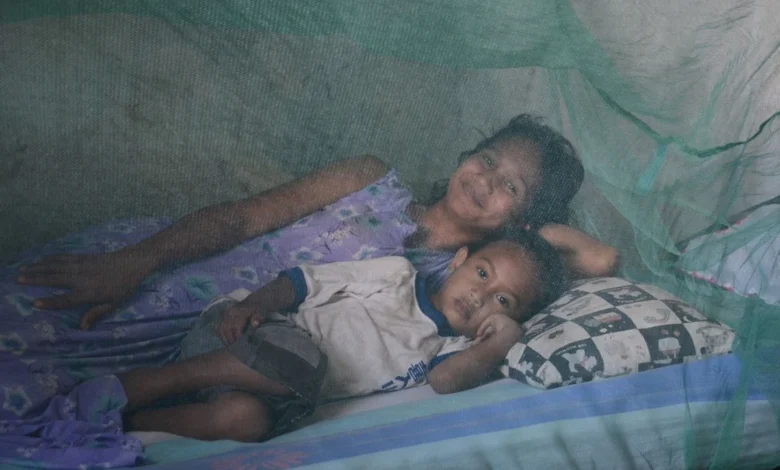
Following the establishment of the National Malaria Programme, the Ministry of Health moved quickly to standardize clinical responses. The introduction of artemisinin-based combination therapies (ACTs) and rapid diagnostic tests (RDTs) allowed for more accurate and timely treatment. These advancements were bolstered by the distribution of long-lasting insecticidal nets (LLINs) to high-risk populations, particularly in remote and rural areas where the parasite—primarily Plasmodium falciparum and Plasmodium vivax—found its most fertile ground.
The acceleration of these efforts occurred in 2009, when the government, supported by the Global Fund to Fight AIDS, Tuberculosis and Malaria, significantly expanded vector control measures. This included large-scale indoor residual spraying and the saturation of community health centers with microscopy equipment and diagnostic kits. By the time the final push for elimination was initiated, the country had established a three-tier health system that ensured most residents, even in the rugged terrain of the interior, were within an hour’s walk of a functional health post or community health center.
Institutional Resilience and Universal Healthcare
A critical component of Timor-Leste’s success was its commitment to universal health coverage. The government’s policy of providing free health services at the point of care removed financial barriers that often prevent vulnerable populations from seeking treatment. By integrating mobile clinics and community outreach into the broader health architecture, the Ministry of Health was able to reach the "last mile," ensuring that even the most isolated communities were monitored.
The implementation of a real-time integrated case-based surveillance system proved decisive. By tracking every diagnosed case and mapping it to specific geographic regions, health officials were able to respond with "ring fencing"—an approach involving rapid testing, treatment, and vector control in the immediate vicinity of a reported case. This level of granular data management effectively choked off the potential for localized outbreaks to evolve into regional epidemics.
Official Statements and Global Recognition
The announcement was met with significant praise from global health leaders who view the achievement as a blueprint for other developing nations. Dr. Tedros Adhanom Ghebreyesus, the WHO Director-General, noted that the achievement is a clear demonstration that malaria can be neutralized when political leadership, investment, and dedicated health labor are aligned.
Dr. Ália António de Araújo dos Reis Amaral, the Minister of Health for Timor-Leste, characterized the victory as a tribute to the resilience of the nation’s health workers. "We did it. Malaria has been one of our most relentless enemies—silent, persistent, and deadly," she stated. "From 223,000 cases to zero—this elimination honors every life lost and every life now saved. We must safeguard this victory with continued vigilance."
Dr. Arvind Mathur, the WHO Representative to Timor-Leste, underscored the "grit" required to reach this status. He highlighted that while science provided the tools, it was the administrative discipline and the sustained focus of the government that ensured the country did not falter during the final stages of the elimination campaign.
Implications for the South-East Asia Region
Timor-Leste’s success carries significant implications for the WHO South-East Asia region, which has long grappled with high malaria burdens. The certification process, which is overseen by the Technical Advisory Group on Malaria Elimination and Certification, is notoriously stringent. It requires a country to provide "proof beyond reasonable doubt" that indigenous transmission has been completely halted.
By successfully navigating this process, Timor-Leste has demonstrated that malaria elimination is achievable even in resource-constrained environments. The primary challenge moving forward will be preventing the re-introduction of the parasite, particularly through international travel and border movement. To address this, the government has already implemented enhanced screening protocols at points of entry, ensuring that the country’s malaria-free status remains protected by vigilant monitoring.
A Legacy of Progress
The eradication of malaria is not merely a statistical success; it is a foundational change for the country’s development. The resources previously diverted to the treatment and management of malaria can now be reallocated toward other pressing health priorities, such as non-communicable diseases, maternal health, and malnutrition.
Furthermore, the institutional capacity built during the malaria campaign—specifically the surveillance networks, the laboratory infrastructure, and the trained community health workforce—provides a sturdy framework for managing future public health threats. Timor-Leste has demonstrated that a focused, well-managed national program can overcome decades of endemic disease.
As the international community acknowledges this milestone, the focus now shifts toward the "prevention of re-establishment" phase. The WHO continues to work closely with the Timor-Leste Ministry of Health to maintain high-quality diagnostic coverage and to ensure that the public health system remains agile enough to respond to any imported cases.
The story of Timor-Leste’s fight against malaria is one of transformation. In two decades, the nation has evolved from a state where thousands were succumbing to a preventable disease every year to a model of health security. It is a defining chapter in the country’s post-independence history, illustrating that with the right combination of international support and domestic resolve, even the most persistent global health threats can be overcome. The certification serves as a beacon for other nations currently working toward their own elimination targets, proving that the vision of a malaria-free world is a tangible reality.
Related posts: