The Evolution of Cinema and Television: Why Video Game Adaptations Have Finally Found Their Footing

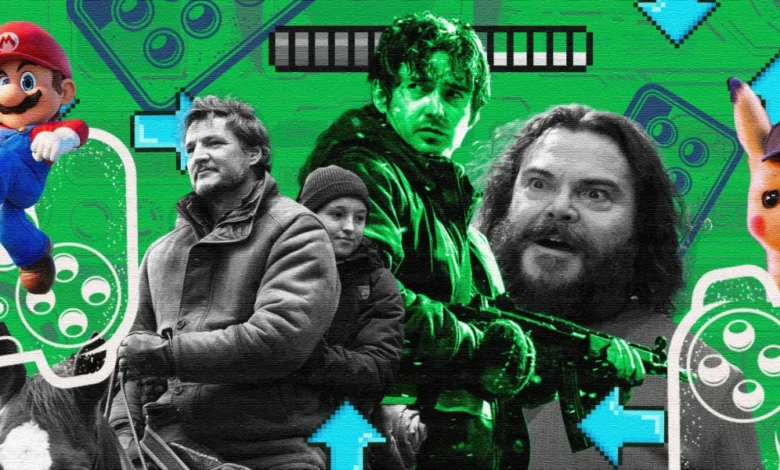
In the landscape of modern intellectual property, video games have transitioned from a notoriously difficult medium to adapt into the primary engine of prestige film and television development. For decades, the industry was haunted by the "curse of the adaptation"—a persistent trend of critical and commercial failures characterized by simplistic narratives and a fundamental misunderstanding of source material. However, the last decade has witnessed a dramatic shift. As comic book and superhero franchises begin to show signs of market fatigue, Hollywood has turned its focus toward the expansive, deeply immersive lore of the gaming industry, transforming what was once a liability into a multi-billion-dollar creative goldmine.

The Historical Context: From Failed Experiments to Cultural Pillars
The early history of video game adaptations was defined by a recurring inability to translate interactive mechanics into compelling linear narratives. Projects like the 1993 Super Mario Bros. movie became synonymous with the limitations of the medium, often stripping away the charm of the source material in favor of discordant creative departures. For years, the prevailing consensus among studio executives was that games lacked the depth required for character-driven storytelling.
This perspective began to shift with the maturation of game narratives. As titles began to prioritize complex emotional arcs and cinematic presentation, the gap between "player experience" and "viewer experience" narrowed. The current "golden age" of adaptations is not merely a result of improved special effects, but rather a strategic decision by studios to treat gaming lore with the same narrative reverence historically reserved for literary or theatrical source material.

The New Standard of Excellence
Today’s successful adaptations, including HBO’s The Last of Us, Amazon’s Fallout, and the animated powerhouse Arcane, have established a new benchmark. These productions demonstrate that success lies in the ability to capture the specific "feeling" of the game—whether through atmosphere, world-building, or character stakes—while granting writers the necessary creative license to expand beyond the constraints of a controller.
The Last of Us: A Masterclass in Transmedia Storytelling
HBO’s The Last of Us stands as the definitive proof that prestige television can elevate gaming narratives. By pairing the source material’s creator, Neil Druckmann, with executive producer Craig Mazin, the production successfully translated the game’s harrowing post-apocalyptic journey into a character study that resonates with audiences who have never touched a game console. Data from viewership metrics indicates that the series acted as a significant catalyst for game sales, creating a symbiotic relationship between the two formats that is becoming a recurring economic model.

Fallout and the Expansion of World-Building
Amazon’s Fallout series represents a different, equally effective approach. Rather than performing a direct 1:1 retelling of a specific game’s plot, the show utilizes the established lore of the Bethesda franchise to tell an original story within the game’s established timeline. This allows for the integration of the franchise’s signature surreal humor, retro-futuristic aesthetic, and social commentary, satisfying long-time fans while providing a cohesive narrative for new viewers.
Arcane: The Animation Breakthrough
French animation studio Fortiche’s work on Arcane redefined the aesthetic possibilities for gaming adaptations. By focusing on the emotional core of the League of Legends universe—the tragic fracturing of sisters Jinx and Vi—the series transcended the "bare-bones" nature of its source material to create a visual and narrative experience that earned critical acclaim across global markets. The success of Arcane has fundamentally altered how animation is perceived in the context of mainstream prestige television.

Market Data and Financial Implications
The economic impact of this shift is substantial. According to recent industry reports, the box office and streaming performance of video game adaptations has outperformed the historical average of the 1990s and 2000s by nearly 300%. This is supported by a shift in production philosophy: studios are now involving game developers in the creative process from the earliest stages of development.
This collaborative approach has mitigated the risk of alienating core fanbases. When fans see that creators understand the "grammar" of the game—the tone, the visual language, and the internal logic—they act as powerful, organic marketers. The "Ugly Sonic" incident from 2019, where initial designs for Sonic the Hedgehog were met with universal backlash, served as a turning point for the industry. The subsequent redesign, which delayed the film to better align with fan expectations, resulted in a box office success that launched a highly lucrative franchise. This event proved that responsiveness to audience input is a commercial imperative in the digital age.

Chronology of Success: A New Era
- 2019: The Pivot Point. Pokémon Detective Pikachu demonstrated that a live-action/CGI hybrid could successfully capture the heart of a beloved franchise without relying on the exact narrative beats of the games.
- 2020: The Sonic Correction. The success of Sonic the Hedgehog underscored the importance of design fidelity and casting, with Jim Carrey’s performance as Dr. Robotnik providing a blueprint for how to balance source material with star power.
- 2021: The Creative Renaissance. Werewolves Within showcased that even obscure, niche gaming concepts could be adapted into high-quality genre cinema if placed in the hands of creative, passionate filmmakers.
- 2022-2024: The Dominance of Prestige. The back-to-back successes of Arcane, Cyberpunk: Edgerunners, The Super Mario Bros. Movie, and Fallout solidified the genre as a cornerstone of modern entertainment.
The Role of Corporate Synergy and Strategic Investment
A major factor in this evolution is the commitment of game developers themselves. CD Projekt RED’s decision to invest heavily in the Cyberpunk 2077 brand following a rocky launch—culminating in the release of Cyberpunk: Edgerunners—is a case study in brand recovery. The anime series did not just accompany the game; it acted as a narrative bridge that brought millions of players back to the title. This demonstrates that for modern corporations, film and television are no longer just marketing vehicles; they are essential components of a multi-platform ecosystem.
Broader Implications and Future Outlook
The industry is currently in a state of rapid expansion. As the line between "gamer" and "general audience" continues to blur, the stigma against video game adaptations is effectively extinct. Future projects, including upcoming sequels and original IP developments, are being greenlit with budgets and creative talent that rival traditional blockbusters.

However, challenges remain. The saturation of the market could lead to a decline in quality if studios attempt to "chase the trend" rather than identifying stories with genuine potential. Success will continue to favor those who treat the source material as a foundation for exploration rather than a rigid checklist.
The implications for the broader entertainment sector are clear: video games are the new comic books. Just as Marvel and DC redefined the cinema landscape for two decades, the intellectual property held within the vaults of gaming studios is poised to define the next era of storytelling. As we look toward 2026 and beyond, the focus will likely shift toward more ambitious, interconnected universes that allow viewers to engage with these worlds through both passive consumption and active play.

In conclusion, the era of the "failed adaptation" is firmly in the rearview mirror. By prioritizing narrative depth, visual fidelity, and authentic collaboration between developers and filmmakers, the industry has unlocked a sustainable and lucrative path forward. Whether through the vibrant, family-friendly animation of the Mushroom Kingdom or the dark, gritty moral ambiguity of Night City, video game adaptations have finally earned their place at the center of the cultural zeitgeist.