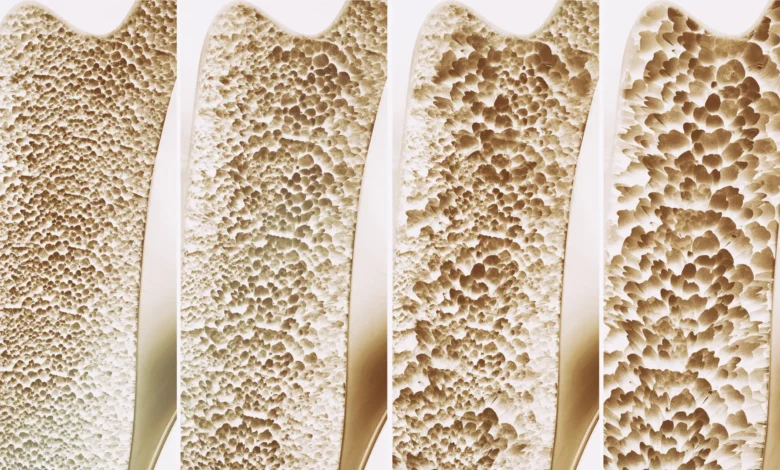
The global medical community faces an escalating crisis in managing degenerative musculoskeletal conditions, chief among them being osteoporosis—a systemic skeletal disease characterized by low bone mass and micro-architectural deterioration of bone tissue. This pathological degradation significantly escalates bone fragility and susceptibility to fractures, predominantly affecting the aging demographic. In Germany alone, approximately six million individuals live with osteoporosis, with postmenopausal women representing the overwhelming majority of those afflicted. Despite the availability of various therapeutic interventions, current clinical options frequently present limitations regarding long-term safety, patient adherence, and efficacy, creating an urgent demand for novel biological targets capable of arresting or reversing bone degeneration safely over extended periods.
Addressing this critical medical need, a team of researchers at Leipzig University has identified a promising new avenue for therapeutic intervention. By focusing on a little-understood cellular surface sensor known as GPR133, the scientific team has demonstrated its pivotal role in maintaining skeletal integrity. The findings not only illuminate the fundamental mechanisms governing bone metabolism but also introduce a synthetic compound, AP503, capable of stimulating the receptor to dramatically enhance bone strength in both healthy and osteoporotic preclinical models. This breakthrough holds profound implications for the future of geriatric medicine, particularly given its parallel capacity to strengthen skeletal muscle tissue.
The Anatomy of an Adhesion Receptor: Unraveling GPR133
To understand the magnitude of the Leipzig discovery, one must examine the complex nature of adhesion G protein-coupled receptors (aGPCRs). These specialized proteins reside on the outer membrane of mammalian cells, acting as critical molecular sentinels that allow cells to sense and respond to mechanical and chemical signals from their surrounding microenvironment. Unlike traditional G protein-coupled receptors, aGPCRs possess exceptionally long extracellular amino-terminal regions equipped with various adhesion domains, enabling them to mediate cellular adhesion and decipher physical forces within tissues.
Despite their ubiquity and importance in human physiology, adhesion GPCRs have historically been categorized among the most elusive and poorly understood receptor families in molecular biology. GPR133, in particular, remained largely overlooked in clinical pharmacology until recent years. However, genetic investigations conducted by the Leipzig research team revealed that disruptions or mutations in the gene encoding GPR133 lead to detrimental skeletal phenotypes. Specifically, murine models exhibiting impaired GPR133 function manifest premature reductions in bone density, closely mimicking the pathogenesis of human osteoporosis at an early developmental stage.
Professor Ines Liebscher, lead investigator of the study from the Rudolf Schönheimer Institute of Biochemistry at Leipzig University’s Faculty of Medicine, elaborates on the mechanism. "If this receptor is impaired by genetic changes, mice show signs of loss of bone density at an early age—similar to osteoporosis in humans. Using the substance AP503, which was only recently identified via a computer-assisted screen as a stimulator of GPR133, we were able to significantly increase bone strength in both healthy and osteoporotic mice," Professor Liebscher explains.
This revelation positions GPR133 not merely as a passive structural marker, but as an active master regulator of skeletal homeostasis. By identifying AP503 through advanced computer-assisted screening methodologies, the researchers bridged the gap between theoretical molecular biology and practical pharmacology, transforming an obscure receptor into a viable therapeutic target.
Chronology of Discovery: A Decade of GPCR Research in Leipzig
The identification of GPR133 as a bone-strengthening target does not represent an isolated scientific fluke, but rather the culmination of over a decade of meticulous, sustained research at Leipzig University. The institution has long prioritized the investigation of adhesion G protein-coupled receptors, cementing its status as an international epicenter for structural biology and pharmacological signaling research.
The foundational work underpinning the recent osteoporosis breakthrough was substantially propelled by Collaborative Research Center 1423 (CRC 1423), titled "Structural Dynamics of GPCR Activation and Signaling." Established to decode the intricate conformational changes that occur when adhesion GPCRs become activated, the consortium has spent years mapping how these receptors transmit chemical and mechanical signals across the cell membrane.
Over the past ten years, researchers within this collaborative framework systematically cataloged the expression patterns of various aGPCRs across different human tissues. Through rigorous biochemical assays, high-resolution structural imaging, and computational screening, the Leipzig team narrowed their focus onto receptors that exhibited significant expression in musculoskeletal tissues. This prolonged dedication ultimately enabled the high-throughput, computer-assisted identification of AP503 as a selective agonist for GPR133.
This chronological progression—moving from broad theoretical mapping of receptor dynamics under CRC 1423 to targeted small-molecule screening and subsequent in vivo validation in murine models—exemplifies the methodical rigor required in modern translational pharmacology. The trajectory highlights how foundational, publicly funded basic science can ultimately yield high-impact clinical candidates for prevalent age-related diseases.
Cellular Dynamics: How GPR133 Rebalances Bone Remodeling
Skeletal health relies on a continuous, highly regulated physiological process known as bone remodeling. Throughout an individual’s lifetime, old or micro-damaged bone tissue is systematically removed and replaced with newly synthesized matrix. This delicate equilibrium depends on the coordinated actions of two primary cell lineages: osteoblasts, which are responsible for bone formation, and osteoclasts, which execute bone resorption.
In a healthy skeleton, the activities of osteoblasts and osteoclasts are perfectly synchronized to maintain bone mineral density and structural integrity. However, pathological states such as postmenopausal osteoporosis disrupt this balance. Declining estrogen levels in women accelerate osteoclast activity while suppressing osteoblast function, resulting in a net loss of bone mass that renders the skeleton porous, brittle, and prone to debilitating fractures.
The Leipzig study elucidates how GPR133 acts as a molecular switch capable of correcting this cellular imbalance. Within the bone microenvironment, GPR133 responds to mechanical loading and physical forces, as well as biochemical signals passing between adjacent bone cells. Upon activation by mechanical cues or pharmacological agents like AP503, the receptor triggers an intracellular signaling cascade that modulates the transcriptional profiles of bone-dwelling cells.
Specifically, the activation of GPR133 stimulates the proliferation and differentiation of osteoblasts, enhancing their capacity to synthesize extracellular matrix proteins and mineralize bone tissue. Simultaneously, the signaling pathway exerts an inhibitory effect on osteoclastogenesis, reducing the maturation and resorptive activity of bone-breaking cells. By concurrently upregulating bone formation and downregulating bone resorption, AP503 shifts the cellular equilibrium firmly toward the generation of denser, stronger, and more durable bone tissue.
This dual-action mechanism distinguishes GPR133 stimulation from many existing pharmaceutical interventions. While traditional anti-resorptive medications primarily focus on halting bone loss, and anabolic therapies concentrate on building new bone, targeting GPR133 offers a harmonized approach that simultaneously fosters formation and curtails resorption.
Broad Implications for Aging Populations: The Bone-Muscle Axis
One of the most exciting dimensions of the Leipzig University discovery is its potential to address more than just skeletal pathology. Aging populations frequently suffer from a dual decline in both bone density and skeletal muscle mass—a correlated syndrome known clinically as osteosarcopenia. The concurrent loss of bone strength and muscle power drastically increases the incidence of falls, severe fractures, mobility loss, and subsequent mortality among older adults.
Crucially, the therapeutic utility of AP503 extends beyond the skeleton. In an earlier study conducted by the same research group at Leipzig University and published in prominent scientific literature, investigators discovered that pharmacological activation of GPR133 with AP503 simultaneously strengthens skeletal muscle tissue.
Dr. Juliane Lehmann, lead author of the study and a researcher at the Rudolf Schönheimer Institute of Biochemistry, emphasizes the compounding medical benefits of this dual-tissue effect. "The newly demonstrated parallel strengthening of bone once again highlights the great potential this receptor holds for medical applications in an aging population," Dr. Lehmann notes.
A therapeutic compound capable of concurrently enhancing bone mineralization and improving skeletal muscle function would represent a paradigm shift in geriatric care. By bolstering muscle mass and strength, patients gain improved postural stability, better coordination, and enhanced physical mobility, directly lowering the probability of experiencing a fall. Simultaneously, the reinforced skeletal architecture ensures that if a fall or impact does occur, the bones possess the requisite structural resilience to resist fracturing. This synergistic protection could dramatically improve the quality of life and functional independence of millions of elderly individuals worldwide.
Future Directions and Ongoing Research at Leipzig
Building upon these encouraging preclinical milestones, the research team at Leipzig University is aggressively pursuing a comprehensive agenda of follow-up investigations. The immediate scientific objective involves deepening the physiological mapping of GPR133 to fully chart its distribution, regulation, and signaling pathways across various human organ systems.
Concurrently, researchers are exploring whether the therapeutic utility of AP503 can be expanded beyond osteoporosis and sarcopenia to encompass other degenerative, inflammatory, or metabolic diseases. Because adhesion GPCRs are involved in a myriad of physiological processes—including angiogenesis, immunity, and central nervous system development—understanding the broader systemic functions of GPR133 remains a critical priority for ensuring future pharmacological safety and target specificity.
As the scientific community digests these findings, the path toward clinical translation will require extensive pharmacokinetic and pharmacodynamic optimization of AP503 or its derivatives, followed by rigorous phase clinical trials in human subjects. While translating a preclinical murine discovery into an FDA- or EMA-approved human therapeutic is a notoriously arduous and time-consuming endeavor, the identification of GPR133 provides a clear, highly promising biological roadmap.
Conclusion: A New Horizon in Musculoskeletal Therapeutics
Osteoporosis remains a silent epidemic, frequently remaining undiagnosed until a catastrophic fracture occurs. With demographic shifts pointing toward an increasingly aged global population, the social, economic, and healthcare burdens associated with bone and muscle degeneration are projected to soar over the coming decades.
The breakthrough achievement by Professor Ines Liebscher, Dr. Juliane Lehmann, and their colleagues at Leipzig University opens an inspiring new chapter in medical research. By spotlighting the adhesion G protein-coupled receptor GPR133 and demonstrating the restorative efficacy of its agonist AP503, the research team has provided a sophisticated, multifaceted strategy for preserving human mobility and vitality. As ongoing studies progress, the medical community moves one step closer to realizing therapies that can truly fortify the aging human body from the cellular level upward.