Indigenous land restitution in Chile brings mixed bag of environmental outcomes according to recent study

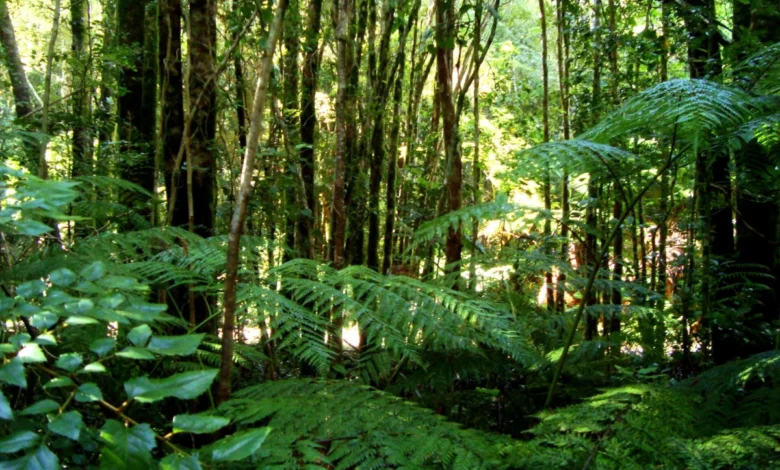
The long-standing struggle for Indigenous land rights in Chile has reached a complex intersection with environmental science, as a new study published in the journal Nature Sustainability reveals that land restitution for Mapuche communities does not automatically result in the restoration of native forests or immediate ecological recovery. The research, which analyzed 1,577 properties returned to 36 Mapuche communities between 1994 and 2022, challenges the prevailing global narrative that Indigenous self-determination is a guaranteed panacea for conservation goals.
While the return of ancestral territory has proven successful in dismantling industrial-scale monoculture plantations and curbing certain corporate land-use practices, the data suggests that these lands have not seen a significant uptick in carbon sequestration, biodiversity enrichment, or soil erosion control. This finding has ignited a critical debate among academics, policymakers, and Indigenous leaders regarding the purpose of land rights and the expectations placed upon marginalized communities to act as the primary stewards of global climate targets.
The Mechanism of Restitution: The FTAI Program
The Chilean Indigenous Land and Water Fund (FTAI), established under the 1993 Indigenous Law, serves as the primary instrument for addressing historical dispossession. Its mandate is to purchase land from private owners or state entities and transfer the title to Indigenous communities. Over the course of nearly three decades, the program has facilitated the return of approximately 217,716 hectares (roughly 538,000 acres) across the Biobío, Araucanía, Los Ríos, and Los Lagos regions.
However, the process is fraught with bureaucratic hurdles. The National Corporation for Indigenous Development (CONADI), the state agency responsible for overseeing these transfers, has faced sustained criticism for its lack of efficiency. In some documented instances, land claims have remained in the processing stage for up to 25 years. This delay has contributed to a cycle of frustration and instability, occasionally escalating into violent land disputes between local communities, private landowners, and forestry corporations.

In June 2023, the administration of President Gabriel Boric acknowledged the severity of the crisis by establishing a special commission to address the backlog and the broader conflict in Mapuche territories. Current estimates from the commission suggest that, at the current pace of operations, it would take between 80 and 162 years to resolve all pending claims within the CONADI system, highlighting a massive structural failure in the state’s commitment to land restitution.
Historical Context and Current Land Use
To understand the environmental state of the returned land, it is necessary to examine the historical trajectory of the Mapuche heartland. Historically, the region was characterized by dense temperate rainforests. However, the arrival of Spanish settlers in the 16th century marked the beginning of a centuries-long transformation. The introduction of European livestock changed the economic focus of the region, and subsequent military campaigns in the late 19th century stripped the Mapuche of more than 90% of their ancestral territory.
By the time the FTAI program began returning land, the ecological landscape had been irrevocably altered. Large swathes of the territory had been converted into wheat fields or, more recently, industrial pine and eucalyptus plantations. Consequently, the land returned to the Mapuche is often fragmented, degraded, and largely devoid of the native biodiversity that once defined the Valdivian temperate forest ecoregion.
The study indicates that once communities regain control, their immediate priority is often the survival of their households and the preservation of cultural traditions. The researchers noted an expansion of grasslands for livestock production—a practice deeply embedded in Mapuche culture following the Spanish conquest—at the expense of commercial logging plantations. While this move signifies an act of autonomy and a rejection of industrial forestry, it does not necessarily translate into "rewilding" or carbon-heavy forest restoration, as these activities require significant capital, technical support, and time.
The "Romanticized" View of Indigenous Stewardship
Robert Heilmayr, an associate professor at the University of California, Santa Barbara, and a co-author of the study, notes that the research serves as a necessary correction to the "romanticized" views often held by international conservationists. There is a persistent assumption in Western environmental discourse that Indigenous peoples will inherently prioritize the maximization of carbon sequestration or biodiversity protection.

"The findings complicate this narrative," Heilmayr stated. "True self-determination only emerges when Indigenous communities define for themselves what land uses align with their needs and values." He argues that expecting Indigenous communities to serve as the world’s carbon sinks ignores the economic realities of communities that have been systematically marginalized and dispossessed of their resources for generations.
This perspective is echoed by Verónica Figueroa Huencho, a Mapuche academic at the University of Chile. Huencho warns against the dangers of evaluating land restitution through a narrow environmental lens. She argues that conditioning the return of land on the expectation of "positive" environmental outcomes—as defined by non-Indigenous institutions—is a form of neo-colonialism.
"The lands are not returned because a community captures more carbon, but because there was dispossession and because Indigenous peoples have the right to decide their development priorities," Huencho stated. She emphasizes that while the relationship with Ñuke Mapu (Mother Earth) is a fundamental pillar of Mapuche culture, the burden of fixing the environmental damage caused by state-backed industrialization should not be placed solely on the shoulders of the victims of that dispossession.
Broader Implications for Global Conservation
The implications of this study extend far beyond the borders of Chile. Globally, as nations push for the protection of 30% of the planet’s land and sea by 2030, there is an increasing reliance on Indigenous-led conservation. The Chilean case study provides a cautionary tale for international policy: without adequate infrastructure, financial resources, and, most importantly, the recognition of genuine self-determination, the goals of environmental restoration and Indigenous justice may remain in conflict.
Research has shown that the environmental impacts of Indigenous land tenure are not monolithic. In the Amazon, for instance, Indigenous territories are among the most effective buffers against deforestation. Conversely, in other parts of South America, such as parts of Bolivia and Peru, some Indigenous lands have become net carbon sources due to the necessity of subsistence agriculture and the lack of alternatives in the face of encroaching extractive industries.
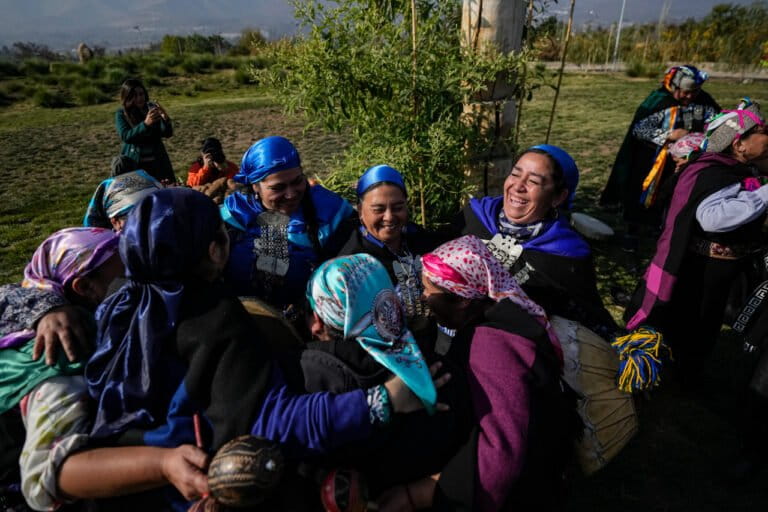
The Chilean research highlights a critical missing piece in the environmental strategy puzzle: the "support" phase. Returning land is only the first step. For communities to transition toward more sustainable, high-biodiversity land uses, they require consistent, long-term state support in the form of soil remediation, reforestation grants, and technical assistance. Without this, the cycle of degradation persists, not because of a lack of will, but because of a lack of means.
Future Outlook and Policy Recommendations
As the commission appointed by the Chilean government continues its work, there is a growing consensus that the restitution process must be decoupled from the strict metrics of environmental performance. Policy analysts suggest that the state should view land restitution as a human rights imperative first, and an environmental strategy second.
Furthermore, the study suggests that future conservation policies should involve early and meaningful engagement with Mapuche communities to co-develop land management plans that respect both cultural heritage and environmental health. Forcing a "guardian of the forest" identity upon these communities, without addressing the structural inequalities that left them with degraded, plantation-covered land, risks repeating the very patterns of dispossession that the FTAI was designed to correct.
In conclusion, the study in Nature Sustainability serves as a sobering reminder that the path toward environmental justice is complex. It necessitates a move away from idealized expectations toward a more nuanced, site-specific approach that honors the agency of Indigenous peoples to define their own future on their own land. As the Mapuche continue to navigate the challenges of reclaiming their territory, their struggle highlights the urgent need for a holistic approach to land management—one that balances the rights of the dispossessed with the environmental needs of the planet, without sacrificing one for the other.