Artificial Intelligence and the Corporate Quest for Dominance: Examining the Sam Altman Narrative

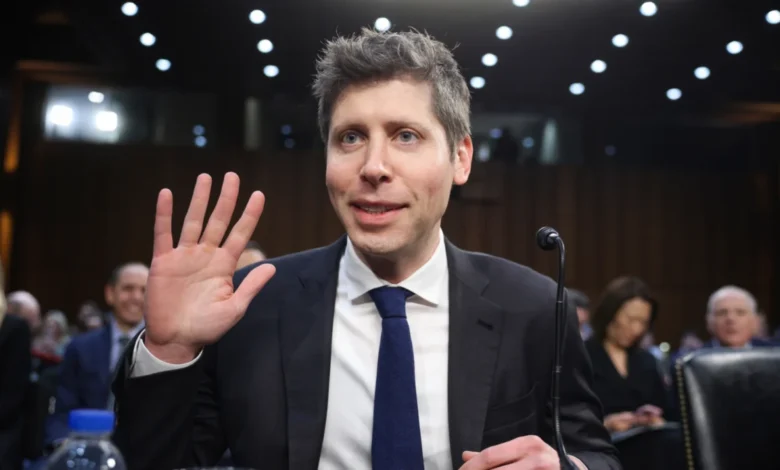
The rapid evolution of artificial intelligence has moved beyond the quiet confines of research laboratories and into the center of geopolitical and cinematic discourse. As OpenAI positions itself at the vanguard of this technological revolution, the company’s leadership—specifically CEO Sam Altman—has become a polarizing figure, representing both the promise of unprecedented innovation and the perils of unchecked corporate power. This tension is now being synthesized for the silver screen in the upcoming film Artificial, which explores the turbulent internal politics of the world’s most prominent AI firm.
The cinematic dramatization of OpenAI’s history is set against the backdrop of the tumultuous five-day period in November 2023, during which Altman was abruptly ousted by the company’s board of directors and subsequently reinstated following immense pressure from employees and investors. While the film, featuring Andrew Garfield as Altman, frames this event as a high-stakes thriller, the real-world implications of OpenAI’s trajectory suggest that the drama is far from contained within the walls of a production studio.
A Chronology of Internal and External Friction
To understand the current scrutiny surrounding OpenAI, one must examine the timeline of its transformation from a non-profit research collective into a commercial powerhouse with deep ties to the U.S. military-industrial complex.
The November 2023 ouster served as a turning point, revealing the deep-seated ideological fractures within the company. Court documents and leaked communications from that period depict a leader operating with singular focus. During the chaotic five-day interregnum, internal text messages revealed a frantic effort by Altman to regain his position, an endeavor that succeeded within 120 hours. Since his return, the narrative surrounding Altman has shifted from that of a visionary technologist to a power-broker navigating the intersection of global capital and national security.
The following timeline highlights key milestones in this trajectory:
- November 2023: The OpenAI board dismisses Sam Altman, citing a lack of transparency. He is reinstated less than a week later following an employee revolt and investor intervention.
- February 2026: OpenAI enters into a $200 million agreement with the Pentagon, signaling a formal shift toward defense-related applications.
- June 2026: Amazon rescinds its support for the film project Artificial, a decision occurring shortly after the expansion of its partnership with OpenAI to integrate advanced models into Amazon Web Services (AWS).
- September 2026: Reports emerge regarding the Pentagon’s specific requests for automated military tools, further complicating the public perception of the company’s "for the benefit of humanity" mission statement.
The Competition for Intellectual Supremacy
The recent controversy surrounding the solution to the Navier-Stokes existence and smoothness problem—a 200-year-old mathematical challenge—exemplifies the hyper-competitive nature of modern AI development. On September 7, 2026, OpenAI announced that its internal models had solved the problem, completing the task in a mere 88 hours.
The achievement was quickly contested by mathematician Tristan Buckmaster, who alleged that OpenAI’s announcement was a reactive move rather than a foundational breakthrough. According to Buckmaster, he and Levent Alpöge, an employee at rival firm Anthropic, had been making significant progress on the problem using both Anthropic and OpenAI tools. The timing suggests that OpenAI’s push to "solve" the problem was motivated by a desire to outpace competitors rather than purely academic inquiry.
OpenAI’s official response acknowledged that the company had been alerted to rumors of a pending solution by external researchers. The organization stated, "Inspired by these rumors, we utilized our internal models to tackle the problem, unaware at the time that the individuals working on the research were affiliated with Anthropic." This incident has reignited debates regarding the ethics of AI research, specifically whether the drive for proprietary advantage undermines the collaborative spirit necessary for scientific advancement.
The Military-Industrial Intersection
The intersection of generative AI and national defense represents perhaps the most significant shift in the sector. The Intercept’s reporting in September 2026 highlighted that the Pentagon has requested OpenAI to design automated tools that prioritize military efficiency, specifically aiming for systems that "rarely deny" operational requests.
This development carries profound implications for the governance of autonomous systems. If AI models are trained to minimize refusal rates in a military context, the safety guardrails typically touted by OpenAI as a core value proposition may be compromised. This move toward military integration places OpenAI in a category similar to the defense contractors of the 20th century, fundamentally altering the company’s identity from an open research laboratory to a strategic asset for the United States government.
The Cinematic and Cultural Lens
The release of Artificial, scheduled for December 25, arrives at a moment of deep public skepticism toward Big Tech. The film’s portrayal of Altman as a complex, perhaps even antagonistic figure, reflects a broader cultural reckoning.
In the cinematic tradition, the "tech CEO" archetype has evolved significantly. In 2010, The Social Network provided a sympathetic, if flawed, look at Mark Zuckerberg’s rise at Facebook. However, the subsequent years—marked by the Cambridge Analytica scandal, the role of social media in international conflicts, and the proliferation of AI-generated misinformation—have hardened public sentiment.
Aaron Sorkin, who penned the script for The Social Network, is reportedly revisiting the subject with The Social Reckoning, expected in October. This dual focus on Zuckerberg and Altman suggests that the film industry is no longer interested in the "boy genius" tropes of the past, but is instead turning its lens toward the systemic influence these individuals exert over global infrastructure.
Analysis of Societal Implications
The implications of these developments are twofold. First, the move toward military and competitive, high-speed intellectual output suggests that the "alignment problem"—the challenge of ensuring AI systems act in accordance with human values—is being sidelined in favor of performance metrics and geopolitical dominance.
Second, the consolidation of power within a small group of firms raises questions about transparency. When companies like OpenAI move to solve math problems not for the sake of science, but to preempt competitors, the public record is effectively polluted by strategic corporate communications. This "race to the top" creates an environment where information is weaponized, and the distinction between scientific progress and marketing becomes increasingly blurred.
As we look toward 2027 and beyond, the narrative of Sam Altman and OpenAI will likely continue to be one of the most critical case studies in modern corporate governance. Whether the reality matches the dramatic tension depicted in Artificial remains to be seen, but the trajectory of the company—from a transparent research organization to a key player in global defense—is an objective fact that demands rigorous oversight. The public, now more than ever, is tasked with discerning the difference between the manufactured narrative of the tech industry and the tangible, often concerning, realities of the technology they are building.
Ultimately, the question of whether Altman or any other industry leader should be "trusted" with the power of artificial intelligence is no longer a rhetorical one. It is a matter of institutional policy, international law, and the preservation of democratic oversight in an age where the tools of innovation are as powerful as the tools of statecraft.
Related posts: