WHO and the African Union Renew Strategic Partnership to Bolster Continental Health Sovereignty Amid Global Financial Shifts


The World Health Organization (WHO) and the African Union (AU) Commission have officially renewed their longstanding strategic partnership, signing an updated Memorandum of Understanding (MoU) on the sidelines of the 78th World Health Assembly in Geneva. This landmark agreement serves as a formal commitment to fortify health security, accelerate universal health coverage, and advance sustainable development across the African continent. By cementing this collaboration during a period defined by tightening global fiscal conditions and shifting geopolitical priorities, both organizations have signaled a decisive move toward regional self-reliance and coordinated health governance.
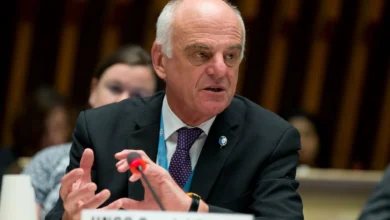
The signing ceremony featured Her Excellency Ambassador Amma Adomaa Twum-Amoah, Commissioner for Health, Humanitarian Affairs and Social Development, representing the African Union, and Dr. Tedros Adhanom Ghebreyesus, Director-General of the World Health Organization. The agreement aims to transition the continent’s health architecture from a model of reactive aid dependency to one of proactive, sovereign health management.
Historical Context and the Evolution of the Partnership
The relationship between the WHO and the AU has evolved significantly over the past two decades. The foundation for the current agreement traces back to a pivotal 2019 MoU, which sought to harmonize the technical expertise of the WHO with the political mandate of the African Union. Since then, the partnership has been tested by unprecedented global crises, most notably the COVID-19 pandemic, which exposed critical vulnerabilities in global supply chains and underscored the necessity of robust regional health institutions.
Before the 2019 agreement, collaboration was often fragmented, focusing on siloed disease-specific initiatives such as malaria eradication or HIV/AIDS management. The modern iteration of the partnership reflects a shift toward a holistic, systems-based approach. The 2019–2024 period saw the emergence of the Africa Centres for Disease Control and Prevention (Africa CDC) as a primary operational arm of the AU, which the WHO has increasingly supported through technical normative guidance. This current renewal acknowledges that the landscape has changed; with the AU’s recent inclusion in the G20, its voice in global health governance has never been more prominent, necessitating a more sophisticated and streamlined collaborative framework.
Supporting Data: The Economic and Health Landscape
The timing of this agreement is underscored by sobering economic data regarding the African health sector. According to World Bank and IMF projections, several African nations are currently navigating a "fiscal squeeze," characterized by rising debt-servicing costs that compete directly with public health budgets. Data from the WHO’s Global Health Expenditure Database indicates that while domestic health spending in Africa has risen, it remains below the Abuja Declaration target—a 2001 commitment by AU member states to allocate at least 15% of their annual budgets to the health sector.
Furthermore, bilateral aid, which has historically sustained primary health care in many African nations, has seen stagnation or contraction in recent years as donor nations pivot their financial focus toward domestic economic recovery and alternative regional conflicts. The WHO estimates that approximately 600 million people in Africa still lack access to essential health services. By streamlining the MoU, the AU and WHO intend to maximize the efficiency of existing resources, reducing administrative overlaps that historically diverted funds away from frontline service delivery.
Official Perspectives and Strategic Vision
During the signing ceremony, Commissioner Amma Adomaa Twum-Amoah articulated the shift in philosophy driving the AU’s current agenda. "This Agreement marks a new chapter in AU-WHO cooperation. We need to move from budgeting for survival to planning for health sovereignty," she stated. Her remarks highlight a growing sentiment among African policymakers that the continent must own its health outcomes. The "sovereignty" lens involves not only domestic financing but also the development of local manufacturing capabilities for vaccines, therapeutics, and diagnostics—a priority that has gained significant traction since the onset of the pandemic.
Dr. Tedros Adhanom Ghebreyesus mirrored this sentiment, emphasizing the practical application of the agreement. "This renewed agreement comes at a critical time, as cuts to bilateral aid imperil the health of millions in Africa," he noted. "It reflects our determination to translate our partnership into tangible results for the people of Africa, and support countries to leave behind the era of aid dependency and transition to sustainable self-reliance."
Core Pillars of Collaboration
The renewed Memorandum of Understanding is designed to be more than a symbolic gesture. It outlines five primary areas of collaboration that are expected to define the operational synergy between the two entities over the next several years:
- Strengthening Health Systems: Enhancing the resilience of primary health care (PHC) systems to ensure they can withstand future pandemics and climate-related health shocks.
- Emergency Preparedness and Response: Standardizing regional protocols for disease surveillance and rapid response, integrating the Africa CDC’s operational capacity with the WHO’s global data-sharing and normative standards.
- Local Manufacturing and Supply Chain Security: Supporting the AU’s strategy for the local production of medical products to reduce reliance on fragile global supply chains.
- Universal Health Coverage (UHC) Financing: Working with member states to advocate for and implement sustainable health financing models that reduce out-of-pocket expenses for the most vulnerable populations.
- Data Governance and Digital Health: Building unified digital health infrastructures that allow for real-time monitoring of health trends across borders, facilitating more informed policy decisions.
Analysis of Implications: A New Era for Regional Governance
The formalization of this partnership has significant implications for global health architecture. By positioning the AU’s Department of Health, Humanitarian Affairs, and Social Development at the center of implementation, the agreement acknowledges that regional political bodies are the most effective conduits for sustainable change.
The inclusion of the African Union in the G20 provides an unprecedented platform for these joint priorities to be translated into global policy. Analysts suggest that the WHO-AU partnership will likely act as a blueprint for other regional blocs, such as ASEAN or the Caribbean Community (CARICOM), in how to bridge the gap between technical global guidance and regional political implementation.
However, the success of this MoU will depend on the "last mile" of implementation. Historically, agreements between international organizations and regional bodies have faced challenges in translating high-level policy into outcomes at the district and community levels. To mitigate this, the agreement includes provisions for periodic joint monitoring and evaluation, ensuring that progress is tracked against concrete health indicators rather than mere administrative milestones.
Looking Toward the Future
The signing in Geneva is just the beginning of a multi-year effort. As the AU continues to mature as a political and health-governing entity, the WHO’s role is shifting from that of a "primary provider" to a "technical partner and enabler." This transition is essential for the long-term sustainability of African health systems.
As the international community watches, the efficacy of this collaboration will be tested by upcoming challenges: the impact of climate change on vector-borne diseases, the rising burden of non-communicable diseases, and the ongoing need to vaccinate and protect aging populations. By moving toward a model of health sovereignty, the African Union and the World Health Organization are signaling that the era of external-led health interventions is giving way to a new, more balanced partnership defined by mutual accountability and regional empowerment.
For further information regarding the implementation of this agreement or to inquire about specific work streams, stakeholders are encouraged to reach out to the designated focal points: Professor Julio Rakotonirina at the African Union Commission ([email protected]) or Ms. Stéphanie Seydoux at the World Health Organization ([email protected]).