Early-Season Avalanche Hazards Surge Across the Mountain West as Thin Snowpack Masks Significant Risks

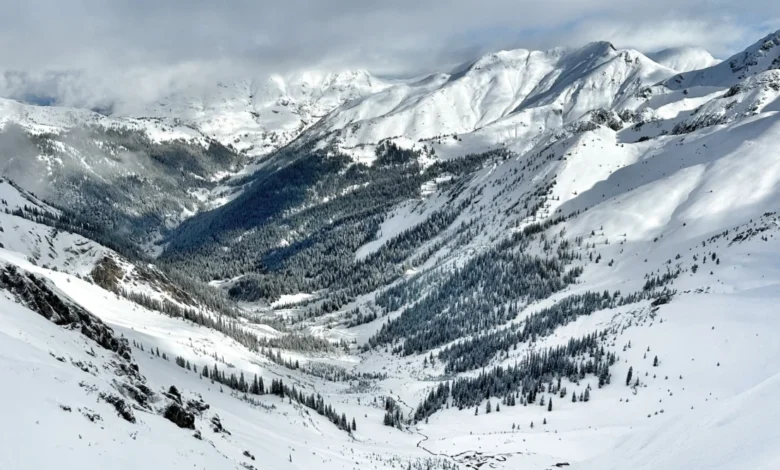
The 2026 backcountry ski season has begun with a sobering sequence of events, as unusual weather patterns and a shallow, unstable snowpack have triggered a rash of early-season avalanches across the American West. While early snow is often celebrated by enthusiasts eager to test their gear and find fresh turns, safety officials are warning that the current conditions are deceptive. The combination of persistent weak layers, sporadic storm cycles, and the inherent hazards of partially covered, rocky terrain has created a volatile environment that has already resulted in several close calls, including a dramatic, caught-on-camera incident in Colorado’s San Juan Mountains.
As of early November, regional avalanche centers have reported a high frequency of slide activity, prompting authorities to urge extreme caution among those venturing into high-alpine zones. The situation highlights a recurring but often underestimated danger: the belief that low-snow years or early-season conditions are inherently safer than the mid-winter peak.
A Chronology of Recent Incidents
The recent surge in avalanche activity began in late October, as the first significant storms of the season interacted with a base layer that had been subjected to unseasonably warm temperatures. On October 25, a backcountry traveler on Colorado’s Mount Bross was caught in a wind-slab avalanche. The slide, triggered by the skier, resulted in a full burial, leaving the individual trapped facedown in the snow. Fortunately, the victim’s companions were nearby and equipped to perform an immediate rescue, successfully unearthing the skier before the situation turned fatal.
The danger escalated as the calendar turned to November. On November 1, observers near Alta, Utah, documented multiple wet-snow avalanches. These slides were powerful enough to descend over cliff bands and impact a local service road, illustrating that even modest snow accumulations can produce significant momentum when terrain is steep and the snow structure is compromised.
Perhaps the most widely publicized incident occurred on November 3, near Silverton, Colorado. Professional skier and filmmaker Colter Hinchliffe was documenting a tour when he captured a video of his partner being caught in a slide. The avalanche swept the skier approximately 500 feet down the slope, resulting in a partial burial. The victim was recovered by Hinchliffe and remained unharmed, but the footage served as a stark, visceral reminder of how quickly an early-season excursion can spiral into a life-threatening emergency.
Analyzing the Mechanics of Early-Season Instability
According to data from the Colorado Avalanche Information Center (CAIC), the state has already recorded nearly 100 distinct avalanche events as of November 6. Brian Lazar, deputy director of the CAIC, notes that while the raw number of slides is not necessarily unprecedented for this time of year, the circumstances surrounding them are particularly complex.
The current instability is driven by a "yo-yo" weather pattern. Southwestern Colorado, in particular, has seen warm, high-moisture storms that brought rain to elevations exceeding 12,000 feet. Rain acts as a destabilizing agent, saturating the snowpack and weakening the bonds between layers. When these warm events are followed by colder periods, the surface of the snow often undergoes "faceting"—a process where water vapor moves through the snowpack, creating weak, sugar-like crystals. When a new storm drops fresh, heavier snow on top of these weak layers, the result is a classic, high-sensitivity avalanche setup.
Furthermore, the "thin" nature of the snowpack is a double-edged sword. While it may seem like there is not enough snow to trigger a massive, destructive slide, the lack of depth means that obstacles—such as sharp rocks, exposed logs, and hidden stumps—remain close to the surface. As Lazar explains, a slide does not need to be massive to be lethal. A relatively small, shallow-snow avalanche can knock a skier off their feet and drag them across jagged, exposed terrain, causing severe trauma even if the skier avoids full burial.
The Paradox of Popularity and Terrain Choice
The risk is compounded by human behavior. Early-season snowfall is often localized, drawing large numbers of skiers to specific peaks or drainages that have the deepest coverage. This concentration of activity increases the likelihood of human-triggered slides.
"A lot of people in the mountains means a lot of decisions are being made, and some of them can go wrong," Hinchliffe observed following his recent encounter. His experience emphasizes the psychological challenge of the early season: the desire to "get the season started" can lead to a relaxation of risk-assessment protocols.
Lazar highlights a paradoxical trend in how backcountry users select their terrain: "If you’re going out looking to ride on snow, you are naturally drawn to the places with the best coverage, and those are the same places that often have the most dangerous avalanche conditions." In essence, the terrain that offers the best skiing is also the terrain most likely to be susceptible to slab formation, as the deep, wind-loaded pockets that provide smooth snow are the same pockets where the snowpack is most stressed.
Broader Implications and Safety Recommendations
The events of the past two weeks serve as a definitive wake-up call for the North American backcountry community. As climate patterns shift and early-season snow becomes more erratic, the traditional "rules of thumb" regarding when it is safe to enter the backcountry are being tested.
For the remainder of the season, experts emphasize that traditional risk management strategies must be applied with even greater rigor. These include:
- Strict Adherence to Local Forecasts: Even in the early season, avalanche centers are producing daily reports. These should be considered mandatory reading before leaving the trailhead.
- Essential Gear and Training: Carrying a beacon, shovel, and probe is only the baseline. All members of a touring party must be proficient in their use. The "rescue" portion of the equation is often the only thing standing between a close call and a fatality.
- Conservative Terrain Selection: The early season is a time for patience. Avoiding steep, high-consequence terrain—even if it looks enticing—is the most effective way to manage risk when the snowpack is still developing.
- Partner Communication: Establishing a plan that prioritizes safety over the desire to find "the goods" is critical. Hinchliffe and his partner had explicitly agreed to avoid steeper slopes on the morning of their accident, a decision that likely prevented a much worse outcome.
The industry at large is watching these early developments closely. As climate volatility continues to impact snow stability patterns, the role of avalanche education becomes increasingly vital. The transition from fall to winter is not merely a change in temperature, but a change in the fundamental nature of the mountain environment. For those who choose to venture into the backcountry, the message is clear: the snow may be thin, but the risks are as significant as they will be in the depths of February.
As the season progresses, the CAIC and other organizations are monitoring whether these persistent weak layers will remain a threat throughout the winter or if they will be mitigated by subsequent, more uniform snowfalls. Until that time, the consensus among safety professionals remains one of extreme caution. The mountains are currently in a state of flux, and for the backcountry community, the best approach is to treat every slope with the respect due to a complex and currently, highly unpredictable, environment.