Escalating US-Iran Hostilities Target Critical Infrastructure as Ceasefire Crumbles, Raising Humanitarian Concerns

The volatile standoff between the United States and Iran has intensified dramatically, with both nations engaging in an alarming exchange of military strikes that have reportedly targeted critical civilian infrastructure, leading to growing humanitarian concerns and the complete breakdown of a recently brokered interim ceasefire agreement. The US military announced an eighth consecutive night of strikes against Iran’s military systems on Saturday, July 18, 2026, but reports from the ground indicate that these operations extended beyond purely military targets to include vital water and energy facilities, food storage sites, and bridges across Iran.
Widespread Infrastructure Damage and Civilian Impact
The alleged targeting of civilian infrastructure marks a significant escalation in the conflict, with potentially dire consequences for the Iranian populace. Iran’s energy ministry has already issued urgent pleas to its citizens, advising them to drastically reduce their usage of electricity and air conditioning in the immediate aftermath of the American strikes, signaling acute disruptions to power grids. Specific reports, including one circulated by "Drop Site" news, highlighted that US forces struck power infrastructure and desalination plants near Bonji village, close to Jask, at approximately 4:44 a.m. on July 18. These strikes, if confirmed to have specifically targeted civilian-serving facilities, have severed water supplies to several villages, plunging communities into immediate crisis.
The reliance on such infrastructure in arid regions like Iran is absolute. Desalination plants, in particular, are lifelines, converting saltwater into potable water for millions. Disrupting these facilities can quickly lead to widespread water shortages, impacting public health, sanitation, and daily life for entire populations. Similarly, power outages not only cause discomfort but can cripple essential services, including hospitals, food refrigeration, and communication networks, exacerbating an already fragile humanitarian situation. The reported targeting of food storage sites and bridges further complicates the ability to distribute aid or even basic necessities, raising fears of impending food insecurity and isolating affected regions.
Retaliatory Strikes and Regional Ripple Effects
The escalation has not been one-sided. Iran has vehemently retaliated, launching strikes against American allies across the Gulf, demonstrating its capacity to project power and inflict damage beyond its borders. A significant incident occurred on Friday, July 17, when an Iranian attack on a military facility in Jordan resulted in the deaths of two US service members, with one additional service member reported missing. This direct targeting of US personnel marks a critical turning point, almost certainly guaranteeing further American reprisal and deepening the cycle of violence.
Furthermore, Gulf states that host significant US military presence or are strategic allies have found themselves in the crosshairs. Officials in Kuwait confirmed on Friday, July 17, that Iran had struck a critical power and water desalination plant. In a stark demonstration of intent, the Kuwaiti government reported the very next day, Saturday, July 18, that the same plant had been targeted again. This repeated assault on Kuwaiti infrastructure is particularly alarming given the nation’s extreme dependency on desalination technology; approximately 90 percent of Kuwait’s entire water supply is derived from these plants. Such attacks threaten not only Kuwait’s national security but also the fundamental well-being of its population, underscoring the broad regional implications of the current conflict.
The Collapse of a Fragile Ceasefire
These latest military confrontations unfold just a month after a glimmer of hope emerged from the conflict: an interim ceasefire agreement signed between the Trump administration and Iran’s leadership. This deal, painstakingly negotiated, was intended to open channels for broader discussions aimed at ending the protracted war, which initially erupted in February of the current year. However, the fragile accord has spectacularly unraveled, primarily amid renewed clashes over the strategically vital Strait of Hormuz.
The Strait of Hormuz, a narrow maritime chokepoint between the Persian Gulf and the Gulf of Oman, holds immense global significance. Before the conflict began, approximately one-fifth of the world’s total crude oil and natural gas supplies transited through these waters daily. Any disruption to shipping in the Strait of Hormuz has immediate and far-reaching consequences for global energy markets, driving up oil and gas prices, and creating uncertainty for international trade. The renewed clashes in this critical waterway served as a major catalyst for the breakdown of the interim ceasefire, with both sides accusing the other of violating its terms and undermining efforts towards de-escalation.
On Saturday, July 18, Iranian officials formally declared that the country was abandoning its commitments to the interim deal, effectively sealing its demise. This announcement, coupled with the continued military strikes, signals a full return to hostilities, eliminating any immediate prospect of a diplomatic resolution. The immediate consequence of this renewed conflict was palpable across the region; air raid sirens were reported across Jordan on Sunday, July 19, a grim testament to the pervasive threat of further attacks and the pervasive fear gripping civilian populations.
US Reinforcements and Escalation
In response to the escalating situation and the direct targeting of US personnel, American officials have indicated a significant military build-up in the Middle East. Reports from the New York Times on Sunday, July 19, confirmed that the United States was dispatching additional warplanes to the region. These deployments, according to US officials, had been in the planning stages even before the recent deaths of American soldiers in Jordan, suggesting a pre-existing strategy to enhance military pressure on Iran.
Further details emerged regarding US casualties. The Pentagon confirmed on Sunday that a third US service member was killed in northern Iraq during the disposal of a downed Iranian attack drone, bringing the total reported American fatalities in the recent escalation to three. This tragic development further fuels the cycle of retaliation and underscores the widening geographical scope of the conflict, which is now impacting multiple theaters across the Middle East. The deployment of additional warplanes signals a clear intent from the US to maintain and potentially increase its offensive capabilities in the region, raising the specter of a prolonged and more destructive conflict.
International Law and Humanitarian Concerns
The alleged targeting of civilian infrastructure by both sides has drawn sharp criticism from human rights organizations and raised serious questions regarding adherence to international humanitarian law. Erika Guevara Rosas, a senior director at Amnesty International, highlighted in April 2026, during an earlier phase of the conflict, that while certain key infrastructure might, under specific circumstances, qualify as legitimate military targets, facilities such as power plants are unequivocally essential for meeting the basic needs of civilians. Attacking such facilities, she stressed, would constitute a disproportionate act and would therefore be unlawful under international humanitarian law, potentially amounting to a war crime.
The principles of distinction and proportionality are cornerstones of international humanitarian law. The principle of distinction requires parties to a conflict to distinguish between combatants and civilians, and between military objectives and civilian objects. Attacks must only be directed at military objectives. The principle of proportionality dictates that even if a military objective is targeted, the anticipated civilian casualties and damage to civilian objects must not be excessive in relation to the concrete and direct military advantage anticipated. Deliberately targeting infrastructure vital for civilian survival, such as water purification plants or food storage, is a grave violation of these principles and can lead to immense suffering.
The current situation, with reports of widespread damage to water, energy, and food facilities, suggests a potential disregard for these critical protections. The long-term implications of such attacks include not only immediate loss of life and injury but also the collapse of public health systems, mass displacement, and the potential for famine, creating a protracted humanitarian catastrophe. International bodies and human rights advocates are closely monitoring the situation, and calls for independent investigations into alleged war crimes are likely to intensify as the conflict continues.
Broader Implications and Future Outlook
The collapse of the ceasefire and the direct targeting of critical infrastructure represent a dangerous new phase in the US-Iran conflict. Economically, the instability in the Strait of Hormuz alone is enough to send ripples through global markets, affecting not just oil prices but also shipping insurance rates and supply chain reliability for countless other goods. The prospect of a full-blown regional conflict, with attacks on vital infrastructure, poses an existential threat to the economies of the Gulf states and could severely disrupt global trade and energy security.
Diplomatically, the path forward appears increasingly fraught. With Iran renouncing the interim deal and both sides demonstrating a willingness to escalate militarily, the space for negotiation has drastically shrunk. International efforts to de-escalate the situation will face significant challenges, especially given the direct casualties suffered by US forces and the profound distrust between Washington and Tehran. The risk of miscalculation, leading to an even wider and more devastating conflict involving more regional actors, remains alarmingly high.
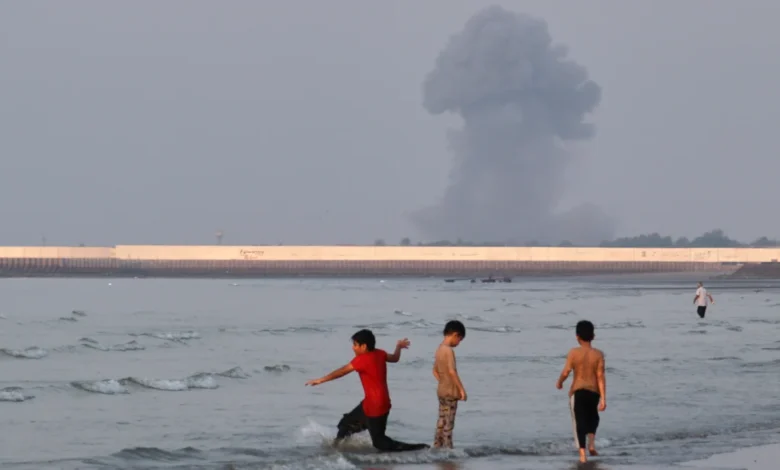
The images of children standing in the shallow waters off Bandar Abbas, with a plume of smoke rising ominously in the background on July 13, serve as a stark reminder of the human cost of this escalating conflict. As the US sends more warplanes and Iran drops its diplomatic commitments, the trajectory points towards further confrontation, with civilian populations in the crosshairs and the specter of a humanitarian crisis looming large over the Middle East. The international community watches with bated breath, urging restraint and adherence to the laws of war, as the region teeters on the brink of an even greater catastrophe.