Alexander Zverev leads Ben Shelton in the US Open men’s final as the American hopeful battles to stay in contention for a historic title

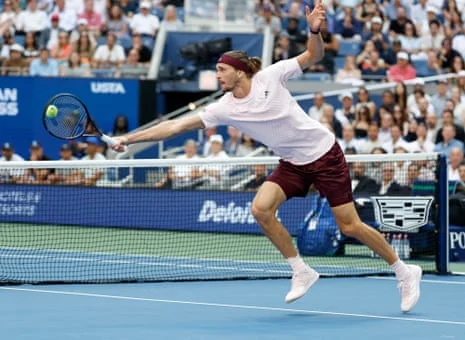
The 2026 US Open men’s final at Arthur Ashe Stadium has evolved into a compelling narrative of grit, tactical adjustment, and high-stakes pressure. As the match progresses into the fourth set, top-seeded Alexander Zverev currently holds a two-sets-to-one lead, though Ben Shelton has begun to assert himself, successfully breaking Zverev’s formidable service streak in the third set to breathe new life into his championship aspirations.

The Trajectory of the Final
The encounter began with Zverev establishing early dominance. The 29-year-old German, seeking his second major title after his triumph at Roland Garros earlier this year, broke Shelton’s serve in the very first game of the match. Zverev’s clinical execution and ability to neutralize Shelton’s powerful serve allowed him to secure the first set 6-3.
The second set proved to be a more contested affair. Both players held serve with relative efficiency, forcing a tiebreak. In that high-pressure environment, Zverev’s experience surfaced; he clinicaly dispatched Shelton 7-2, leveraging his superior consistency and forcing a series of unforced errors from the American. At this stage, the statistics were stark: Zverev had not dropped a service game in over 60 attempts, and Shelton faced the daunting reality of having never recovered from a two-sets-to-love deficit at a major tournament.
The Third Set Breakthrough
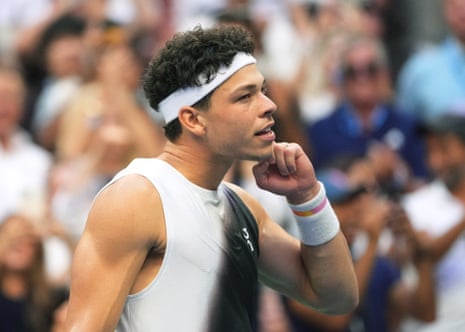
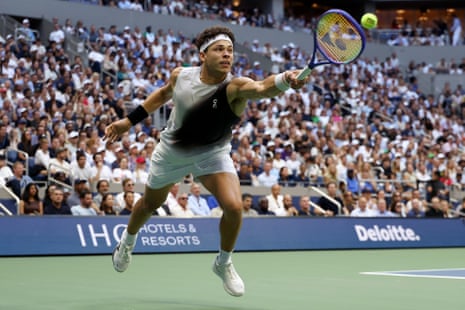
The narrative shifted significantly in the third set. While Zverev continued to rely on his powerful first serve—maintaining a 90% success rate on first-serve points at times—Shelton began to play with increased aggression. The 23-year-old American, known for his explosive athleticism and ability to thrive in lengthy rallies, began to dictate play from the baseline.
The crucial moment arrived in the final game of the third set. After 66 consecutive holds of serve throughout the tournament, Zverev finally faltered. A combination of aggressive shot-making from Shelton and a rare lapse in focus from the German gave the American triple set point. While Zverev saved one, he ultimately sent a volley into the alley, handing the set to Shelton 7-5. This result injected a palpable surge of energy into the Arthur Ashe crowd, who have been desperate to see an American male champion since Andy Roddick’s 2003 victory.
Statistical Context and Tactical Analysis
The match represents a clash of styles and career trajectories. Zverev, now a seasoned veteran of five grand slam finals, has demonstrated an exceptional ability to handle left-handed opponents, a skill often attributed to his upbringing playing against his brother, Mischa Zverev. His two-handed backhand has functioned as a "brick wall," effectively neutralizing Shelton’s wide-swinging serves and heavy forehands.
Conversely, Shelton’s path to this final has been defined by his endurance. Having played an arduous draw that included multiple four- and five-set battles—most notably his historic 3:33 a.m. finish against Carlos Alcaraz—Shelton has proved he possesses the physical stamina required for long-form tennis. However, the disparity in unforced errors has been a deciding factor. By the end of the second set, Shelton had accumulated 29 unforced errors, a figure he has successfully managed to reduce during his third-set resurgence.
The Stakes for Both Players
For Alexander Zverev, this final is an opportunity to solidify his status as the premier player of his generation. Following his victory in Paris and a runner-up finish at Wimbledon, winning in New York would represent a crowning achievement. His record in grand slam matches where he wins the first two sets is a staggering 85-3, highlighting his efficiency in closing out opponents once he gains a foothold.
For Ben Shelton, the stakes are both personal and national. The weight of the 23-year drought for American men—and the 58-year gap since a Black American man won the title—is heavy. Yet, Shelton’s 7-2 record in finals and his perfect 4-0 record in championship matches this year suggest a player who performs optimally when the pressure is at its peak. His father and coach, Bryan Shelton, has noted his son’s "amazing record on Sundays," a sentiment that has kept the crowd hopeful as the match enters its most critical phase.
Fourth Set Dynamics
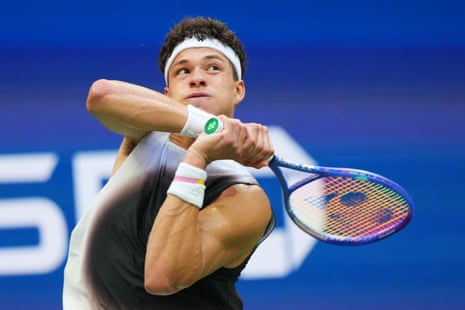
As the match transitioned into the fourth set, the physical toll became more apparent. The three-hour mark passed, and the intensity of the rallies increased. A 24-shot rally—the longest of the match—served as a microcosm of the physical battle, with both players testing each other’s defensive limits.
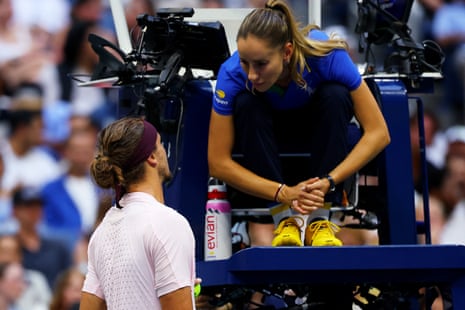
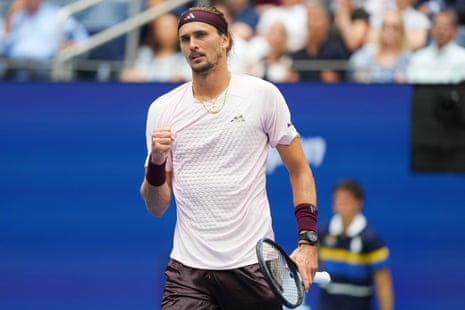
Zverev has maintained a composed demeanor, despite receiving a time violation warning from chair umpire Marijana Veljovic in the fourth set. The warning, which likely stemmed from his lengthy service routine—a point of contention throughout his tournament run—did not appear to rattle him, as he immediately responded with a strong crosscourt backhand to extend his lead in the set.
Implications and Broader Impact
Regardless of the final outcome, this match has already cemented itself in the annals of the 2026 US Open. The contrast between the established, precise game of Zverev and the high-octane, crowd-pleasing style of Shelton has provided a spectacle fitting for a major final.
The match also underscores the ongoing debate regarding the best-of-five format in men’s tennis. While some officials and observers argue for shorter matches to attract younger demographics, the drama and endurance displayed in this final serve as a powerful counter-argument for the traditionalists who view the five-set format as the ultimate test of professional tennis.
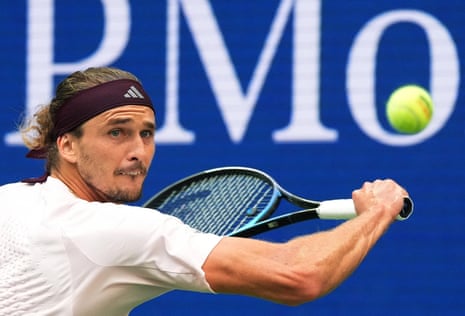
As the sun sets over New York and the floodlights illuminate Arthur Ashe Stadium, the match remains on a knife-edge. Zverev continues to lead in the fourth set, but Shelton’s ability to force longer rallies and his newfound confidence in his baseline game suggest that the final outcome is far from decided. The crowd remains vocal, every point treated with the gravity of a championship-winning shot, as both players prepare for what could be the defining moments of their respective careers.
Official Reactions and Atmosphere
The atmosphere in the stadium has been electric, with high-profile celebrities and tennis legends alike observing a match that has balanced tactical chess with raw, physical effort. Post-match analysis will likely focus on the shift in momentum during the third set and how both players managed the physical and mental fatigue of a long-form grand slam final.
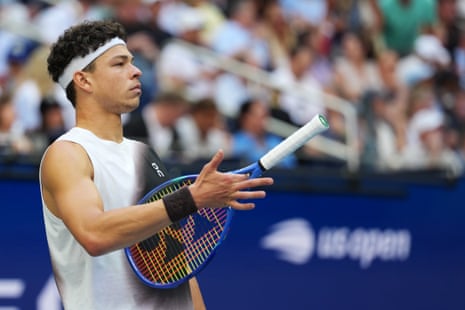
For Zverev, the goal remains the same: to maintain his serve and capitalize on any remaining opportunities to break. For Shelton, the mission is to maintain the aggression that allowed him to break the Zverev serve, hoping to force a fifth set and potentially become the first man in two decades to complete the American dream on the hard courts of New York. As the fourth set progresses, the focus shifts to who can hold their nerve in the face of mounting exhaustion and the deafening roar of the Arthur Ashe crowd.