George Russell expresses deep disappointment after team miscalculation costs him pole position at the Sao Paulo Grand Prix

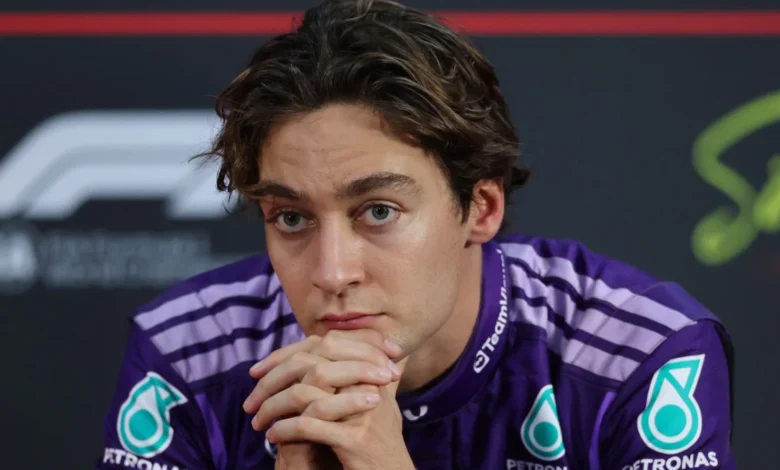
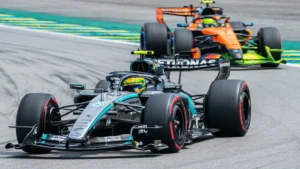
The rain-lashed tarmac of the Autódromo José Carlos Pace in Interlagos set the stage for one of the most contentious qualifying sessions of the 2026 Formula 1 season. As the clouds parted and then unleashed torrential downpours during the final segment of qualifying, Mercedes driver George Russell found himself at the center of a strategic debate that saw him miss out on the top spot by a narrow margin of two-tenths of a second to McLaren’s Lando Norris. Despite setting a formidable pace throughout the session, a tactical error regarding the timing of his final flying lap left the British driver starting Sunday’s race from seventh position, further complicated by an existing five-place grid penalty for an engine component change.
A Session Defined by Volatility and Precision
The Sao Paulo Grand Prix has long been regarded as a crucible for driver skill, particularly when the unpredictable Brazilian weather intervenes. Saturday’s qualifying was no exception. From the outset, the track conditions shifted rapidly, forcing teams to rely heavily on real-time meteorological data and radar imagery. Russell had demonstrated exceptional confidence in the wet, showing a level of pace that suggested he was the man to beat. During his initial run in Q3, he established a commanding four-tenths-of-a-second lead over Norris, signaling his intent to secure a front-row start.
However, the dynamics of the session shifted as the clock ticked down. In his second flying lap attempt, Russell encountered the Williams of Alex Albon. With the track environment becoming increasingly treacherous, the Mercedes pit wall instructed Russell to abort his effort, believing that the weather window for a subsequent, faster lap remained open. This decision proved to be the turning point of the afternoon. Moments after the team signaled for the abort, the intensity of the rain increased, effectively nullifying any possibility for drivers to improve their times.
Chronology of the Qualifying Controversy
The sequence of events leading to the frustration in the Mercedes garage can be broken down into three critical phases:
- The Early Dominance: During the first half of Q3, the track was in a transitional state. Russell maximized the grip of his intermediate tires, clocking a time that placed him firmly at the top of the leaderboard, significantly ahead of his rivals.
- The Strategic Pivot: As the field prepared for final pushes, the interaction between the traffic management and the weather report became paramount. When Russell caught Albon, the team faced a binary choice: either push through the traffic or abort and bank on a clearer track later. The team opted for the latter, citing a perceived window of opportunity.
- The Meteorological Shift: The decision to abort was based on radar data that suggested a brief respite. Instead, the weather deteriorated rapidly, rendering the track significantly slower for the remainder of the session. The seven minutes that followed were essentially neutralized, locking the leaderboard in place.
Technical Data and Performance Analysis
The debate surrounding whether Russell could have secured pole position remains a point of contention among experts. Former driver and analyst Karun Chandhok suggested that the proximity to Albon would have likely hampered Russell’s ability to maximize his speed, regardless of the team’s instruction. Conversely, former strategy engineer Bernie Collins pointed to the sector-by-sector data, which indicated that Russell was significantly faster than his previous best in the middle sector.
Statistically, Russell’s middle sector was seven-tenths of a second quicker than his previous efforts. Had he been able to complete the lap, even with the presence of the Williams car, the potential for a new personal best was mathematically significant. However, the five-place grid penalty, which was applied for the installation of a new internal combustion engine, serves as a sobering reality check. Even had he secured the theoretical pole, the penalty would have forced him to start from sixth; his final seventh-place position represents only a marginal loss in grid position compared to his true potential.
Internal Dynamics and Team Response
The post-qualifying period saw a display of candid communication from both the driver and the team principal, Toto Wolff. Russell’s immediate reaction over the team radio was one of raw frustration. He questioned the logic behind the command, emphasizing that his feel for the car in the wet conditions was superior to that of the dry sessions.
Wolff, speaking to the media, defended the team’s process while acknowledging the human element of the error. "It was a 50-50 call," Wolff stated, noting that the team operates on a massive influx of data and that, in high-pressure scenarios, errors in judgment are an unfortunate byproduct of the sport’s complexity. The team principal also moved to protect the team’s morale, emphasizing that no single individual was to blame for the outcome.
Russell, reflecting on the incident, showed maturity in his assessment of the team dynamic. He highlighted the necessity of trust between the driver and the pit wall. "They have the weather forecast in front of them, and I don’t," he remarked. "We rely on one another." He pointedly avoided assigning personal blame to his race engineer, Marcus Dudley, noting that the information flow involves a vast array of support staff, and that the team must collectively review their systems to ensure future decisions are more accurate.
The Broader Context: A Season of High Stakes
This incident occurs against the backdrop of a challenging season for the Mercedes outfit. The recent coronation of Kimi Antonelli as the world champion at the Mexico City Grand Prix has added a layer of intensity to the team’s internal environment. Russell’s season has been marked by flashes of brilliance hampered by technical issues and, at times, misfortune. The psychological burden of the title race, combined with the technical frustrations of the current campaign, has made this period particularly taxing for the driver.
Wolff’s intervention on the radio—reminding Russell that his performance remained a "strong result"—was a clear effort to stabilize the driver’s mindset before Sunday’s race. The team is aware that maintaining high morale is essential for the final push of the season, particularly as they look to secure constructors’ points.
Implications for the Sao Paulo Grand Prix
Starting from seventh on the grid, Russell faces a daunting task at Interlagos. The circuit is renowned for its overtaking opportunities, particularly heading into the Senna S and the long run up to the start-finish straight. However, the unpredictable nature of the weather in Sao Paulo means that strategy will remain fluid.
For the championship standings and the internal team competition, this result is a missed opportunity to build momentum. With his teammate already established as the champion, the remainder of the season serves as a platform for Russell to prove his long-term viability as a primary contender. The frustration felt in the pit lane on Saturday is a testament to the high standards expected at Mercedes, but the focus must now shift to the race day recovery.
The team has already initiated an internal review of their radar interpretation and communication protocols. Whether this translates into a more robust decision-making process for future races remains to be seen. As the grid prepares for the final leg of the triple-header, the events at Interlagos will serve as a case study in the fine margins that define modern Formula 1—where the difference between a pole position and a mid-pack start can be decided by a few seconds of data interpretation and the shifting winds of the Brazilian sky.
The race on Sunday promises to be a spectacle. With the weather remaining a volatile variable and the grid order shuffled by penalties and qualifying mishaps, the tactical battle will be just as important as the mechanical performance. For George Russell, the race provides an immediate chance to translate his frustration into a charge through the field, proving that his pace in the wet was not merely a glimpse of what could have been, but a sign of his readiness to compete at the front of the pack.
Related posts: