PGA Tour: Jacob Bridgeman races to Biltmore Championship victory to provide Team USA form boost for Presidents Cup

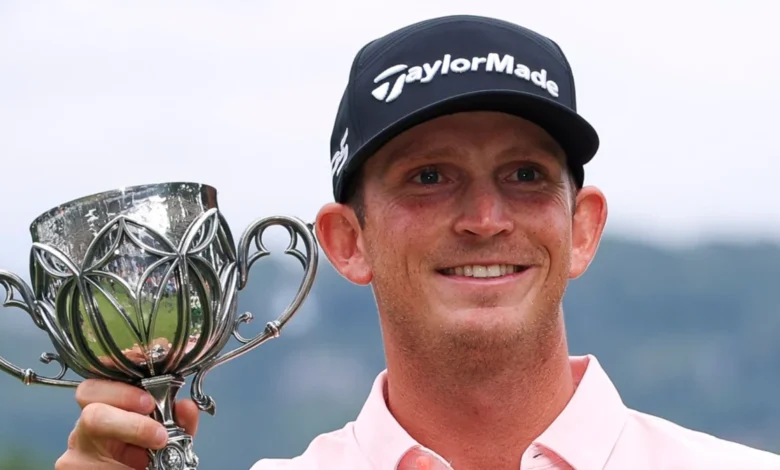
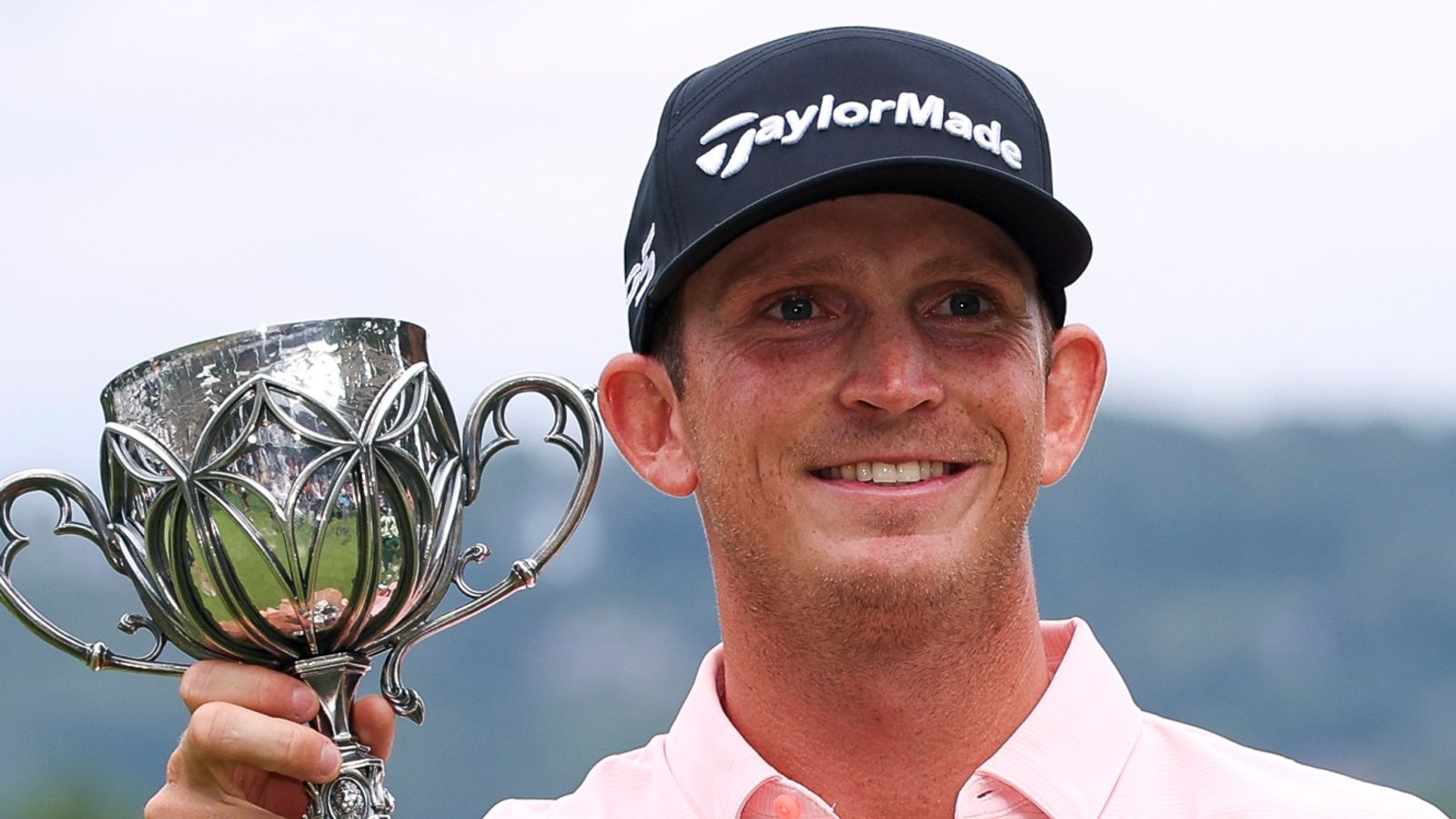
Bridgeman’s path to the winner’s circle was characterized by an extraordinary final-round comeback. Entering the Sunday finale trailing the overnight leader, Neal Shipley, by five strokes, Bridgeman delivered a bogey-free 61 to finish at 26 under par. This performance effectively overhauled the leaderboard, leaving him two shots clear of compatriot Ben James, who also carded a 61 in a spectacular display of scoring.
A Masterclass in Sunday Scoring
The final round at The Cliffs at Walnut Cove was defined by ideal scoring conditions and a field that aggressively attacked the course. The low-scoring nature of the day was highlighted by the fact that three different players—Bridgeman, James, and JT Poston—all carded scores of 61 or lower.
Bridgeman’s round was a clinic in precision and aggressive play. He signaled his intentions early, birdieing three of his first four holes. His momentum accelerated at the par-five eighth, where he drained a 10-foot putt for eagle. He maintained this pace on the back nine, picking up a stroke at the 10th and rattling off three consecutive birdies from the 13th to the 15th.
Despite the statistical excellence of the round, Bridgeman faced a high-pressure finish. He reached the 16th hole needing to play the final three holes in three under par to achieve a historic sub-60 round on the PGA Tour. While he managed a birdie on the par-five 17th, a closing par left him one stroke shy of the elusive 59. Regardless, the 61 was more than enough to secure his second PGA Tour title of the 2026 season, solidifying his status as one of the tour’s most consistent rising stars.
The Road to the Presidents Cup
The Biltmore Championship win serves as the ultimate validation for Bridgeman’s selection as one of Brandt Snedeker’s captain’s picks for the Presidents Cup. Since the announcement of the roster, there has been considerable discourse regarding the form of the American side, but Bridgeman’s recent performance effectively silences any lingering questions about his readiness for elite-level team competition.
For Bridgeman, the transition from individual stroke play to the high-stakes, match-play environment of the Presidents Cup is a dream realized. Reflecting on his selection, he noted the shift in mentality required for the upcoming event. "It’s a dream come true," Bridgeman stated. "There is so much individualness in this sport, but to be able to play as a team and the United States is just amazing. Everybody is pumped. It’s getting really real. We’re all getting super excited!"
His inclusion alongside fellow competitor Jackson Koivun—who also secured a top-five finish at the Biltmore—adds further depth to the U.S. roster. The U.S. team will rely on the current form of players like Bridgeman to counter the International Team, who are looking to capitalize on the home-field advantage (or lack thereof) at Medinah.
Analysis of the Field and Scoring Trends
The Biltmore Championship leaderboard reflected a wider trend in modern professional golf: the requirement for extreme low scoring to remain competitive. Overnight leader Neal Shipley, who held a firm grip on the tournament for three days, could not withstand the final-day charge from the field. Shipley ultimately finished three strokes back in a tie for third alongside Ricky Castillo, ending at 23 under par.
JT Poston provided perhaps the most poignant story of the day. His final-round 60 was a career-low and a testament to the depth of talent currently populating the PGA Tour. "At the end of the day it was a great round of golf, a new career low out here," Poston said after narrowly missing a birdie putt on the 18th that would have brought him to 59. "As much as I would like to shoot that magical 59 number, which I’ve never done, there are so many positives to take away."
International representation in the event saw Ireland’s Seamus Power finish six strokes off the pace in a share of seventh, while England’s Marco Penge, opting to compete in the U.S. rather than the DP World Tour’s BMW PGA Championship, finished in a share of 10th after a final-round 67. The strategic decision by international players to prioritize U.S.-based events highlights the increasing pull of the PGA Tour’s prestige and prize money, even during weeks where major European events are held simultaneously.
Strategic Implications for Medinah
The success of Bridgeman and Koivun in North Carolina carries significant weight for the upcoming Presidents Cup. Historically, the U.S. team has relied on deep rosters of experienced match-play specialists, but the infusion of new talent—specifically those who have demonstrated the ability to shoot low scores under pressure—changes the calculus for captain Snedeker.
The ability to "go low" is an essential attribute in modern team golf, where individual birdie runs can flip the momentum of a match in a matter of holes. Bridgeman’s bogey-free 61 suggests that he is currently comfortable in high-pressure scenarios, a trait that is vital for foursomes and four-ball formats.
Furthermore, the course at Medinah is expected to present a different set of challenges compared to The Cliffs at Walnut Cove. While Walnut Cove rewarded aggressive scoring, Medinah will likely demand more tactical discipline. The U.S. team’s preparation over the coming days will focus on translating the individual success found in North Carolina into the collaborative, strategic play required for the Presidents Cup.
Broader Context and Future Outlook
As the golf world shifts its attention to the Presidents Cup, the performances at the Biltmore Championship serve as a microcosm of the current state of professional golf. The parity at the top of the leaderboard, characterized by sub-60 threats and consistent 60-61 scoring, indicates that the margin for error is virtually non-existent.
For the International Team, the goal will be to disrupt the momentum of players like Bridgeman. The International squad has spent the season building cohesion, and their strategy will likely rely on testing the Americans’ patience and consistency rather than engaging in a pure birdie-fest.
The Biltmore Championship also highlights the evolution of the PGA Tour’s schedule, providing meaningful high-stakes competition leading directly into premier international events. With the Presidents Cup set to begin this Thursday, the performance in Asheville will be scrutinized as a barometer for player form. Whether Bridgeman can maintain his scorching pace on the bigger stage remains to be seen, but his recent victory has undeniably positioned him as a focal point for both the U.S. and International scouting reports.
The tournament at Medinah promises to be a showcase of modern golf at its highest level. With the U.S. team looking to assert dominance and the International squad aiming to claim a historic upset, the contributions of the tournament’s top performers—Bridgeman, James, and Poston—will be critical to the ultimate outcome. Fans can expect an intense, high-scoring affair that tests not only the physical limits of the athletes but their mental fortitude in the face of intense team-based pressure.
As the final preparations conclude, the focus remains on the transition from the individual glory of a PGA Tour win to the collective responsibility of representing a nation. Bridgeman’s journey from a five-shot deficit to a two-shot victory is the kind of narrative that defines the sport, and he enters the Presidents Cup not just as a rookie, but as a player who has proven he can handle the heat of the moment. The question for the remainder of the week is whether that heat will translate into victory at Medinah, or if the pressure of the team event will require a different approach to the game that has served him so well thus far.