Toto Wolff reflects on the resilience and strategic rebirth of Mercedes as the team secures their ninth Formula 1 Constructors Championship in 2026

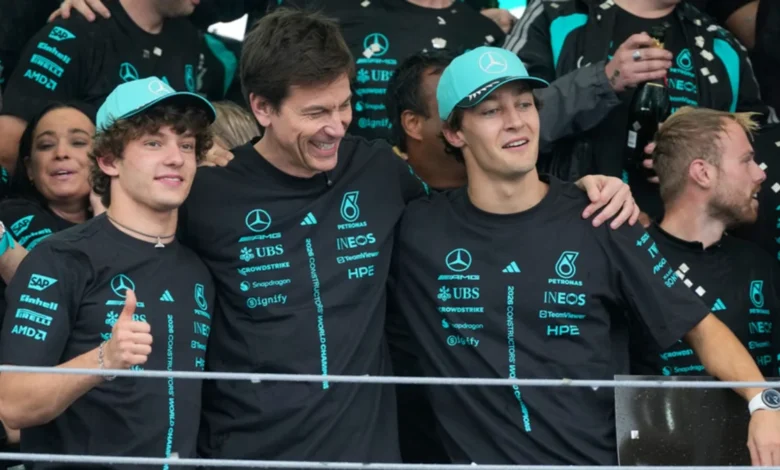
The Mercedes-AMG PETRONAS Formula One Team has officially reclaimed its throne at the pinnacle of motorsport, securing the 2026 Constructors’ Championship at the Sao Paulo Grand Prix. This milestone marks the team’s ninth title in the sport’s history, signaling a triumphant conclusion to a rigorous four-year period of reconstruction and tactical evolution. For team principal Toto Wolff, the victory is not merely a tally of points but a testament to the organizational endurance required to navigate the complexities of modern Formula 1 regulation shifts.
A Return to Dominance: The 2026 Narrative
The 2026 season represented a pivotal juncture in the history of Formula 1, characterized by sweeping technical regulation changes that fundamentally altered the aerodynamic and power unit requirements of the cars. Mercedes, which had enjoyed an unprecedented run of eight consecutive Constructors’ titles between 2014 and 2021, entered the new era following a difficult transition period.
The introduction of the "ground effect" philosophy in 2022 had initially stunted the Brackley-based squad’s momentum. While rivals adapted more rapidly to the demands of the new vehicle architecture, Mercedes spent the subsequent years in a cycle of analysis, development, and iterative design. The 2026 campaign served as the fruition of these efforts, with the team establishing a car that consistently maximized downforce and efficiency, propelling them back to the top of the standings. This championship is further burnished by the success of Kimi Antonelli, who secured the Drivers’ Championship earlier in the season, cementing a double-title sweep for the Silver Arrows.
Chronology of the Mercedes Rebound
To understand the significance of this achievement, one must look at the timeline of the "wilderness years."
- 2014–2021: The era of total hegemony. Mercedes established a record-breaking streak of eight consecutive Constructors’ Championships, a period defined by the dominance of the V6 turbo-hybrid power unit.
- 2022: The regulatory reset. Mercedes struggled significantly with "porpoising" and mechanical instability, finishing third in the standings behind Red Bull and Ferrari.
- 2023–2024: A period of persistent refinement. The team faced an uphill battle in understanding the correlation between wind-tunnel data and on-track performance. Despite the struggle, the team secured consistent podium finishes and demonstrated flashes of their former brilliance, though a true title challenge remained elusive.
- 2025: The turning point. Significant internal structural changes and a refinement of their design philosophy allowed Mercedes to close the gap on the frontrunners.
- 2026: The reclamation. By mastering the final iteration of the current regulations, Mercedes outperformed the field to clinch the title at Interlagos, with two races remaining in the season.
Quantitative Context and Historical Standing
Statistically, the 2026 title places Mercedes in an elite tier of historical achievement. The team now shares the second-most Constructors’ Championships in history with Williams, both holding nine titles. They currently trail only McLaren, who possess 10, and Ferrari, who hold the all-time record of 16.
However, the context of these wins differs. Unlike teams that have rebuilt over decades, Mercedes’ ability to remain competitive—never falling outside the top four in the standings during their "struggle" years—is rare in the high-stakes environment of Formula 1. Between 2022 and 2025, George Russell and Lewis Hamilton combined for seven Grand Prix victories, proving that while the team was no longer "dominant," it remained a perennial contender.
The Human Capital Behind the Machines
Toto Wolff has frequently diverted credit away from the driver pairing, choosing instead to emphasize the role of the 2,500 employees operating across the team’s facilities in Brackley and Brixworth. In the modern era of cost caps and restricted wind-tunnel time, the efficiency of the workforce has become the primary differentiator between teams.
"Sometimes the drivers, or myself, we are so visible because we are in front of the TV cameras," Wolff remarked during the post-race interviews in Brazil. "But there are 2,500 superstars. All of them have delivered a great job. When you are in these difficult moments—moments we all encounter in life—it is not easy to keep going. In retrospect, you recognize that you needed those tough moments to grow as an organization. But when you are in the thick of it, feeling the weight of that performance gap, it is a difficult reality to process."
Technical and Tactical Reflections
The Sao Paulo Grand Prix served as a microcosm of the team’s season. While neither George Russell nor Kimi Antonelli stood on the podium—with both drivers experiencing spins in challenging, mixed-weather conditions—the championship was sealed through the sheer accumulation of points throughout the year.
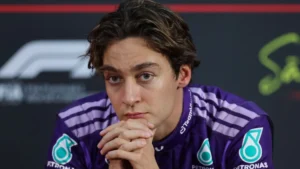
George Russell, reflecting on the weekend, noted the contrast between the result and the objective. "We achieved what we came here to do," Russell stated. "We would have liked to have done it in a bit more style, but the goal was the title. When I joined the team in 2022, the aspiration was to fight for championships regularly. To have weathered that storm and emerged back at the top is a profound achievement for everyone involved."
Kimi Antonelli, the youngest protagonist in this championship run, echoed the sentiment of collective effort. "They have done an incredible job this year. It is an amazing group of people who push every day to give us the best opportunity to fight for wins. That is why they deserve this title."
Implications for the Future of Formula 1
The implications of Mercedes’ return to form are significant for the landscape of the sport. The 2026 victory confirms that the team’s internal restructuring—intended to bridge the gap between their historical dominance and the new era of technical parity—has been successful. By effectively navigating the transition, Mercedes has silenced critics who argued that the team was overly dependent on the specific regulations of the previous decade.
Furthermore, the team’s ability to integrate young talent like Antonelli into a championship-winning car suggests a stable transition plan for the future. As the sport moves toward the next cycle of regulations, Mercedes enters the off-season not as a team in recovery, but as the benchmark for efficiency and engineering excellence.
Looking Toward Las Vegas
With the Constructors’ title safely in the trophy cabinet, the focus for Mercedes shifts toward individual honors and the final development cycles of the 2026 car. The team will head to the Las Vegas Grand Prix with the pressure of the championship removed, allowing for more aggressive strategic experimentation in the final races.
The resilience displayed by the team over the last four years—maintaining high standards despite significant technical setbacks—serves as a case study in corporate management within elite sports. As Wolff noted, very few teams have managed to navigate a multi-year decline and bounce back to championship form so quickly. The 2026 Mercedes W17, and the team that built it, will be remembered as the organization that successfully navigated the most difficult regulatory transition in the modern history of the sport.
As the circus moves to The Strip for the penultimate round of the season, the paddock will likely continue to analyze how a team with such a deep-seated culture of winning managed to reconcile the pain of defeat with the eventual return to glory. The result in Brazil was not just a win for the team; it was a validation of a process that prioritized long-term structural health over short-term reactive changes. The Silver Arrows have returned, and the field is now tasked with finding a way to displace them once again.