Controversy Mounts Over Nairobi National Park Infrastructure Project as Activists Allege Intimidation by Kenya Wildlife Service

The delicate balance between urban development and wildlife conservation in Kenya has reached a new point of friction following allegations that the Kenya Wildlife Service (KWS) obstructed a court-ordered inspection within the Nairobi National Park. The dispute centers on a contentious proposal to relocate and upgrade the Nairobi Animal Orphanage as part of the broader Bomas International Conference Complex development, a project that critics argue threatens the integrity of one of the world’s most unique ecological sanctuaries.
On July 16, 2024, the Environment and Land Court in Nairobi directed its deputy registrar, Vincent Kiplagat, to conduct a formal site visit. The objective was to provide the judiciary with an objective report on the physical impact of the proposed construction. However, the visit was marred by reports of hostility. Several non-governmental organizations, including Save the Nairobi National Park (SaveNNP) and JustAct, issued statements condemning what they described as "threats and intimidation" by KWS personnel. The activists alleged they were initially denied entry to the site, effectively preventing them from participating in the judicial process they had helped initiate.
The July 16 Site Inspection Incident
The court-ordered visit was intended to be a transparent exercise involving all litigants, legal representatives, and the media. According to SaveNNP, KWS rangers and administrative staff actively sought to "control the narrative" by restricting access to specific areas and limiting the movement of the co-petitioners. In a formal statement, the NGO claimed that they were only granted access after the primary inspection—conducted by court officials, KWS representatives, and a single legal representative—had already concluded.
Friends of Nairobi National Park (FoNNP), another prominent conservation group, echoed these concerns, suggesting that the exclusion of key stakeholders undermined the transparency of the judicial inquiry. The groups contend that the KWS’s actions were a deliberate attempt to hide the extent of the environmental disruption already occurring or planned for the site.
In response to these allegations, KWS spokesperson Duncan Wanyama denied any deliberate obstruction. Referencing official protocols, Wanyama stated that the rangers were merely enforcing standard security and operational procedures within the park. He maintained that the visitors were eventually allowed to proceed and that the KWS remains committed to following the legal process. However, the delay in granting access to the activists has fueled further suspicion among the conservation community regarding the transparency of the Bomas International Conference Complex project.
Project Scope and Environmental Implications
The proposed development is part of a larger government initiative to modernize Kenya’s tourism and conference infrastructure. The plan involves carving out between 76 and 89 acres within the boundaries of the Nairobi National Park to facilitate the relocation of the Nairobi Animal Orphanage. This new facility is intended to serve as a cornerstone of the Bomas International Conference Complex, a project aimed at positioning Nairobi as a premier destination for Meetings, Incentives, Conferences, and Exhibitions (MICE) tourism.
Key features of the proposed facility include:
- A modernized wildlife rescue and rehabilitation center.
- A state-of-the-art wildlife hospital to treat injured and orphaned animals.
- Enhanced visitor amenities and educational centers.
- A massive parking facility designed to accommodate ,300 vehicles.
While the KWS emphasizes the benefits of modernized facilities, conservationists point to the ecological cost. The designated site includes a significant portion of indigenous forest that serves as a critical buffer zone. Perhaps more concerning is the proximity to the habitat of the critically endangered black rhino. Nairobi National Park is a globally recognized rhino sanctuary, and activists argue that the noise, pollution, and habitat fragmentation caused by a large-scale conference complex and a 1,300-car parking lot could have devastating effects on the rhino population.
Chronology of the Conflict
The tension surrounding the Nairobi National Park infrastructure project has been building for several months, characterized by legal challenges and public demonstrations.
- 1964: The Nairobi Animal Orphanage is established as a rescue and rehabilitation center, becoming a major educational hub for Kenyan citizens and international tourists.
- Early 2024: Details of the Bomas International Conference Complex expansion begin to circulate, revealing plans to utilize park land for commercial and hospitality infrastructure.
- June 2024: Public outcry intensifies. Former Chief Justice David Maraga is arrested during a peaceful protest against the project. His arrest is widely condemned by the Law Society of Kenya (LSK) as a violation of constitutional rights to assembly and an assault on civic space.
- July 6, 2024: A citizen-driven legal petition is filed in the Environment and Land Court. Over 4,600 Kenyans sign the document, requesting a judicial determination on whether the construction can legally proceed under current environmental laws.
- July 16, 2024: The court-ordered site visit takes place, leading to allegations of intimidation and obstruction by KWS.
Official Justification and Economic Arguments
The Kenya Wildlife Service, led by Director General Erastus Kanja, has consistently defended the project as a necessary evolution of the park’s mission. Kanja has argued that the current orphanage facilities are outdated and insufficient for the growing demands of wildlife rescue in an increasingly urbanized environment.

According to the KWS, the new facility will provide a "semi-wild" environment that is better suited for the eventual reintroduction of animals into the wild, rather than keeping them in traditional cages. Furthermore, the government highlights the economic potential of the project. It is estimated that the construction and subsequent operation of the new orphanage and conference complex will create approximately 500 jobs for local residents and significantly boost tourism revenue for the Nairobi region.
"The upgrades will improve our capacity for conservation education and provide a world-class experience for visitors," Kanja stated during a recent press briefing. He emphasized that the project is designed to integrate wildlife conservation with sustainable economic growth, ensuring the long-term viability of the park’s management.
The Legal and Constitutional Framework
The dispute has raised significant questions regarding the interpretation of the Kenyan Constitution and environmental statutes. The Law Society of Kenya and the petitioners argue that national heritage sites, such as Nairobi National Park, are not state property to be "bartered behind closed doors."
Article 69 of the Constitution of Kenya mandates that the State shall "ensure sustainable exploitation, utilization, management and conservation of the environment and natural resources." Furthermore, the Environmental Management and Co-ordination Act (EMCA) requires rigorous Environmental Impact Assessments (EIAs) for any project that may significantly affect the environment. Petitioners argue that the current plans have not undergone sufficient public participation or independent environmental scrutiny.
The arrest of former Chief Justice David Maraga added a layer of legal gravity to the situation. As a figure synonymous with the rule of law in Kenya, Maraga’s involvement signaled that the concerns regarding the park were not merely about "trees and animals" but about the adherence to constitutional processes and the protection of public land.
Broader Impact and Global Significance
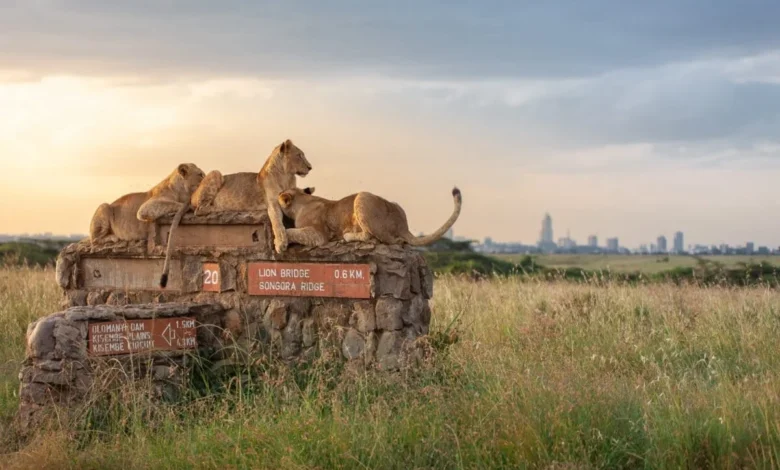
Nairobi National Park holds a unique status as the only national park in the world located within a capital city. Established in 1946, it covers approximately 117 square kilometers (45 square miles). Despite its small size compared to the Serengeti or Tsavo, it supports a diverse array of wildlife, including lions, leopards, cheetahs, and over 400 species of birds.
The park has long been under pressure from Nairobi’s rapid urbanization. Previous infrastructure projects, such as the Standard Gauge Railway (SGR) and the Southern Bypass, have already carved through portions of the park or its migration corridors. Conservationists argue that the Bomas expansion represents a "death by a thousand cuts" strategy, where incremental encroachments eventually destroy the ecosystem’s ability to function.
The outcome of this court case is expected to set a major precedent for environmental litigation in East Africa. If the court rules in favor of the petitioners, it could lead to stricter controls on how government agencies manage protected lands. If the project proceeds as planned, it may signal a shift toward prioritizing commercial tourism infrastructure over traditional conservation models.
Analysis of the Path Forward
As the Environment and Land Court awaits the report from Deputy Registrar Vincent Kiplagat, the atmosphere remains tense. The report will be a critical piece of evidence in determining whether the KWS and the government have followed the necessary legal safeguards.
For the activists, the goal remains the total cessation of construction within the park boundaries and the exploration of alternative sites for the conference complex that do not involve the destruction of indigenous forest or rhino habitats. For the KWS, the challenge lies in proving that modernization can coexist with conservation without compromising the very wildlife that makes the park a global attraction.
The international conservation community is also watching closely. As biodiversity loss becomes a global crisis, the management of urban-adjacent wilderness areas like Nairobi National Park serves as a litmus test for the world’s ability to protect nature in the face of relentless economic expansion. The resolution of this conflict will likely determine the character of Nairobi’s "Green City in the Sun" identity for decades to come.
Related posts: