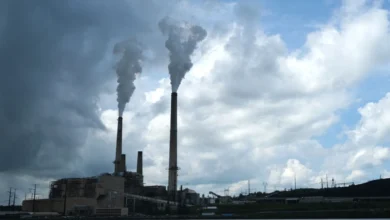
Diesel Prices Shatter Historical Records Amid Escalating Global Conflicts and Supply Chain Strains

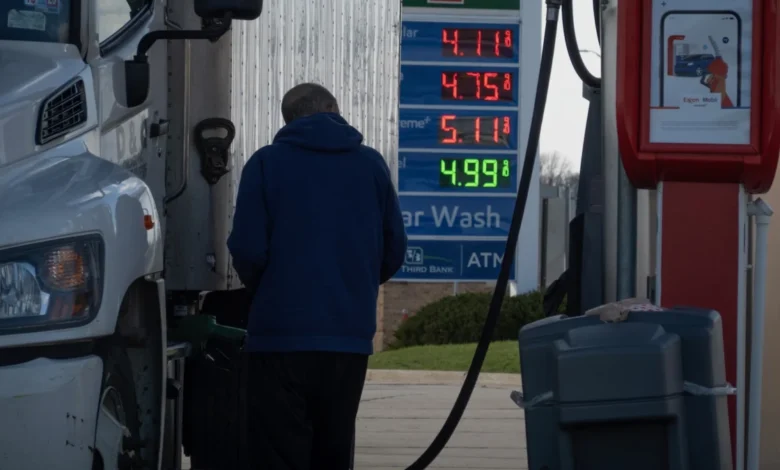
U.S. diesel fuel prices have shattered historical records, soaring past $5.98 per gallon nationally in mid-September as a confluence of prolonged geopolitical conflicts, shuttered vital shipping lanes, and severely depleted domestic inventories converge to squeeze American consumers and businesses alike.
According to market data provided by the American Automobile Association (AAA), the staggering national average recorded on September 10 represents an increase of approximately $2.31 per gallon compared to late February levels, when the United States and Israel launched military operations against Iran. Regional disparities have magnified the crisis in various parts of the country; in states like California, consumers face crippling prices touching $7.91 per gallon.
While the average everyday commuter may not directly pump diesel into a personal passenger vehicle, the economic repercussions of these soaring fuel costs are nearly inescapable. Diesel serves as the lifeblood of the global supply chain, powering the heavy-duty semi-trucks, cargo trains, and maritime vessels responsible for transporting everything from fresh milk and agricultural produce to raw lumber and retail goods. As transportation expenses mount, these hidden costs are rapidly embedded into the final price tags observed by consumers at grocery stores, hardware supply centers, and shopping malls across the nation.
The last time American consumers experienced a shock of this magnitude was in 2022, when the outbreak of the Russia-Ukraine war propelled diesel prices to a then-record high of $5.82 per gallon. However, market analysts note that the current crisis is driven by a more complex web of international supply restrictions, domestic refining bottlenecks, and seasonal demand pressures that threaten to persist well into the winter months.
A Timeline of Conflict and Geopolitical Disruption
The roots of the current crisis trace back to early 2020s energy market vulnerabilities, but the immediate catalyst unfolded in late February with the military conflict involving the United States, Israel, and Iran. This hostilities have effectively closed the Strait of Hormuz—a crucial maritime chokepoint through which approximately 10 percent of the world’s seaborne diesel historically traveled.
The closure of this vital trade corridor instantly choked off major international supply routes, sending shockwaves through global commodity exchanges. Compounding the issue are ongoing, increasingly sophisticated military operations by Ukraine targeting Russian oil refineries. These strategic strikes have successfully removed Russia—historically one of the world’s primary diesel exporters—from meaningful participation in the open global market.
Energy analysts emphasize that these compounding geopolitical shocks have left the global market uniquely exposed. Patrick De Haan, head of petroleum analysis at fuel-tracking platform GasBuddy, noted that diesel is currently trapped in a much more volatile web of international conflict than standard gasoline.
"Russia is no longer supplying the global market, and U.S. refineries are already operating at full capacity," De Haan explained, highlighting the structural limitations of domestic production. With refiners unable to easily ramp up output to offset the shortfall, domestic inventories have plummeted to their lowest levels since 1982, according to official data published by the Energy Information Administration (EIA).
Economic Toll and Supply Chain Pressures
The financial fallout for American households has been swift and severe. Data from a specialized tracking project at Brown University reveals that the surging price of diesel has drained an additional $46 billion from the U.S. economy, translating to an average burden of roughly $350 per household. While gasoline prices have also risen sharply—accounting for $55 billion in extra consumer costs due to a 41 percent price increase—diesel has outpaced motor gasoline with a staggering 61 percent spike over the same timeframe.
Initially, businesses attempted to absorb the escalating costs internally. David Ortega, a professor of food economics and policy at Michigan State University, explained to industry reporters that early price hikes were largely buffered along the supply chain via pre-existing freight contracts and retailer profit margins.
"As contracts reprice and fuel surcharges take hold, more of that cost makes its way to the grocery store," Ortega warned. Consequently, everyday items—from perishable groceries to manufactured household goods—are steadily increasing in price as logistics providers pass their operational expenses down the line.
The timing of the crisis could hardly be worse. September marks a critical period of heightened demand for diesel fuel. David Russell, global head of market strategy at brokerage firm TradeStation, pointed out that agricultural producers and long-haul trucking fleets traditionally scale up their fuel consumption during the autumn harvest season.
"We’re entering a key period for diesel consumption with the lowest inventories on record for early September," Russell stated. "Farmers and truckers typically use more diesel in the autumn, which raises the stakes for the current crisis and increases the risk of sharper price increases."
The Looming Winter Heating Crisis
As autumn transitions into winter, the diesel crisis is projected to morph into an acute home heating emergency. Heating oil—which is chemically and structurally nearly identical to diesel fuel—is utilized by millions of residential households across the United States, particularly in the Northeastern states.
Families relying on heating oil face the prospect of unprecedented utility bills just as the federal administration weighs potential cuts to vital support infrastructure. Specifically, the proposed federal budget from President Donald J. Trump’s administration includes threats to eliminate the Low Income Home Energy Assistance Program (LIHEAP), a federal initiative designed to help vulnerable, low-income households afford their home heating bills during severe weather.
Mark Wolfe, executive director of the National Energy Assistance Directors Association, expressed deep concern over the convergence of high fuel costs and potential safety-net rollbacks. "If you’re in the Northeast, then this is much more burdensome than anywhere else in the country," Wolfe told media analysts. "Families are getting hit by both gasoline and heating oil."
Political Implications Ahead of Midterm Elections
With fuel and heating costs dominating household budgets, the economic crisis has taken center stage in the national political dialogue just ahead of the upcoming midterm elections. Historically, fluctuating fuel prices have played a secondary role in voter decision-making compared to broader macroeconomic indicators like employment and inflation. However, energy analysts suggest this election cycle may break that historical mold.
Kevin Book, head of research at energy consulting firm ClearView Energy Partners, noted that voters in regions heavily reliant on alternative heating fuels may cast their ballots with energy costs at the forefront of their minds. "In cold weather states—particularly those that rely on fuels other than natural gas—it could be a very big deal," Book observed.
Path to Recovery Remains Lengthy
Even under the most optimistic projections—such as an immediate, diplomatic resolution to the ongoing conflicts in Iran and Ukraine—market experts caution that relief will not be instantaneous.
According to GasBuddy’s Patrick De Haan, restoring equilibrium to the energy sector will require a deliberate, multi-step process. "After both of those are solved, then once the flow normalizes, that will start to help global inventories recover," De Haan stated. "Only after inventories have recovered do diesel prices really see a full decline."
Until international shipping lanes reopen, refining capacities expand, and domestic stockpiles are replenished, American consumers, agricultural producers, and logistics networks will continue to navigate the high cost of a disrupted global energy market.
Related posts: