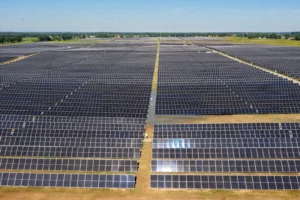
Red State Paradox: How Trump-Voting States Became the Unlikely Engine of America’s Solar Boom


The political rhetoric surrounding renewable energy in the United States has long been characterized by a sharp partisan divide. Traditional narratives often paint progressive states as the champions of green technology and conservative regions as staunch defenders of fossil fuels. However, a comprehensive new market report released by the Solar Energy Industries Association (SEIA) reveals a striking paradox at the heart of the nation’s energy transition. Despite mounting political opposition from conservative federal lawmakers and administrations, states that voted for Donald Trump in the most recent presidential election are aggressively leading the country in solar energy adoption.
According to the SEIA’s Q3 2026 Solar Market Insight Report, Trump-supporting states accounted for an overwhelming eight out of the top ten solar-building states nationwide during the first half of the year. This unexpected alignment between conservative political leadership and rapid renewable deployment highlights a complex economic reality: when it comes to power generation, the demands of a booming commercial sector, abundant land availability, and a pro-growth regulatory environment often outweigh ideological differences over climate change.
As the United States grapples with surging electricity demands driven by advanced manufacturing, artificial intelligence, and the proliferation of power-hungry data centers, conservative states are turning to solar power not out of environmental altruism, but as a pragmatic, fast-to-deploy solution to energy scarcity.
The Scale of the 2026 Surge
The figures underscore a massive nationwide acceleration in renewable energy infrastructure. During the second quarter of 2026 alone, the United States added more than 11 gigawatts of solar power to the grid. This milestone represents a dramatic 45 percent increase compared to the same three-month period in 2025. Crucially, states that supported Trump in the last presidential election were responsible for nearly three-quarters of this unprecedented growth.
At the vanguard of this movement are traditional Sun Belt powerhouses. Texas and Florida, the two most populous states that voted for Trump, claimed the first and third spots, respectively, in nationwide solar construction rankings. They were joined in the top ten by fellow red-leaning jurisdictions such as Indiana, Ohio, and Arizona—all of which have maintained their positions among the nation’s elite solar-building states since 2024. Other conservative or politically mixed states, including Missouri, Arkansas, Michigan, and Utah, have also secured positions in the top ten during various reporting periods over the last three years.
Tim Pawlenty, CEO of the SEIA and a former Republican governor of Minnesota, noted that the data points to a fundamental shift in how conservative governance approaches energy infrastructure. "At least at the macro level, Republican-led and governed states are not only open to but embracing solar energy as a technology," Pawlenty said.
A Pro-Business Culture Meets the Energy Crunch
The rapid expansion of solar energy in conservative states is largely fueled by a confluence of economic factors. Unlike densely populated coastal states with complex regulatory hurdles, Republican-led states frequently boast expansive tracts of available land, fewer bureaucratic entanglements, and streamlined permitting processes for commercial energy projects.
This business-friendly ecosystem has intentionally attracted a new wave of heavy industry, including advanced manufacturing plants and massive data centers required to power the modern digital economy. These energy-intensive industries require vast amounts of electricity, and they need it quickly. Traditional fossil fuel plants and nuclear facilities often take years—sometimes decades—to plan, finance, and construct. In contrast, utility-scale solar farms and energy storage systems can be brought online in a fraction of that time.
"Red states, as a general proposition, have sort of a pro-build mentality. They want to build things," Pawlenty explained. This pragmatic approach to economic development means that local officials and state legislators are often willing to approve large-scale renewable projects, provided they create jobs, boost local tax revenues, and supply the cheap electricity necessary to sustain regional industrial growth.
A Shifting Federal Landscape and the 2026 Tax Credit Cliff
While the current construction boom in red states is robust, the future trajectory of the American solar industry faces significant headwinds due to recent legislative shifts at the federal level.
Historically, federal policy has played a major role in stimulating renewable energy investments. Following the passage of the landmark Inflation Reduction Act in 2022, energy developers constructing utility-scale solar farms and homeowners installing residential rooftop systems enjoyed lucrative federal tax credits. These financial incentives helped lower the barrier to entry and catalyzed a nationwide rush toward clean energy adoption.
However, the political pendulum swung again last year when Congress passed the One Big Beautiful Bill Act, which brought a premature end to many of these federal green energy incentives. Under the new legislation, tax credits for most uninitiated solar projects expired on July 4, 2026.
This looming deadline triggered a massive scramble across the country. Solar developers raced to break ground on planned projects before the expiration date, artificially inflating installation numbers and creating the record-shattering bump in solar deployment observed in the second quarter of 2026. Looking forward, industry analysts warn that the sudden withdrawal of federal tax credits introduces a high degree of uncertainty, particularly for the residential rooftop solar market, which has already begun to experience a noticeable contraction through 2026.
The Divergent Paths of Sun Belt Titans and Emerging Markets
The impact of the federal tax credit expiration will not be felt equally across all states, revealing a stark divide between established solar markets and emerging ones.
Texas, for instance, has cemented its status as an undisputed titan in the renewable energy sector, claiming the number one spot in solar development for 2024, 2025, and the first half of 2026. Backed by the wide-open spaces of the Texas grid, abundant sunshine, and a deregulated energy market, the Lone Star State’s solar engine operates with immense momentum that may easily weather federal policy changes.
Other states, however, are navigating their solar booms under entirely different geographic and political conditions. Michigan serves as a prime example. As a politically competitive state where a majority of voters chose Trump in the 2024 presidential election, Michigan reached the national top ten for solar deployment for the first time in 2026, climbing dramatically from 23rd place in 2024 to 4th place in the first half of the year.
Unlike Texas, Michigan lacks year-round intense sunlight, raising questions about the long-term economic viability of its solar sector in the post-tax-credit era. Michael Craig, an associate professor at the University of Michigan’s School for Environment and Sustainability, notes that climate and geography play an unavoidable role in energy economics.
"The economics of solar largely depends on your solar resource," Craig stated. "The better the resource, I’d say the less important the tax credits are."
State-Level Mandates and Structural Drivers
For states like Michigan, the absence of federal financial incentives means the industry will likely rely heavily on state-level clean energy policies to sustain momentum. Despite voting for a Republican presidential candidate in 2024, Michigan currently operates under a Democratic governor and a Democrat-led state Senate. This political configuration enabled the passage of stringent state laws mandating that public utilities generate 50 percent of their electricity from renewable sources by the year 2030.
According to Craig, this statutory requirement, combined with soaring electricity demands from regional data centers, provides a resilient local market that will continue to drive solar installations forward regardless of shifts in Washington, D.C.
Beyond state mandates and tax credits, industry experts argue that structural market forces remain the most critical determinants of solar’s long-term survival. Rachel Skaar, communications director for the Solar Energy Industries Association, emphasizes that the fundamental utility of solar technology—specifically its unmatched deployment speed—ensures its continued integration into the American power grid.
"Solar and storage can deploy so much faster than other technologies," Skaar said. "So when we talk about the need for energy right now, solar and storage can provide it."
Implications for the Future of American Energy
The reality that Trump-voting states are leading the nation in solar adoption challenges simplistic partisan narratives about the energy transition. It demonstrates that the economic imperatives of modern industrial growth, cheap power generation, and land monetization frequently override broader political debates.
As the United States enters the post-tax-credit era of 2026 and beyond, the resilience of the solar industry will be tested. While the loss of federal subsidies may slow residential rooftop installations and challenge emerging markets with less-than-ideal solar resources, the powerful combination of corporate electricity demand, state-level renewable portfolio standards, and the sheer speed of project deployment suggests that the red-state solar boom is more than a temporary anomaly. It may well be the blueprint for the future of American energy infrastructure.
Related posts: