Unearthing the Toxic Legacy of September 11: Newly Released Municipal Documents Shed Light on Decades-Old Air Quality Cover-Up


Twenty-five years after the catastrophic terrorist attacks that forever altered the skyline of New York City and the geopolitical landscape of the world, a fresh chapter in accountability is unfolding. The administration of New York City Mayor Zohran Mamdani recently released approximately 170,000 pages of long-concealed air-quality documents. These records, originating from 68 boxes discovered in a municipal office last year, were forced into the public domain following a rigorous freedom-of-information lawsuit spearheaded by the advocacy organization 9/11 Health Watch.
The contents of these newly uncovered archives dismantle decades of official reassurance, offering a devastating window into the hazardous toxic soup that blanketed lower Manhattan in the autumn of 2001. More critically, they substantiate what survivors, first responders, and investigative journalists have argued for a quarter-century: that federal and local authorities knowingly misled the public regarding the safety of the ambient air, fostering a public health disaster that many epidemiologists estimate has ultimately claimed more lives through illnesses than the initial attacks themselves.
The Genesis of a National Tragedy and Environmental Catastrophe
The morning of September 11, 2001, began under an eerily immaculate expanse of blue sky—clear, bright, and temperate. Yet, that deceptively serene meteorological backdrop soon transformed into an apocalyptic theater. At 8:46 a.m., American Airlines Flight 11 struck the North Tower of the World Trade Center, followed shortly by United Airlines Flight 175 hitting the South Tower at 9:03 a.m.
The subsequent collapse of the Twin Towers released an unprecedented volume of pulverized building materials into the atmosphere. The resulting dust cloud was not mere dirt; it was a complex, highly toxic aerosolized cocktail composed of pulverized concrete, asbestos, glass fibers, lead, polycyclic aromatic hydrocarbons (PAHs), benzene, and dioxins.
Despite the visibly toxic nature of the billowing black and gray plumes that choked lower Manhattan, federal assurances materialized with alarming swiftness. Within days of the attacks, the U.S. Environmental Protection Agency (EPA) issued sweeping public statements declaring that the air was safe to breathe. This narrative was aggressively echoed by municipal officials eager to project normalcy, reopen Wall Street, and facilitate economic recovery.
Chronology of Denial: The Anatomy of an Institutional Failure
The timeline of the EPA’s public pronouncements versus internal skepticism reveals a disturbing disconnect between bureaucratic expedience and scientific reality.
September 11–18, 2001: In the immediate aftermath of the collapses, rescue and recovery operations commenced immediately amid heavy smoke and particulate matter. Workers operated without adequate respiratory protection, largely relying on the federal government’s implicit and explicit guarantees that the air posed no long-term health hazards.
September 18, 2001: Just one week after the attacks, the EPA officially declared the air quality in lower Manhattan to be safe. This proclamation was broadcast nationally, offering profound psychological comfort to traumatized citizens but setting a perilous trap for residents, returning office workers, and recovery personnel.
August 2003: A landmark report by the EPA Office of the Inspector General delivered a damning verdict on the agency’s early actions. The report concluded that the EPA’s reassuring statements in September 2001 were issued without sufficient data and analyses to support such a blanket claim. Furthermore, the report revealed that the White House Council on Environmental Quality had pressured the agency to soften its language regarding environmental risks to expedite the reopening of the financial district.
2006–Present: Longitudinal health studies by the World Trade Center Health Program documented surging rates of chronic respiratory diseases, autoimmune disorders, and dozens of distinct types of cancers among survivors and first responders. Epidemiological models began suggesting that post-9/11 illnesses could eventually surpass the direct death toll of the attacks, which stood at 2,977 victims.
September 2026: The release of the 170,000 pages of municipal documents by the Mamdani administration provides the smoking gun that researchers had sought for years. According to analyses by participating news organizations, the records show that hazardous materials—including asbestos—were actively detected in air quality tests conducted as far as half a mile away from Ground Zero a full ten months after the attacks.
The Human Toll and Scientific Findings
The newly surfaced documents reinforce the findings of numerous scientific bodies regarding the composition and persistence of the Ground Zero toxins. When the towers imploded, the pulverization of thousands of tons of fireproofing materials, electrical cables, and structural insulation created an alkaline dust cloud with a pH level similar to liquid drain cleaner. This caustic substance coated the mucous membranes of anyone breathing it in without proper filtration.
Thousands of volunteer firefighters, police officers, sanitation workers, and construction personnel labored on "The Pile" for months, often wearing simple surgical masks or no respiratory protection at all, believing official statements that the environment was benign.
The consequences have been generational. Decades later, the World Trade Center Health Program continues to monitor hundreds of thousands of individuals. Medical professionals have formally linked exposure to the toxic dust cloud to elevated incidences of multiple myeloma, prostate cancer, thyroid cancer, and debilitating pulmonary fibrosis. For many families, the tragedy of 9/11 did not end on September 11; it manifested slowly over years of agonizing medical treatments and premature deaths.
Official Responses and Statements
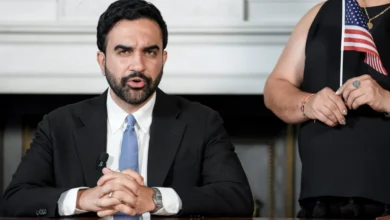
At a packed press conference on September 8 announcing the release of the archival cache, Mayor Zohran Mamdani did not mince words regarding the historical failure of leadership.
"People got sick because the leaders they trusted lied and told them they were safe to breathe in toxic air," Mayor Mamdani stated plainly. He emphasized that transparency, however delayed, is a fundamental prerequisite for civic healing and accountability.
Representatives from advocacy groups such as 9/11 Health Watch echoed these sentiments, noting that the documents validate the long-standing struggles of victims seeking adequate healthcare compensation and recognition from the federal government. While previous legislative milestones—such as the James Zadroga 9/11 Health and Compensation Act—established crucial funding streams for medical care, the newly released records provide vital evidentiary support for ongoing legal and political accountability.
Broader Impact and Implications
The unearthing of these records serves as a sobering case study in crisis communication, institutional self-preservation, and the ethics of public safety administration during national emergencies.
When catastrophic events occur, governments face an inherent tension between managing public panic and communicating transparent ethical truths. In the case of September 11, the decision to prioritize economic continuity and emotional reassurance over scientific caution resulted in a secondary man-made health crisis.
As the Mamdani administration pledges to release further batches of documents in the coming months, historians, legal experts, and public health officials are evaluating the systemic lessons of 2001. The physical debris of the Twin Towers was cleared from lower Manhattan decades ago, but the broader work of excavating the institutional truth remains unfinished. Twenty-five years later, the shadow of that toxic cloud continues to demand answers, transparency, and justice for a generation of Americans who paid the ultimate price for institutional deception.