The Vanishing Landmark: St. Mary’s Glacier and the Rapid Decline of Colorado’s Alpine Snowfields

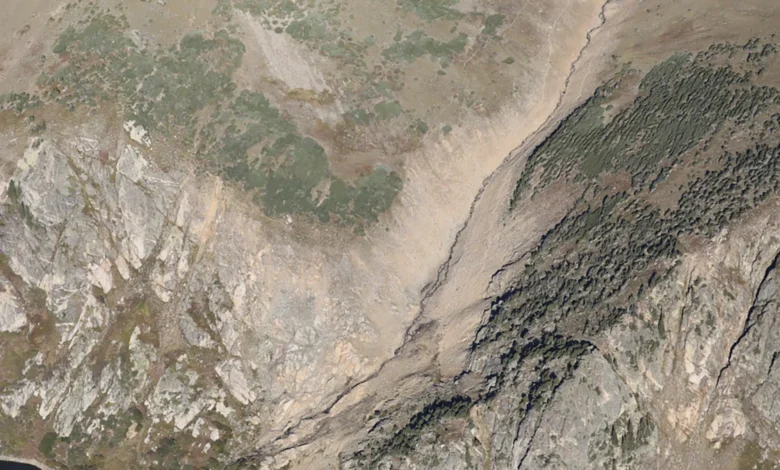
The disappearance of St. Mary’s Glacier from the Colorado Front Range represents a definitive turning point in the state’s ecological history. For over a century, the snowfield—located near Idaho Springs—served as a primary destination for summer recreation, a critical hydrologic feature, and a cultural touchstone for residents of the Denver metropolitan area. However, following an exceptionally mild winter snowpack and record-breaking summer temperatures, the site has officially melted out, marking the first time in recorded history that the feature has completely vanished. This event underscores a broader, accelerating trend of glacial and perennial snowpack retreat across the Rocky Mountains, driven by a changing climate that is fundamentally altering the high-altitude landscape.
A Chronology of Decline
While the total disappearance of the ice occurred in September 2026, the trajectory of the decline has been evident for decades. St. Mary’s, often referred to as a "glacier" despite its technical classification as a perennial snowfield, exists in a deep, north-facing cirque that typically protects it from direct solar radiation. Historically, this geography allowed the snow to persist through the warmest months of the year, replenishing itself through wind-blown snow accumulation and avalanches during the winter.
The early 2000s marked a period of noticeable thinning. Photographic evidence from 2014 and 2016 provided early indicators of the retreat, showing exposed bedrock where ice had previously held firm. The process moved from gradual to rapid between 2020 and 2024. Geoscientists monitoring similar features in the Front Range noted that while these snowfields once lost only inches of thickness annually, recent measurements indicate a shift toward multi-foot losses in single seasons.
The final catalyst was the winter of 2025-26. Colorado experienced the lowest seasonal snowpack in four decades, depriving the cirque of the necessary "capital" required to survive the ensuing summer. The 2026 summer season then set local heat records, creating an environment where the rate of ablation—the process of melting and evaporation—far outpaced the dwindling reserves of ice. By mid-September, the expanse that had hosted generations of hikers, backcountry skiers, and field trips was reduced to a barren, rocky gully.
Technical Assessment and Data Analysis
The loss of St. Mary’s is not an isolated incident; it is a symptom of a systemic shift in Colorado’s alpine cryosphere. Dan McGrath, a professor of geosciences at Colorado State University, has utilized aerial Light Detection and Ranging (LIDAR) imagery, in partnership with the conservation group LightHawk, to quantify the health of regional snowfields. The data collected by McGrath’s team provides a stark look at the fragility of these systems.
At the nearby Andrews Glacier in Rocky Mountain National Park, researchers observed a significant acceleration in melt rates. Between 2010 and 2020, the glacier lost an average of six inches of thickness per year. That rate increased sixfold between 2020 and 2024, with the glacier losing three feet annually. The most recent data for 2026 showed a staggering 11-foot thinning in a single year, a tripling of the rate observed just two years prior.
These metrics suggest that the "savings account" analogy—where winter snow serves as a deposit and summer heat as a withdrawal—is no longer balanced. Because the replenishment cycle has been disrupted by warmer winters and more intense, prolonged summers, the ability of these features to recover is increasingly compromised. Experts note that even if a single winter were to bring heavy snowfall, the structural integrity of these snowfields has been weakened to the point where they are less resilient to future heat events.
Regional Environmental and Cultural Implications
The loss of St. Mary’s Glacier extends beyond the immediate sadness of the local community. The Front Range snowfields have long acted as natural reservoirs, slowly releasing water throughout the late summer months. This late-season runoff is vital for maintaining stream flows in the headwaters of the South Platte and Colorado River basins, supporting local aquatic ecosystems and downstream agricultural interests. As these features disappear, the hydrological profile of the mountains changes, potentially leading to earlier, more intense spring runoff and a subsequent period of late-summer drought in mountain streams.
From a cultural standpoint, the loss of St. Mary’s represents the erasure of a landmark that served as a gateway to the high alpine for thousands of Coloradans. The site was historically significant, dating back to the Victorian era when city residents would hike to the snowfield to escape the heat of the plains. In more recent decades, it became a training ground for backcountry skiers and a site for environmental education. Its disappearance serves as a tangible indicator of climate change that is accessible and visible to the public, moving the conversation from abstract scientific projections to observable reality.
Official Perspectives and Future Outlook
The scientific community maintains a focus on the broader implications of these trends. Glacial retreat is a global phenomenon, contributing to rising sea levels and the destabilization of mountain slopes. In the context of Colorado, the focus is on understanding the variables that determine which features are most at risk and how the loss of these features will impact regional water security and biodiversity.
"All of these glaciers are on a one-way street to their eventual disappearance," McGrath stated. While he acknowledges that some features may persist longer than others due to their specific topography, the overall trend is clear. The Arapahoe Glacier and the Isabelle Glacier are currently among the most vulnerable, with the latter already reduced to isolated patches of crusty, discolored ice.
For the public, the disappearance of St. Mary’s Glacier serves as a sobering reminder of the rapid pace of environmental change. While scientists continue to model the future of the remaining snowfields, the consensus is that the conditions required to maintain these features—a stable, cold climate with consistent winter precipitation—are becoming increasingly rare. The cultural and recreational practices built around these "eternal" snows are now facing a period of forced adaptation, as the landscape shifts from one of permanent ice to one of seasonal rock and soil.
Conclusion: A Changed Landscape
The 2026 melt-out of St. Mary’s Glacier is more than just a meteorological footnote; it is a definitive marker of an era ending. The combination of historic heat and diminished winter snowfall has achieved in a single year what previously took centuries of natural variation. As research continues into the retreat of alpine features, the focus remains on the downstream effects and the reality that, in many cases, these glaciers are not merely receding—they are nearing the end of their existence. The "slushy oasis" that provided joy to generations of children and a unique environment for athletes has become a casualty of a warming climate, leaving behind a changed Front Range that will require new strategies for both ecological management and the preservation of Colorado’s outdoor heritage.