Chiwetel Ejiofor Reflects on a Storied Career at the Torino Film Festival After Receiving the Prestigious Stella della Mole Award

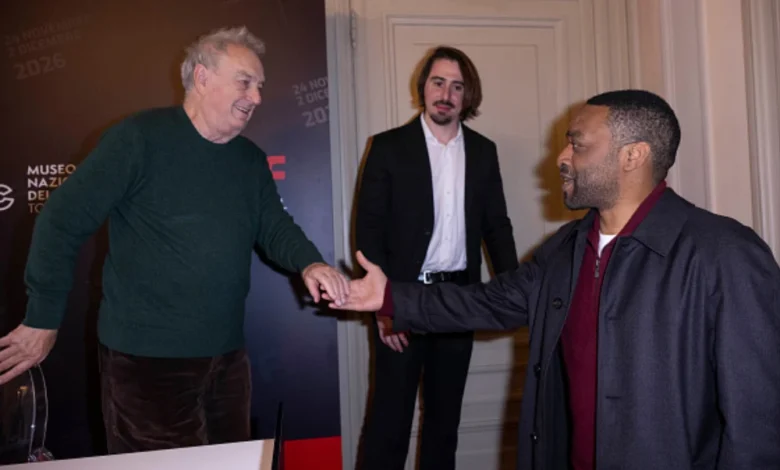
The 42nd edition of the Torino Film Festival served as a retrospective of modern cinematic excellence, drawing international stars, directors, and cinephiles to northern Italy for a celebration of the seventh art. Among the most anticipated honorees of the festival was Academy Award-nominated British actor, writer, and director Chiwetel Ejiofor. While in Turin, Ejiofor was awarded the prestigious Stella della Mole lifetime achievement award, an accolade recognizing his profound and enduring impact on both stage and screen.
During a series of masterclasses and media appearances at the festival, Ejiofor offered candid reflections on a career that spans nearly three decades. His journey, characterized by iconic collaborations with some of the most influential filmmakers of the modern era, began with an unexpected and daunting milestone: landing a role in a Steven Spielberg film straight out of the gate.
A Daunting Beginning: Starting at the Peak with Steven Spielberg
For many aspiring actors, working with a cinematic master like Steven Spielberg is the ultimate career ambition, a milestone to be strived for over decades of theatrical and cinematic toil. For Chiwetel Ejiofor, however, this monumental achievement happened at the very inception of his professional acting journey.
In 1997, at just 19 years old and while training at the prestigious London Academy of Music and Dramatic Art (LAMDA), Ejiofor was cast in Spielberg’s historical drama "Amistad." The film, which detailed the 1839 mutiny aboard a slave ship and the subsequent legal battle that reached the United States Supreme Court, featured an ensemble cast including Morgan Freeman, Anthony Hopkins, and Djimon Hounsou.
Speaking to audiences and journalists at the Torino Film Festival, Ejiofor admitted that achieving such a high-profile platform right at the start of his career provoked considerable anxiety.
"I was definitely worried about it at the time," Ejiofor recalled. "You feel that there are stages to how you develop as an actor and the opportunities you get, and you think they might follow a very linear path. But of course, my first film role was with Steven Spielberg. I realized then, very early on, that it’s a deeply unpredictable profession. You can either feel disquiet or anxiety about that, or you have to go with it."
This early lesson in the volatile and nonlinear nature of the entertainment industry shaped Ejiofor’s professional philosophy. Rather than expecting a steady, predictable ascension through the ranks of Hollywood, he learned to embrace the erratic rhythm of artistic opportunities.
"The opportunities can be sporadic or come from different places and angles that you didn’t imagine," he added. "Part of the challenge, but also the exciting thing about being an actor, is having the capacity and ability to roll with it, to travel on the journey of it and see where it takes you."
Rooted in the Stage: The Making of a Classical Actor
Despite making his cinematic debut under the direction of one of Hollywood’s most commercially and critically successful filmmakers, Ejiofor did not immediately view himself as a film actor. For the first several years of his professional life, his heart and professional ambitions remained firmly planted in the rich soil of the British theater tradition.
Ejiofor spent his formative years working extensively with the Royal National Theatre, the West End, and various off-West End theater companies. He immersed himself in the demanding, rigorous world of classical drama, tackling complex characters with physical presence and psychological depth.
His theatrical dedication culminated in 2008 when he delivered a critically acclaimed performance as the title character in Michael Grandage’s production of "Othello" at the Donmar Warehouse. His searing portrayal of the Venetian general earned him the Laurence Olivier Award for Best Actor, cementing his status as one of the preeminent classical stage actors of his generation.
For Ejiofor, the transition from stage to screen was not instantaneous. It required a fundamental shift in artistic appreciation—a process catalyzed by a specific collaboration in the early 2000s.
Falling in Love with Cinema: The Stephen Frears Factor
The turning point in Ejiofor’s relationship with cinema arrived when he was cast in Stephen Frears’ 2002 psychological thriller "Dirty Pretty Things." The film, which also screened at the Torino Film Festival to honor Frears, follows an illegal Nigerian immigrant in London named Okwe, who works as a hotel desk clerk and stumbles upon an underground organ-trafficking ring.
"Dirty Pretty Things" earned Ejiofor widespread international acclaim, including a British Independent Film Award for Best Actor, and proved to be the catalyst that altered his professional identity.
"I think it was around that time when I started to fall in love with film as well, with film acting and the rhythm and poetry of cinema," Ejiofor reflected in Turin. "A lot of that had to do with Stephen Frears and Chris Menges, who was the cinematographer on that film. It became something that I started to pursue."
Working alongside cinematographer Chris Menges—a two-time Academy Award winner known for his naturalistic lighting and evocative visual storytelling—Ejiofor discovered the distinct intimacy and nuanced pacing of film acting. The experience bridged the gap between his theatrical discipline and the demands of the camera, allowing him to successfully balance both mediums for the next decade.
Transition to Filmmaking: Writing and Directing
As his career matured, Ejiofor’s creative ambitions expanded beyond performance. Finding himself increasingly drawn to the mechanics of storytelling from behind the camera, he began carving out time to write and direct his own projects.
Historically, the time Ejiofor dedicated to writing and directing would have been spent treading the boards in theatrical productions. However, this pivot allowed him to bring unique, socially conscious narratives to the screen as a filmmaker.
To date, Ejiofor has directed two notable feature films. His directorial debut, "The Boy Who Harnessed the Wind" (2019), adapted from William Kamkwamba’s bestselling memoir, tells the inspiring true story of a 13-year-old boy in Malawi who builds a wind turbine to save his village from famine. The film was critically praised for its visual poetry, cultural authenticity, and emotional resonance, and was selected as the British entry for the Best International Feature Film at the 92nd Academy Awards.
Following that success, Ejiofor directed "Rob Peace" (2024), a biographical drama exploring the tragic life of a brilliant Yale graduate who lived a double life as a drug dealer before meeting an untimely death.
Despite his successful foray into directing, Ejiofor’s passion for live theater remains undiminished. During his time at the Torino Film Festival, he revealed that a return to the stage is imminent.
"It’s still something that I’m very passionate about," Ejiofor stated regarding theater. "Finding the time to do as much theater as I want can be challenging, but it’s something I’m in the midst of conversations about." He expressed hope that he will be involved in a major theatrical production by late next year, signaling a welcome homecoming for fans of his stage work.
Bringing Humanity to History: The Legacy of "12 Years a Slave"
Among the cinematic milestones celebrated during the Torino Film Festival retrospective was Steve McQueen’s 2013 historical masterpiece "12 Years a Slave," a film that marked a defining moment in contemporary cinema and earned Ejiofor a nomination for the Academy Award for Best Actor.
Based on the 1853 slave memoir by Solomon Northup, the film chronicles the harrowing true story of Northup, a free African American man from upstate New York who was kidnapped in Washington, D.C., in 1841 and sold into slavery in the Deep South, enduring twelve years of brutality before regaining his freedom.
When the script was first sent to him, Ejiofor was entirely unfamiliar with Northup’s account. The discovery proved to be profoundly moving.
"I hadn’t heard of his story at all. When I was sent the script, I was incredibly moved and shocked by it. Then I read Northup’s own memoir. I thought it was an extraordinary story, an extraordinary tale," Ejiofor said prior to the festival screening. He reflected on the film’s unflinching examination of a "very tragic period of absence of humanity."
Ejiofor praised the collaborative environment fostered by director Steve McQueen, describing the filmmaker as "a phenomenal filmmaker, incredibly passionate, detailed and thorough, with a wonderful vision and cinematic heart." The global critical acclaim and subsequent Academy Awards—including Best Picture—validated the immense emotional and physical toll the production demanded.
"It felt very profound to me. I was just deeply moved," Ejiofor said. "It was incredibly gratifying to see the film being received the way that it was, globally and by the Academy. At its heart, it was always a story about human respect and human dignity."
Broader Implications and Industry Legacy
Chiwetel Ejiofor’s recognition at the Torino Film Festival highlights a rare and enduring career trajectory. In an industry frequently criticized for typecasting and short-lived commercial trends, Ejiofor has successfully navigated multiple artistic spheres—blockbuster cinema, independent auteur projects, classical theater, and auteur filmmaking.
His journey from a teenage newcomer on the set of "Amistad" to a multi-hyphenate creator underscores the value of artistic adaptability. By embracing the unpredictability of the profession rather than resisting it, Ejiofor has built a body of work defined by intellectual rigor, emotional depth, and a steadfast commitment to human dignity.
As the Torino Film Festival concluded, the presentation of the Stella della Mole award served not merely as a retrospective of past accomplishments, but as a testament to an artist whose creative evolution remains ongoing. Whether through upcoming stage productions in London or future directorial projects behind the camera, Ejiofor continues to chart a course defined by uncompromising artistic integrity and a profound respect for the transformative power of storytelling.
Related posts: