As the winter sports season approaches, alpine skiers across the globe are intensifying their training regimens to prepare for the physical rigors of the mountain. While traditional preparation often emphasizes the primary movers of the lower body—specifically the quadriceps, hamstrings, and the gluteus maximus—medical experts are increasingly highlighting the critical importance of a smaller, often overlooked stabilizer: the gluteus medius. Located on the outer hip, this muscle is increasingly recognized by orthopedic surgeons and sports medicine professionals as a primary defense mechanism against the most common and debilitating injuries on the slopes, most notably the anterior cruciate ligament (ACL) tear.
The Anatomy of Slope Safety
The gluteus medius is a vital component of the pelvic girdle and lower extremity stability. Its primary function is hip abduction—moving the leg away from the midline of the body—but its role in skiing extends far beyond this simple motion. During the complex, multi-axial movements of a ski turn, the gluteus medius acts as a dynamic stabilizer. It prevents the knee from collapsing inward toward the midline, a biomechanical failure known as valgus.
When a skier loses form and drifts into the "back seat"—a position where the center of gravity shifts behind the boots—the knee becomes vulnerable. If the gluteus medius is insufficiently strong to counteract the forces at play, the knee may buckle into valgus, creating a high-risk environment for the tibia to rotate internally. This specific motion is the clinical hallmark of an ACL rupture. According to orthopedic data, ACL injuries remain the most frequent serious orthopedic event among alpine skiers, often requiring surgical reconstruction and extensive rehabilitation periods ranging from nine to twelve months.
Expert Insights on Training Disparities
Dr. Gregory Lichtman, a prominent orthopedic surgeon in northern California who serves as a physician for the U.S. Women’s Ski Team, emphasizes that even elite athletes can suffer from gluteal deficiencies. The issue lies in the nature of general fitness training. Standard endurance activities like road running, cycling, or basic hill climbing are highly effective at conditioning the quads and hamstrings, but they do little to isolate the specific lateral stabilizing function of the gluteus medius.
"Unlike the larger muscle groups that are engaged through repetitive forward-motion activities, the gluteus medius requires intentional, targeted stimulation," Dr. Lichtman notes. He suggests that the disconnect between general cardiovascular fitness and sport-specific stability is a major contributing factor to the high incidence of knee pain, such as patellofemoral pain syndrome, often seen in recreational skiers as the season progresses.
The Chronology of Injury Prevention
The window for building this stability is not limited to the pre-season. While many enthusiasts focus on a three-month intensive "dryland" program starting in late autumn, injury prevention is a longitudinal process. A professional training timeline typically follows three distinct phases:
- Pre-Season (September–November): Focus on building foundational strength and neuromuscular adaptation. This is when the gluteus medius should be prioritized, as the central nervous system learns to fire these muscles in concert with the larger muscle chains.
- Early Season (December–January): A transition phase where intensity is maintained. Many skiers experience a drop-off in strength training during this time, believing that skiing itself provides enough exercise. However, for those skiing fewer than four days a week, this "taper" can lead to muscle atrophy and increased fatigue.
- Mid-to-Late Season (February–April): Maintenance and fatigue management. As the season progresses, muscle fatigue becomes the primary catalyst for injury. Research suggests that as muscles tire, reaction times slow, and the ability to maintain proper form—especially staying centered over the skis—diminishes.
Comparative Biomechanics: Isolating vs. Integrating
Historically, physical therapy protocols for the gluteus medius relied heavily on side-lying leg raises with ankle weights. While these movements are effective for clinical isolation, they lack the "kinetic chain" involvement required for high-velocity sports like skiing.
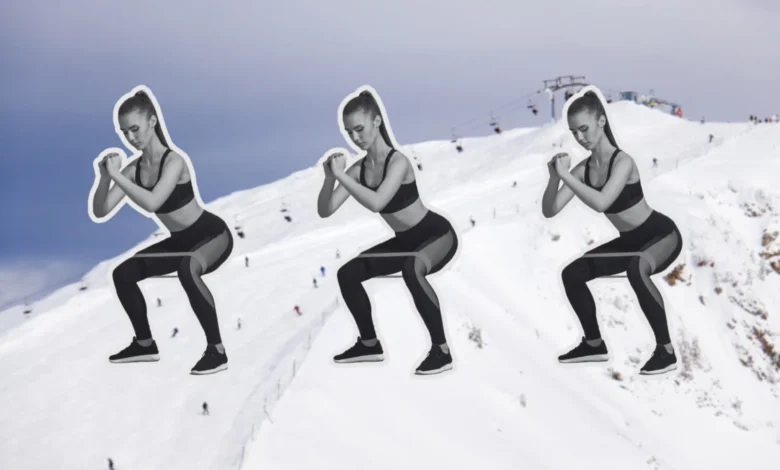
Modern athletic training has shifted toward "Monster Walks"—a dynamic exercise that involves using a resistance band placed above the knees or around the ankles while maintaining an athletic squat position. This movement forces the gluteus medius to work in conjunction with the core, hamstrings, and quadriceps. By requiring the athlete to fight against the resistance of the band while maintaining a stable pelvis, the exercise mimics the lateral tension encountered during a carved turn on groomed snow.
Data from strength and conditioning studies indicate that multi-joint movements are significantly more effective for sport-specific injury mitigation than isolated movements. By integrating the gluteus medius into a full-body movement pattern, skiers train their bodies to resist the massive G-forces generated during high-speed turns, thereby protecting the joints and enhancing overall performance.
Broader Implications for the Recreational Skier
The broader implication for the skiing community is a shift in how "fitness" is defined. Being able to ski for six hours is not the same as being physically prepared for the structural demands of the sport. Orthopedic surgeons point out that fatigue is a primary risk factor for traumatic injury. A skier who is "zapped" by the afternoon is significantly more likely to drift into the back seat, lose control of their knee alignment, and suffer an ACL tear.
Therefore, a comprehensive injury prevention strategy must be tripartite:
- Targeted Stability: Building the gluteus medius to prevent valgus collapse.
- Core and Quad Strength: Maintaining the ability to stay centered and forward-balanced over the skis.
- Muscular Endurance: Ensuring that the muscles can perform at the same level of intensity at 3:00 PM as they did at 9:00 AM.
Clinical Perspectives and Future Outlook
The consensus among medical professionals is that while no training program can eliminate the inherent risks of a high-speed sport like skiing, the gap between a season-ending injury and a successful trip often comes down to the efficiency of the body’s support structures.
"We want to see skiers who are not just fit, but functionally robust," says Dr. Lichtman. The strategy of incorporating resistance-band training into both the pre-season and the active season is gaining traction as a gold-standard approach. For the recreational athlete, this means finding time for 20 minutes of supplemental training two to three times a week—even during the season—to ensure that the smaller stabilizers of the hip remain conditioned to handle the demands of the slope.
As the industry continues to advance in terms of equipment safety—with modern bindings and skis designed to release or absorb shock more effectively—the human element remains the most significant variable. Strengthening the gluteus medius is a simple, highly effective intervention that addresses the root cause of many knee injuries, shifting the focus from post-injury rehabilitation to proactive, intelligent performance management. Through consistent application of these training principles, skiers can extend their longevity in the sport and significantly mitigate the risks associated with the physical stresses of alpine terrain.