The Strategic Evolution of Private Label Outdoor Gear and the Economic Transformation of the Specialty Retail Market

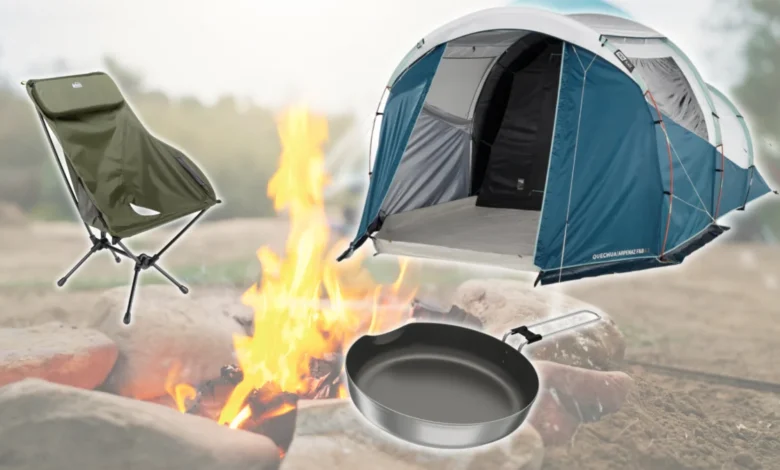
The global outdoor industry has faced a complex economic landscape over the past several years, culminating in a notable 11 percent increase in gear prices during the 2025-2026 fiscal cycle. As consumers navigate the persistent effects of inflation and fluctuating discretionary income, a significant shift has occurred in the way technical equipment and apparel are developed, marketed, and sold. While the "pinch" of inflation has impacted nearly every sector of the economy, the outdoor gear market has been particularly susceptible to rising costs in raw materials, specialized labor, and international shipping. In response, a growing segment of the market is turning away from traditional high-end name brands in favor of private-label gear produced by major retailers like REI, Backcountry, and Decathlon. These "house brands" have moved beyond their historical reputation as budget-friendly alternatives, emerging instead as high-performance competitors that utilize a direct-to-consumer (DTC) manufacturing model to undercut top-shelf pricing by as much as 35 percent.
The Economic Context of Rising Gear Costs
The 11 percent price surge recorded in early 2026 is the result of a multi-year compounding effect. Following the unprecedented surge in outdoor participation during the early 2020s, the industry faced a series of supply chain bottlenecks that delayed product cycles and increased the cost of technical fabrics, such as high-denier nylons and waterproof membranes. By 2026, even as logistics stabilized, the "landed cost"—which encompasses materials, construction, freight, and tariffs—remained elevated.
For the average consumer, this has meant that a standard three-layer technical shell that might have cost $400 in 2022 now frequently retails for $450 to $500. This inflationary pressure has bifurcated the market. On one end, premium heritage brands continue to cater to a high-net-worth demographic. On the other, discount retailers like Target and Walmart provide entry-level options that, while affordable, often lack the technical specifications required for rigorous backcountry use. Between these two extremes, private-label brands have carved out a "performance-value" niche, offering gear that matches the technical prowess of premium labels at a price point accessible to the core outdoor enthusiast.
The Direct-to-Consumer Advantage and Vertical Integration
The primary mechanism allowing retailers like REI and Decathlon to offer lower prices without sacrificing quality is the elimination of the traditional wholesale-to-retail markup. In a standard industry model, a brand designs a product and pays a factory to manufacture it. That brand then sells the product to a third-party retailer at a wholesale price. Finally, the retailer applies a significant markup—often doubling the wholesale cost—to arrive at the shelf price paid by the consumer.
By contrast, house brands utilize a vertically integrated business model. "We maintain competitive prices by controlling margin outcomes through direct factory relationships," stated Isabelle Portilla, Vice President of REI Co-op Brands. This direct relationship allows the retailer to capture the profit margins that would otherwise be split between a manufacturer and a third-party seller. Furthermore, because these retailers own the distribution channels—both physical storefronts and e-commerce platforms—they bypass the marketing and customer acquisition costs that independent brands must shoulder to gain visibility.
Beverly Jacobus, Director of Specialty Brands for Decathlon US, emphasized the efficiency of this model. "We built a completely vertical business model and brought research, development, production, and the supply chain entirely inside our own walls," Jacobus noted. Decathlon’s ability to "own the entire journey" allows them to offer technical cycling gear, such as their Van Rysel line, or running equipment under the Kiprun label, at prices that are often 30 percent lower than comparable specialized brands.
A Chronology of the Private Label Evolution
The evolution of house brands from "generic" to "premium" has been a decade-long process.
- The Entry Phase (2010–2015): Retailers primarily used house brands for basic accessories—socks, base layers, and simple camping furniture. These items were designed for the casual user and rarely featured high-end technical components.
- The Technical Expansion (2016–2020): Brands like REI began investing in advanced R&D facilities, such as the Magnusson Lab. This period saw the introduction of more complex items, including technical down jackets and multi-day backpacks, often utilizing "open-source" or proprietary technologies that mimicked name-brand performance.
- The Premium Integration (2021–2025): Private labels began securing partnerships with high-end component manufacturers. A pivotal moment occurred when REI’s house brand began incorporating PFAS-free Gore-Tex membranes into its rainwear, a move that signaled to consumers that house brands were no longer "settling" for inferior materials.
- The 2026 Market Stabilization: Today, house brands are viewed as primary competitors in the technical space. Backcountry’s expansion into snow sports with its "Stoic" and "Backcountry" labels has challenged the dominance of specialized ski and snowboard brands by offering Gore-Tex shells and bibs at a fraction of the cost.
Quality Assurance and Technical Innovations
One of the most persistent hurdles for house brands has been the consumer perception that lower cost equates to lower quality. However, modern manufacturing data suggests this gap has largely closed. For example, the REI Teris GTX rain jacket utilizes the same industry-standard Gore-Tex membrane found in high-end brands like Arc’teryx or Fjallraven. Similarly, Decathlon’s Quechua MH500 hiking boots undergo laboratory testing for grip and durability using protocols that mirror those used by Vibram, the industry leader in rubber outsoles.
Moreover, the proximity of these brands to their customers provides a unique data advantage. Retailers have access to vast amounts of consumer feedback and return data, which they use to iterate on designs with remarkable speed. REI recently redesigned its Magma sleeping bag line after analyzing over 150,000 body scans to optimize fit across nine different size configurations. This "feedback loop" is much shorter for a retailer-owned brand than for a third-party manufacturer, allowing for rapid improvements in fit and function.
Comparative Pricing: A Data-Driven Breakdown
The savings offered by private labels are most visible when comparing similar technical specifications across the 2026 market:
- Running Apparel: A pair of premium name-brand running shorts typically retails for $85. The REI Co-op Swiftland equivalent, featuring similar moisture-wicking fabrics and pocket configurations, is priced at $65—a 23 percent savings.
- Cycling Gear: Specialized road cycling bib shorts often command a price of $160 or more. Decathlon’s Van Rysel Racer 3 bib shorts, tested in professional peloton environments, retail for approximately $109, representing a 32 percent discount.
- Snow Sports: High-end ski bibs featuring three-layer waterproof construction often hit the $500 mark. Backcountry’s Cardiac XPore 3L bibs are positioned at $400, offering a $100 saving for comparable technical performance.
While these savings are substantial, industry analysts point out that "house brand" does not necessarily mean "budget." These products are still premium items intended for core users. For the "once-a-year" camper or casual walker, true budget brands like Coleman or generic department store labels remain the most cost-effective entry point.
Broader Market Impact and Future Implications
The rise of high-performance house brands is forcing a recalibration of the entire outdoor industry. Heritage brands are now under increased pressure to justify their higher price points through extreme innovation, sustainable practices, or brand prestige. This competition is generally seen as a benefit for the consumer, as it pushes the entire market toward better price-to-performance ratios.
However, there are broader implications for the retail ecosystem. As retailers prioritize their own brands for shelf space and digital marketing, smaller, independent brands may find it increasingly difficult to compete for visibility. This could lead to a more consolidated market where a few large retailers dominate both the selling and the manufacturing of outdoor goods.
From a sustainability perspective, the move toward private labels also offers potential benefits. Because companies like REI and Decathlon control their entire supply chain, they can implement environmental standards—such as the shift to PFAS-free chemicals or recycled textiles—more uniformly across their product lines. REI, for instance, has leveraged its house brand to lead the industry in establishing "Product Sustainability Standards" that all brands sold in its stores must eventually meet.
Conclusion
As the outdoor industry moves through the middle of the decade, the traditional boundaries between "retailer" and "manufacturer" continue to blur. For the consumer, the 11 percent rise in gear prices has been a catalyst for a more discerning shopping experience. By leveraging vertical integration, direct-to-factory relationships, and in-house technical laboratories, private-label brands have successfully positioned themselves as a viable middle ground. They offer the technical reliability required for the backcountry while bypassing the traditional markups that have made high-end outdoor gear increasingly inaccessible. While the "prestige" of a luxury logo still holds weight for some, the data-driven performance and cost-efficiency of house brands are increasingly becoming the standard for the modern outdoor enthusiast.
Related posts: