Cameroonian Drama House of the Wind Triumphs at a Record-Breaking Marrakech International Film Festival

The 23rd edition of the Marrakech International Film Festival concluded on a historic note on Saturday, cementing its status as one of the premier cinematic gatherings on the global calendar. Amid a vibrant celebration of international storytelling, Cameroonian filmmaker Auguste Bernard Kouemo Yanghu clinched the prestigious Étoile d’Or (Golden Star) for his evocative feature debut, House of the Wind. The win caps off an extraordinary festival circuit for the film, which previously made waves at the Venice Film Festival by capturing the prestigious Lion of the Future award for best debut across all sections, alongside a Special Jury Prize in the Horizons competition.
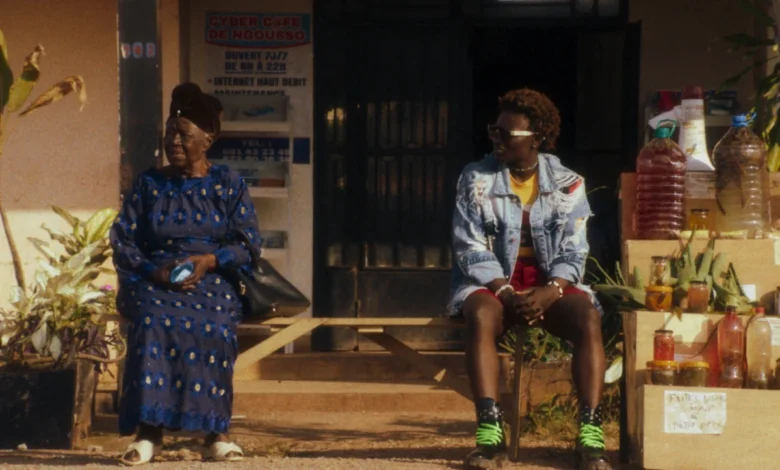
House of the Wind, a poignant exploration of aging, solitude, and cross-generational solidarity, centers on an elderly woman portrayed by Josette Kwanya. In a desperate bid to coax her children working in Europe back to her homeland in Cameroon, she constructs a new home. However, her expectations and entrenched views on familial ties are upended when she forms an unexpected and transformative companionship with a young neighborhood woman. The nine-member international jury, presided over by Oscar-winning French actress Marion Cotillard, reached a unanimous decision in bestowing the top honor upon Yanghu’s cinematic creation.
A Jury of Global Acclaim and Unanimous Consensus
Cotillard, celebrated for her transcendent performances in films such as La Vie en Rose, praised House of the Wind for its emotional resonance and artistic craftsmanship during the closing gala. Flanked by a diverse panel of cinematic luminaries—including Emma Mackey, Vicky Krieps, Claes Bang, Gilles Lellouche, Kaouther Ben Hania, Andrew Haigh, Ramata-Toulaye Sy, and Saïd Hamich Benlarbi—Cotillard articulated the profound impact the Cameroonian feature had on the jury.
“Some films move you deeply and stay with you long after the screening ends. That is what happened to us with this one,” Cotillard told the audience. She highlighted the film’s gentle yet audacious approach, noting that it bravely shifts its cinematic gaze toward those who remain behind rather than focusing solely on the familiar narratives of exile. “It is a film that introduces us to an absolutely wonderful lead character, funny and moving, with whom we fall in love instantly and whom, deep down, we find hard to leave. The journey we take with this woman—with these women—is so precious.”
Cotillard further emphasized the thematic core of the winning feature, framing it as a vital reminder of human connectivity. “Because it is also a film that reminds us of the importance of connection, of encounters, of those small acts of kindness that bring us closer together and give so much meaning to our lives. And it does it all with such grace, such simplicity.”
Global Talents Recognized Across Categories
While House of the Wind claimed the crown, the Marrakech International Film Festival jury distributed accolades across a diverse array of global cinematic achievements, highlighting films that had previously traveled through major European festivals earlier in the year.
The Jury Prize was awarded to Mexican filmmaker Fernanda Tovar for Sad Girlz. Having premiered in the Generation strand of the Berlin Film Festival, the film provides an intimate look at a transformative summer in Mexico, following two teenage best friends as they grapple with the psychological aftermath of a traumatic event. Additionally, a special mention was granted to Rwandan filmmaker Marie-Clémentine Dusabejambo for Ben’Imana. The film, which earned the Camera d’Or for best debut at the Cannes Film Festival, offers a delicate and moving examination of reconciliation and forgiveness set in post-genocide Rwanda.
In the directorial category, Rafiki Fariala was honored for Congo Boy. Inspired by Fariala’s personal history, the coming-of-age musical drama follows a young Congolese refugee navigating a war-torn environment while fiercely pursuing his aspiration of becoming a singer. The film previously bowed in Cannes’ Un Certain Regard section, where its young lead, Bradley Fiomona, secured the best actor prize. Variety critic Murtada Elfadl lauded the feature as a “stirring musical drama” that “beats with the rhythms of resilience,” marking a triumphant sophomore feature for Fariala following his critically acclaimed 2022 Berlin entry, We, Students!
The acting awards similarly reflected a cross-section of international prestige. The best actress prize was shared by Maria Nakouzi and Rym Mroue for their gripping performances in Furies. Directed by Rami Kodeih, the Lebanese heist thriller premiered in the Spotlight section of the Venice Film Festival and has been selected as Lebanon’s official submission for the 2027 Academy Awards. The narrative follows two women who, facing systematic blocks on accessing their personal savings, orchestrate a daring overnight heist to reclaim their funds.
Meanwhile, the best actor award was presented to Béonard Monteau for his compelling work in Marie Madeleine. Directed by Haitian filmmaker Gessica Généus, the film offers a vibrant reimagining of the biblical narrative of Mary Magdalene and premiered in the Cannes Première section. Monteau stars alongside Généus as a young evangelist who forms an unconventional and powerful bond with a free-spirited sex worker.
A Chronology of Artistic Growth and Record Attendance
Beyond the awards ceremony, the 23rd edition of the Marrakech International Film Festival will be remembered for its unprecedented public engagement and organizational maturation. Festival coordinator Ali Hajji reflected on the trajectory of the event in a post-festival interview, noting that this year’s iteration demonstrated a remarkable leap in institutional and cultural coherence.
“There is a growing coherence between our artistic choices, our work with the emerging filmmakers and the relationship we have built with the Moroccan audiences,” Hajji explained. “These are no longer separate dimensions of the festival. They increasingly fit into one another.”
The festival shattered previous attendance milestones, welcoming nearly 50,000 moviegoers through its doors. This builds directly upon the previous year’s historic benchmark of 45,000 attendees. However, organizers were quick to emphasize that quantitative growth is secondary to the qualitative transformation of the local audience’s cinematic appetite.
Hajji pointed out that the festival’s long-term strategy of cultivating trust with the local public has yielded tangible results. Moviegoers in Marrakech are increasingly demonstrating an appetite for challenging, unfamiliar works by international auteurs they may have never previously encountered. This openness, according to festival leadership, serves as one of the primary barometers of the event’s enduring health and cultural relevance.
Cultivating Youth Engagement and Local Ownership
A cornerstone of the festival’s recent strategy has been the intentional cultivation of younger demographics. The heavy presence of Moroccan youth at screenings and masterclasses this year was cited by organizers as the fruition of years of targeted outreach and educational programming.
Despite breaking records in attendance, festival leadership maintains that the primary objective moving forward is not endless physical expansion, but rather the deepening of cultural roots and artistic impact. In an industry landscape often preoccupied with box-office metrics and scale, the leadership in Marrakech is consciously pivoting toward sustainability, continuity, and artistic integrity.
“Growth is important, but so are continuity, artistic consistency and the ability to build lasting relationships with filmmakers and audiences,” Hajji stated. “If I had to identify the greatest achievement of this edition, it would be the convergence of international recognition and local ownership. Marrakech has become a destination for the international film community, but it is also a festival that Moroccan audiences have truly made their own. Preserving and strengthening that balance is essential to its future.”
Implications for the Global and Regional Film Landscape
The success of films like House of the Wind, Congo Boy, and Furies at Marrakech underscores a broader industry trend: the decentralization of prestige cinema and the rising prominence of African and Middle Eastern storytelling on the global stage. By providing a platform where local audiences engage with regional and international art house cinema on equal footing, Marrakech continues to act as a vital bridge between emerging markets and established Western festival circuits.
Furthermore, the unanimous praise for nuanced character-driven narratives over commercial blockbusters indicates that international juries continue to value authenticity, emotional depth, and socio-political relevance. As the festival looks toward its future iterations, the dual achievements of record local turnout and critical international acclaim position Marrakech not merely as a seasonal red-carpet destination, but as an indispensable engine for global cinematic culture.
Related posts: