WETA FX Bridges the Gap Between Digital VFX and Stop-Motion Craftsmanship for Laika’s Epic Fantasy Feature Wildwood

The evolution of modern visual effects has long been defined by an unyielding pursuit of photorealism. From rendering hyper-detailed armies of orcs to crafting complex alien biomes, industry giants like WETA FX have spent decades refining techniques designed to make computer-generated imagery completely indistinguishable from live-action photography. However, when the celebrated New Zealand-based VFX studio was approached to collaborate with Laika Studios on the ambitious stop-motion fantasy film Wildwood, the directive flipped entirely. Rather than masking digital interventions with invisible realism, the artists and technicians at WETA were tasked with a unique creative challenge: embracing the tactile, handmade imperfections of physical stop-motion puppetry and translating them into a sweeping digital landscape.
Directed by Travis Knight and based on Colin Meloy’s acclaimed novel, Wildwood presented a cinematic world deeply rooted in the painstaking art of physical craftsmanship. For WETA FX, working within the distinct ecosystem of a stop-motion production required a fundamental shift in mindset. Instead of utilizing their technological muscle to replicate the physical laws of the natural world, the team had to calibrate their digital assets—ranging from expansive forest environments to elaborate battle sequences and sentient flora—to mirror the stylized, physical weight of Laika’s miniatures.

Bridging Two Worlds: The Philosophy of Stage Realism
For decades, WETA FX has earned international acclaim for its contributions to blockbuster cinema, seamlessly integrating digital effects into live-action plates shot by traditional cameras. Yet, pivoting to an animated stop-motion feature offered the studio’s artists a rare opportunity to lean into pure artistic expression.
According to VFX Supervisor Sabine Laimer, the atmosphere within the studio shifted dramatically when the Wildwood project commenced. In an interview detailing the production, Laimer noted that the team was thrilled by the departure from standard photorealistic workflows. While the studio is historically celebrated for making its effects virtually invisible within live-action films, Wildwood provided an avenue to proudly showcase overt artistic interpretation.
This philosophy directly influenced how WETA constructed the film’s central environments and character dynamics. The dense, impassable woods that serve as the primary setting for the narrative required expansive set extensions. To achieve continuity, WETA’s digital artists had to closely study the lighting designs of cinematographer Caleb Deschanel, whose work on the physical sets utilized a distinctive two-sun configuration. By deploying a smaller, sharper key light alongside a broader, softer secondary source, Deschanel created a specific falloff on character faces—a lighting gradient that WETA’s digital team had to meticulously replicate across computer-generated shots to maintain visual unity between physical puppets and digital creations.

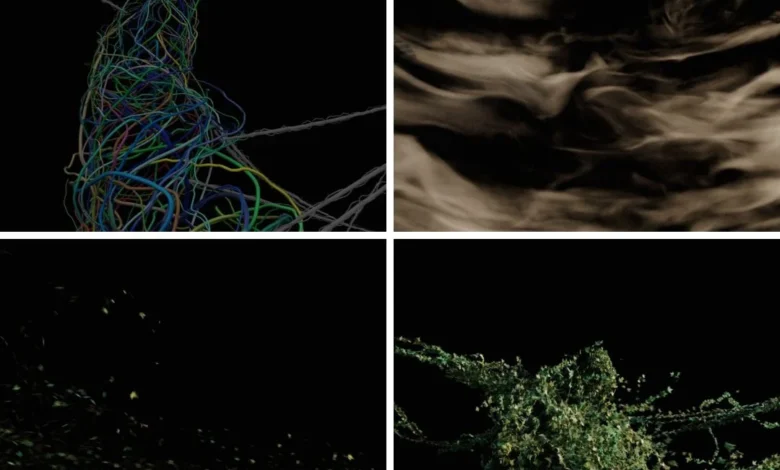
Furthermore, when designing elements like foliage, the studio deliberately avoided nature documentation. For instance, the digital ivy sought after by the character Alexandra—portrayed by Carey Mulligan—and repelled by Prue, played by Peyton Elizabeth Lee, was intentionally built to resemble paper leaves crafted by a stop-motion animator rather than organic botany found in a terrestrial forest.
The Technical Challenge of Animating the Sentient Ivy
One of the most complex narrative and technical hurdles in Wildwood involved the visualization of the ivy, which eventually evolves into a sentient, towering spire capable of threatening the entire world. The creative brief provided by Laika required a delicate balance: the plant needed to feel alive and possess clear intent, yet it could not register as a traditional villainous boss or an entity driven by human cognition.
VFX Supervisor Dan Macarin highlighted the intricacies of this design process, noting that the animation had to balance agency with ambiguity. The ivy was required to creep, attack, consume, and overgrow the practical sets built by Laika, demanding a seamless translation from physical dioramas to malleable digital environments.

To achieve this, Laimer and her team conducted extensive behavioral tests, drawing unconventional inspiration from natural phenomena. They studied time-lapse footage of pea shoots, noting the uncanny, slightly jerky motion inherent in their organic growth cycles. These reference points were synthesized into specific vignettes tailored to individual shots, ensuring the digital ivy always heightened the dramatic tension between characters rather than overwhelming the frame with unnecessary visual noise.
When the narrative required the ivy to swell into a massive, cataclysmic storm threatening the central plinth, WETA abandoned standard procedural growth algorithms in favor of advanced fluid simulations. By studying the collective motion patterns of natural swarms—such as schools of fish changing direction in unison or flocks of starlings cutting through the sky—the team sculpted an ivy cyclone. This approach ensured the colossal plant life maintained a clear, purposeful trajectory, moving with coordinated fluidity rather than random chaos.
Story-Driven Scope in Third-Act Sequences
While WETA FX is globally renowned for orchestrating massive, high-stakes third-act battles across various cinematic universes, the studio approached the climactic sequences of Wildwood through a distinctly narrative-first lens. Given the studio’s extensive history with large-scale conflict choreography, the sheer scope of the battle was never a technical barrier. Instead, the primary objective remained clear: ensuring the visual effects served the emotional core of the storytelling.

In Wildwood, this meant exercising restraint during high-intensity moments, such as sequences set against explosions of cannon fire where traditional physical cameras could never safely venture. Rather than defaulting to a hyper-realistic, gritty aesthetic that would clash with the film’s fairy-tale tone, WETA curated aesthetic choices designed to keep the audience emotionally engaged. The resulting sequences prioritized vibrant color palettes and character-driven stakes, using the surrounding battle as an atmospheric backdrop rather than an overwhelming visual spectacle.
The Broader Implications for Hybrid Animation
The successful collaboration between Laika Studios and WETA FX on Wildwood highlights a broader, increasingly relevant trend within contemporary animation and visual effects: the cross-pollination of mediums. As audiences grow increasingly sophisticated, the boundaries separating stop-motion, hand-drawn animation, and computer-generated imagery continue to blur.
By prioritizing "stage realism" over strict physical accuracy, WETA has demonstrated how digital tools can be successfully subjugated to honor the tactile aesthetics of analog filmmaking. This methodology not only preserves the distinct charm of artisan-driven animation but also expands the technical vocabulary of visual effects studios worldwide. As hybrid productions become more prevalent, the lessons learned in the digital workshops of Wildwood—where algorithms were taught to mimic the deliberate stutters of stop-motion frames and the properties of paper leaves—will likely serve as a foundational blueprint for future cross-medium cinematic collaborations.
Related posts: