Behind the Scenes of Best of the Best: How Netflix Brought Collegiate Bollywood Dance to the Global Stage

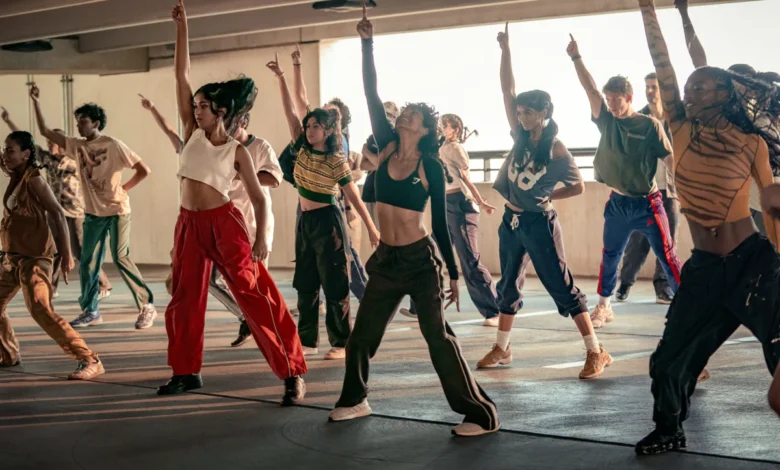
The high-stakes, adrenaline-fueled landscape of collegiate competitive dance has long operated as a subculture defined by intense dedication, elaborate productions, and deep cultural expression. With the release of the Netflix feature film Best of the Best, this vibrant world has transitioned from regional university auditoriums to a global streaming audience. Directed by Lena Khan and written by the creative team of Hasan Minhaj and Prashanth Venkataramanujam, the film captures the emotional complexity, rigorous physical demands, and visual splendor of competitive Bollywood fusion dance. Bringing this specific collegiate phenomenon to the screen required an unprecedented level of inter-departmental collaboration, meticulous pre-production planning, and innovative cinematic techniques that blurred the lines between narrative storytelling and dynamic choreography.
Translating Collegiate Culture to the Screen
At its core, Best of the Best centers on the journey of Maya, a fearlessly innovative freshman portrayed by Maitreyi Ramakrishnan, who challenges her university’s dance team—representing the University of California, Los Angeles (UCLA)—to look beyond predictable Bollywood tropes. The narrative conflict is established early when Maya pushes back against a clichéd Bollywood wedding-themed routine for the upcoming national competition. Team captain Ronak, played by Ankur Rathee, counters that the very essence of the genre relies on being larger-than-life, arguing that heightened expression mirrors the intensity of real human emotion.

This thematic tension serves as a structural foundation for the entire film. Rather than treating musical numbers as isolated interludes, the filmmakers sought to embed character arcs directly into the choreography. Director Lena Khan, working alongside music supervisor Kier Lehman and a dedicated choreography team featuring Phillip Chbeeb, Makenzie Dustman, and Joya Kazi, engineered a system where the dramatic development of the characters could be tracked entirely through movement and music.
Meticulous Planning and Pre-Production
The logistical challenges of mounting a dance-centric narrative feature within a compressed shooting schedule demanded meticulous organization. To ensure that the script’s written promises translated effectively onto the stage, the production team utilized extensive visual mapping tools, including detailed Google Sheets and complex PowerPoint presentations. Khan and her collaborators constructed macro-level line graphs tracking the emotional trajectories of key relationships—such as the dynamics between UCLA as a team, Maya and her codependent best friend Anjali (played by Priyanka Kedia), and Anjali and Ronak.
This analytical approach allowed the choreographers to infuse every movement sequence with subtext, expressing internal conflicts that the characters could not articulate verbally. Cinematographer Adam Carboni approached the visual language with a similarly rigorous mindset, drawing on his background in music videos and commercials to devise in-camera tricks, hard-rigged camera mounts, and optical illusions. Instead of relying on standard training montages, Carboni employed motion-control technology to simulate continuous single-take sequences, lending a fluid, organic energy to the team’s preparation periods.

The Choreography and Camera Synergy
A defining characteristic of Best of the Best is the intimate collaboration between the camera department and the choreography team—a partnership that is notably rare in traditional film productions. Typically, choreographers are brought in late to stage routines within pre-determined camera setups. In contrast, Khan, Minhaj, and Venkataramanujam integrated Chbeeb, Dustman, and Kazi into early pre-production discussions, allowing movement to dictate framing and narrative progression.
This synergy is prominently displayed during complex sequences, such as a moment where two dancers fill the frame with handheld sunflowers, only for the camera to reveal a character substitution as the flora is lowered. Such ingenuity preserved the resourceful, grassroots spirit of collegiate dance troupes while operating under the umbrella of a major studio production.
The physical demands placed upon the cast were comparable to elite athletic endurance events. Throughout production, the actors and background dancers executed high-intensity routines that required precise spatial awareness, strength, and stamina. According to the choreography team, the performers frequently sustained minor injuries while maneuvering large, shifting set pieces under severe time constraints.

The Grand Finale: A Museum Heist on Stage
The culmination of these collaborative efforts is showcased in the film’s climactic sequence, wherein the UCLA Agni dance team performs their final routine at the national championship. Conceptualized as a British museum heist aimed at reclaiming the historic Koh-i-noor diamond, the number serves as a showcase for Maya and Anjali’s leadership while providing individual moments of expression for every team member.
The technical execution of the finale involved coordinating multiple moving set pieces, historically and culturally accurate props and artwork, and intricate lighting designs. To simulate an Ocean’s Twelve-inspired laser-dodging sequence, the choreography team initially mapped the pathways using yarn during rehearsals. On the day of the shoot, the crew integrated 50-watt static lasers, requiring Steadicam operator Rod Calarco to match the frantic, precise pacing established in pre-visualization tests while bearing the weight of heavy camera rigs.
Lighting cues were managed in real time via headset communication by the choreographers, as the crew operated under strict time limits without the luxury of extensive technical rehearsals. Despite these hurdles, the resulting sequence successfully integrated high-concept visual storytelling with the raw emotional stakes of the narrative.

Broader Implications and Cultural Impact
The release of Best of the Best arrives at a time of increasing global appetite for South Asian and South Asian American narratives within mainstream media. By focusing on the collegiate dance circuit—a thriving subculture characterized by organizations like the Desi Dance Network—the film sheds light on a community that has fostered artistic excellence, cultural preservation, and intercollegiate competition for decades.
Industry analysts note that projects centered on dance and performance art face distinct production hurdles, particularly regarding the synchronization of sound, movement, and narrative pacing. By addressing these challenges through exhaustive pre-planning and cross-departmental integration, the production team of Best of the Best has established a benchmark for contemporary musical and dance cinema.
Ultimately, the film transcends its genre boundaries by honoring the complexities of identity, ambition, and interpersonal relationships among second-generation youth. Through the meticulous synergy of direction, cinematography, and choreography, Best of the Best captures not only the technical brilliance of collegiate Bollywood fusion but also the emotional resonance of a community finding its collective and individual voice on stage.