Acrobatic Pastor’s Secret Obsession Drives Boo Junfeng’s ‘Trinity’ at Tokyo Gap-Financing Market

The intricate and often turbulent relationship between religious dogmatism, personal desire, and modern evangelical spectacle takes center stage in Trinity, the ambitious new feature film from acclaimed Singaporean director Boo Junfeng. Currently seeking its final financial backing at the prestigious Tokyo Gap-Financing Market—held in conjunction with TIFFCOM and the Tokyo International Film Festival—the project has already garnered significant industry attention. Boasting a vast, multi-continental co-production footprint spanning eleven countries, the film promises to examine the psychological depths of religious leaders operating within high-pressure, highly theatrical environments.
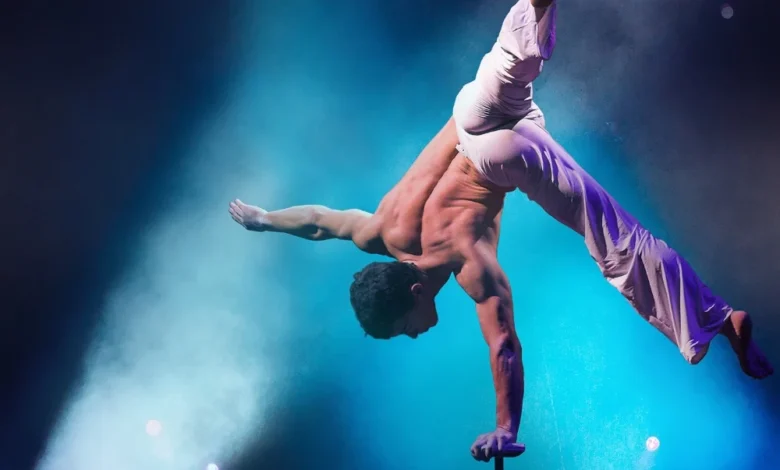
At the core of the narrative is Johnny, a charismatic celebrity preacher originally from Taiwan who has cultivated a massive, devoted following at a prominent megachurch in Singapore. Johnny is not your traditional clergyman; alongside his conservative public teachings, he performs high-octane, daredevil physical stunts for his congregation, modeling his services on the breathtaking theatricality of Cirque du Soleil. However, behind the pulpit and the dazzling acrobatics lies a hidden vulnerability: a mounting, clandestine fixation on Yang, a young newcomer who has recently enrolled in the church’s rigorous training program.
Main Facts and Narrative Structure
Structured deliberately into three distinct chapters modeled after the Holy Trinity—the Father, the Son, and the Holy Spirit—the film explores the slow erosion of Johnny’s carefully guarded public persona. His increasingly obvious preferential treatment toward Yang does not go unnoticed. It quickly breeds tension and unease among his inner circle, most notably his wife, Ruth, and David, his leading disciple who is also engaged to Johnny’s daughter. Both Ruth and David play pivotal roles in the administrative and spiritual operations of the church, making Johnny’s indiscretions a direct threat to the institution they have helped build.
The plot thickens dramatically when the young object of Johnny’s affection mysteriously vanishes. Driven by panic and a desperate need for answers, Johnny initiates his own unauthorized investigation into the disappearance. As he digs deeper, the trail of clues begins to point disturbingly close to home, implicating members of his own inner circle and culminating in tragic consequences.
In the aftermath of the fallout, Johnny and Ruth relocate to a quiet, rural corner of Taiwan. There, they attempt to keep a low profile, worshipping quietly at a modest, unassuming local congregation. Yet, the past is never far behind; the narrative reaches a pivotal crossroad when Johnny glimpses an enigmatic stranger who just might offer the fallen pastor a path toward redemption and divine grace.
Director’s Vision and Creative Roots
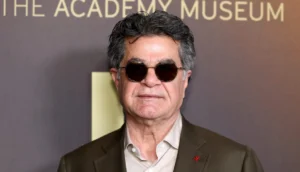
Director Boo Junfeng has built a reputation for tackling complex, morally ambiguous social issues with sensitivity and artistic rigor. Speaking on the thematic underpinnings of his latest work, Boo explained his lifelong fascination with the friction between personal identity and organized religion.
"I’ve always been very interested in the subject of sexuality and faith, and I wanted to make a film that dives deep into the psyche of these characters within a church," Boo stated.
The filmmaker’s distinct cinematic voice was established early in his career. His 2010 feature debut, Sandcastle, made history by becoming the first Singaporean film ever selected to screen at the Cannes Critics’ Week. He followed up that critical success with Apprentice in 2016, a harrowing and critically acclaimed drama examining the psychological toll of capital punishment, which screened in the Un Certain Regard section at the Cannes Film Festival. Beyond narrative filmmaking, Boo’s cultural footprint in Singapore is substantial; he has contributed significantly to national arts programming, serving as creative director for Singapore’s National Day Parade—including the landmark 2025 edition celebrating the nation’s 60th independence anniversary—and currently holding the post of chair of the Singapore International Film Festival.
The Evolution of Trinity and Producer Perspectives
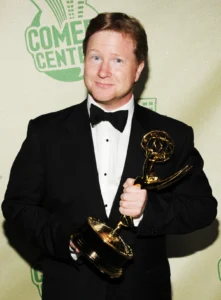
The genesis of Trinity dates back several years, forged through a close collaboration between Boo and veteran producer Raymond Phathanavirangoon, who also co-wrote the screenplay. Phathanavirangoon, whose impressive producing credits include Pen-ek Ratanaruang’s Headshot, Ron Howard’s high-stakes rescue drama Thirteen Lives, and Pang Ho-Cheung’s Dream Home and Aberdeen, has been attached to the project since its earliest conceptual phases. His extensive background also includes serving as an international programmer for the Toronto International Film Festival, a program delegate for Cannes Critics’ Week, and co-founder of the Southeast Asia Fiction Film Lab (SEAFIC).
According to Phathanavirangoon, the film fills a notable void in contemporary Asian cinema by addressing the aggressive growth and unique cultural footprint of modern evangelical movements in the region.
"Personally, I have had people close to me convert to Christianity due to evangelism, but this is seldom seen in Asian films," Phathanavirangoon noted. He emphasized that the integration of grand-scale theatricality within modern Asian churches is a particularly ripe and underexplored cinematic subject.
"Some are surprised that churches can host Cirque du Soleil-style performances like in our film, but just earlier this year in Korea, a stunt sent a man dressed as Jesus into the sky, and that went super viral," he added, highlighting how real-world spectacles mirror the heightened reality depicted in the script.
Global Collaboration and Financing at the Tokyo Gap-Financing Market
As Trinity enters its final stages of post-production, the creative team has brought the project to the Tokyo Gap-Financing Market to secure the remaining funds required to complete the film. Both Boo and Phathanavirangoon expressed optimism about closing their financial gap during the market, which acts as a vital bridge for international co-productions looking for finishing funds, distribution partners, and strategic investors.
The sheer scale of Trinity’s production apparatus underscores its global ambitions. The film is a massive eleven-country co-production, bringing together resources, talent, and funding from Taiwan, France, Singapore, Poland, Greece, Japan, Germany, Brazil, South Korea, Indonesia, and the Philippines. Production duties are spearheaded by Peanut Pictures, Filmagic Pictures, and Gaïjin, reflecting a truly borderless approach to independent filmmaking.
Despite the grand international framework and the high-stakes drama of megachurch politics, the director maintains that the film’s core appeal lies in its fundamental humanity.
"I hope people will empathize with the characters, despite them being flawed human beings," Boo reflected.
Broader Impact and Implications for Asian Cinema
The presentation of Trinity at the Tokyo Gap-Financing Market—part of the broader TIFFCOM content market organized alongside the Tokyo International Film Festival—highlights a growing appetite for boundary-pushing narratives from Southeast Asia and beyond. By examining the intersections of hyper-modern religious spectacles, institutional power dynamics, and repressed personal desires, the film ventures into territory rarely explored by mainstream regional cinema.
As evangelical megachurches continue to expand their influence across Asia, incorporating cutting-edge entertainment technology and high-production-value performances to attract younger demographics, films like Trinity offer a timely, critical mirror to these cultural shifts. By blending intimate character studies with grand socio-religious critique, Boo Junfeng and his international production team are positioning Trinity as one of the most anticipated arthouse co-productions currently navigating the global festival and market circuit.