Voters Increasingly Concerned Over Corruption and Presidential Crypto-Financial Ties Ahead of Midterm Elections

As the nation approaches the midterm elections, a growing segment of the American electorate is signaling deep-seated apprehension regarding the ethical landscape of the executive branch. Recent polling data suggests that concerns over institutional integrity, self-dealing, and conflicts of interest have moved to the forefront of voter priorities, potentially altering the strategic calculus for candidates in both major political parties. According to a comprehensive national survey conducted by the Financial Times and the London-based research firm Focaldata, 69 percent of registered voters expressed significant unease regarding the current administration’s financial practices. Perhaps most notably, this concern transcends traditional party lines, with nearly 50 percent of those who cast ballots for Donald Trump in the 2024 general election admitting they are "very" or "somewhat" concerned about the intersection of the president’s business interests and his official duties.
This shift in public sentiment comes against a backdrop of unprecedented financial disclosure reports detailing the president’s significant involvement in the cryptocurrency sector. Since the inception of his second term, the administration has navigated a complex regulatory environment, punctuated by the passage of the GENIUS Act on July 18, 2025. This legislation, which purported to establish a stable regulatory framework for cryptocurrency stablecoins, has become a focal point of the current debate, with critics arguing that the timing and nature of the act served to bolster the president’s personal financial portfolio.
A Chronology of Financial Disclosure and Regulatory Shift
The trajectory of these concerns can be traced through a series of key milestones during the second Trump administration. Following the inauguration, the administration’s rhetoric shifted rapidly toward the embrace of decentralized finance. By mid-2025, it became clear that the executive branch was prioritizing a pro-crypto agenda.
- January 2025: Initial policy proposals emerge from the White House signaling a "light-touch" regulatory approach to digital assets, sparking early interest from institutional investors.
- May 2025: Public financial disclosures reveal for the first time the extent of the president’s holdings in various digital assets and his co-founding role in the venture World Liberty Financial.
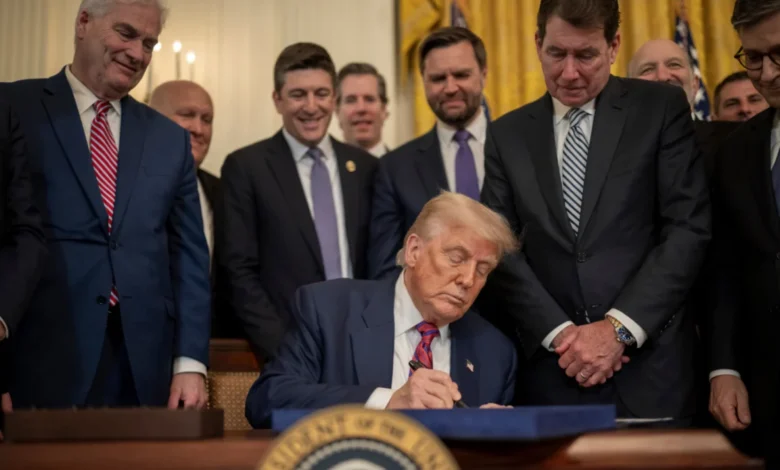
- July 18, 2025: President Trump signs the GENIUS Act into law. The act is heralded by the administration as a breakthrough for financial innovation, yet it faces immediate scrutiny for its potential to disproportionately benefit the president’s own business interests.
- October 2026: Ahead of the midterm elections, investigative reports synthesize data from the president’s recent filings, confirming that he has generated more than $1.4 billion in income through cryptocurrency ventures, including the controversial $TRUMP meme coin.
The juxtaposition of these financial gains against the broader economic struggles of the American public has provided political opponents with a potent line of attack. Economists and political analysts observe that when the public perceives a stark disparity between presidential enrichment and their own financial precarity, the political fallout is often swift and significant. Jeremy Ney, a professor at Columbia Business School, highlighted this disconnect in comments to the Financial Times, noting that when families struggle to afford essential healthcare, the optics of massive crypto-wealth accumulation within the White House can fundamentally erode trust in democratic institutions.
Data-Driven Trends in Voter Sentiment
The intensity of voter concern is reflected in the sheer volume of campaign advertising dedicated to the topic of corruption and ethics. An October 2026 analysis by the Washington Post revealed that out of $1.6 billion spent on midterm advertising, the subject of ethics and corruption reform was the second-highest expenditure category, trailing only the broader issue of "affordability."
Democrats invested approximately $306 million into messaging centered on ethics, while Republicans—sensing the vulnerability of the issue—invested $187 million to frame the narrative on their own terms. This level of spending underscores the central role that accountability is playing in the current cycle. In key battleground states, including Texas and various districts in the Rust Belt, the issue has moved from a secondary concern to a decisive factor for undecided voters.
The Financial Times/Focaldata survey further illuminates the depth of this anxiety. Nearly 50 percent of all registered voters reported that they view the current administration’s level of corruption as significantly higher than that of previous administrations. This sentiment is not limited to fiscal corruption; it extends to the perception of "self-dealing," where public policy—such as the GENIUS Act—is viewed as a vehicle for private gain rather than a tool for public benefit.
Regulatory Implications and the GENIUS Act
The GENIUS Act serves as a prime case study for the friction between policy and perception. Proponents of the bill argue that it provides necessary clarity to a volatile market, potentially preventing the types of catastrophic failures seen in previous years within the crypto industry. By standardizing the requirements for stablecoin issuers, supporters claim the act encourages legitimate business while filtering out fraudulent actors.
However, the opposition contends that the legislation was drafted to provide favorable treatment to the specific types of tokens and decentralized finance protocols in which the president and his associates are invested. Because the act mandates a specific set of operational standards that align closely with the business model of World Liberty Financial, critics suggest that the administration has essentially used the power of the federal government to codify a competitive advantage for its own ventures.
While there is no legal consensus that the act violates specific ethics statutes, the ethical implications remain a subject of intense debate. Legal scholars note that the lack of clear, modern guidelines regarding presidential digital asset holdings creates a "gray zone" that leaves the executive branch vulnerable to accusations of impropriety, regardless of the legality of the actions.
Broader Impact on the Midterm Landscape
As the midterms approach, the challenge for the Republican Party is to maintain control of the legislative agenda while addressing the widespread perception that the executive branch has lost its moral footing. With Democrats needing to flip four seats in both the House and the Senate to regain a simple majority, the "corruption narrative" has become a vital strategic asset.
Campaign strategists observe that voters who are typically focused on local issues, such as tax rates or school board policies, are increasingly connecting those local grievances to the perceived corruption in Washington. This phenomenon is creating a "down-ballot effect," where the popularity or toxicity of the president’s personal financial brand influences the prospects of candidates who are otherwise unaffiliated with his crypto ventures.
Furthermore, the international perspective cannot be ignored. As the United States seeks to maintain its role as a global leader in financial regulation, the perception of a compromised executive branch may weaken the country’s influence. International observers and trade partners are closely monitoring the implementation of the GENIUS Act, assessing whether the U.S. regulatory system is becoming a reflection of private interests rather than a bedrock of impartial, rules-based governance.
Looking Toward the Future
The midterm elections will serve as the first major referendum on the president’s second-term financial conduct. Should the electorate deliver a result that strips the administration of its legislative majority, it would likely signal a shift toward a more aggressive oversight agenda. Congressional committees would almost certainly move to launch investigations into the passage of the GENIUS Act and the broader implications of the president’s $1.4 billion crypto-related earnings.
Conversely, if the current administration retains its legislative power, the debate will likely shift toward the long-term impact of these financial ties on the stability of the dollar and the integrity of the U.S. financial system. The persistence of these concerns suggests that regardless of the election outcome, the tension between the rapidly evolving digital asset industry and the ethical requirements of the presidency will remain a defining feature of the American political landscape for the foreseeable future.
Ultimately, the issue of corruption has become a mirror reflecting the deeper anxieties of a nation grappling with its own economic future. Whether through the lens of individual wealth or systemic inequality, the questions raised by voters today highlight a demand for a return to traditional governance standards—a call that will reverberate long after the final votes are counted in November.
Related posts: