The Adaptability Quotient: How Alec Litowitz Is Redefining Modern Success Through Cognitive Agility

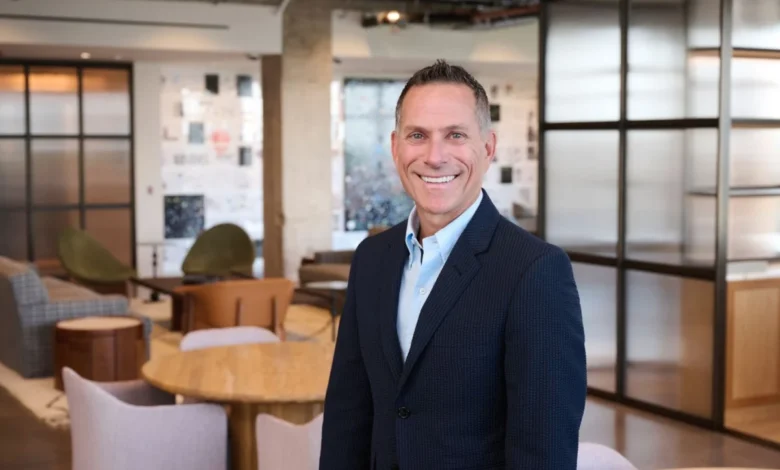
Alec Litowitz arrived at the prominent investment firm Citadel in 1994, bringing with him a resume that defied conventional industry expectations. While his peers were often culled from the ranks of traditional finance programs and business schools, Litowitz possessed a Bachelor’s degree from MIT in Mathematics and Anthropology. This unconventional academic background, paired with a distinct lack of deep-seated financial experience, might have been viewed as a liability in the rigid, high-stakes environment of global hedge funds. However, Citadel’s founder, Ken Griffin, saw an opportunity. He recognized that Litowitz’s unique cognitive approach offered something that standard financial training could not: the ability to analyze complex, shifting systems through an interdisciplinary lens.
That early observation by Griffin proved to be a pivotal moment for both the firm and Litowitz. Reflecting on his formative years in the industry, Litowitz notes that his value to the organization was never rooted in a specific financial playbook, but rather in the mechanics of his thought process. This cognitive framework would eventually lead him to become one of Citadel’s four founding partners, helping to scale the firm from a boutique operation managing roughly $100 million in assets to a financial juggernaut overseeing $10 billion by 2003.
A Chronology of Strategic Growth and Evolution
The trajectory of Litowitz’s career serves as a case study in institutional scaling. Upon joining Citadel in 1994, the firm maintained a lean operation with approximately seven employees. By the time he helped shepherd the firm’s expansion into equity markets and beyond, that headcount had ballooned to 750 professionals. Following his tenure at Citadel, Litowitz transitioned to lead Magnetar Capital, an alternative asset management firm. Over an 18-year period, he oversaw the firm’s growth from its inception to a peak of approximately $20 billion in assets under management by his departure in 2022.
In 2017, seeking to address the rapidly shifting landscape of global markets and human behavior, Litowitz founded Qstar, an investment firm that serves as a platform for his current theories on leadership and organizational agility. Throughout this three-decade arc, Litowitz observed a recurring phenomenon: the most successful leaders were not those who held the most static knowledge, but those who possessed the most flexible mental models.
The Science of the Adaptability Quotient
In his recent book, The Adaptability Quotient: Rewiring Your Mind for Success in the Next Human Era, Litowitz formalizes the concept of AQ. While Intelligence Quotient (IQ) measures the capacity for logic and problem-solving, and Emotional Quotient (EQ) measures the capacity for interpersonal navigation, AQ represents the meta-capacity to recognize when one’s internal map of reality has diverged from the external environment.
Litowitz argues that the pace of technological disruption—fueled by artificial intelligence, geopolitical shifts, and market volatility—has rendered static expertise increasingly obsolete. High AQ, as defined by Litowitz, is the ability to notice this divergence, undergo a rigorous process of "redrawing the map," and execute changes before external circumstances—such as market failure or technological displacement—force a reactive, often painful, pivot.
The Three Pillars of Cognitive Agility
To cultivate high AQ, Litowitz identifies three specific behavioral competencies that founders and executives must adopt: metacognition, simulation, and experimentation.
Metacognition involves the active monitoring of one’s own thought process. It requires a leader to acknowledge that their perceptions are filtered through personal biases and prior experiences. When a founder identifies a potential market opportunity, such as the absence of a specific service in a local economy, they must interrogate the "why" behind that absence. Is the gap a sign of an untapped market, or is it a sign that the fundamental demand is missing?
Simulation is the second pillar. Rather than committing to the first solution that comes to mind, a high-AQ leader generates multiple, competing hypotheses. By running mental simulations, they can stress-test the viability of various outcomes. If an ice cream shop is not present in a neighborhood, perhaps a coffee shop, a pop-up experience, or a different delivery model is the superior answer.
Finally, experimentation represents the transition from theory to reality. In a modern business environment characterized by low barriers to entry, the cost of failure can be managed through iterative testing. Litowitz advocates for "cheap" feedback loops—such as farmers market stalls or limited-scope pilots—to gather data before significant capital expenditure is allocated to infrastructure.
Data-Driven Hiring and Organizational Culture
The implications of Litowitz’s philosophy extend deeply into human resources and team building. In an era where AI is automating entry-level cognitive tasks, the value of an employee is no longer found in their ability to perform rote calculations, but in their ability to adapt to new, ambiguous data sets.
When vetting potential hires, Litowitz suggests moving beyond standard technical inquiries. A favorite diagnostic question he proposes is: "Would you rather be right for the wrong reason or wrong for the right reason?"
From a management perspective, the answer is telling. Being right for the wrong reason suggests a stroke of luck—a dangerous variable in a high-stakes business environment. Conversely, being wrong for the "right" reason suggests that the individual followed a sound, logical process that can be audited, stress-tested, and improved. As Litowitz puts it, "Lucky is not a business." The objective of a successful firm is to build a process that generates repeatable, high-quality outcomes, regardless of the initial result.
The Broader Implications for the Future of Work
The push for higher adaptability is not merely a corporate buzzword; it is a response to a global shift in how institutions function. Data from various labor market studies suggest that the "half-life" of professional skills is shrinking. According to recent workforce reports, technical skills that were once considered evergreen now require significant refreshing every three to five years to remain relevant.
This shift suggests that the traditional model of specialized education, followed by a career spent within a single domain, is being replaced by a model of continuous, rapid iteration. Litowitz’s focus on AQ addresses the underlying anxiety many workers feel regarding AI and automation. If everyone is, in effect, an entrepreneur, then the ability to pivot becomes the ultimate competitive advantage.
Expert Perspectives on Cognitive Flexibility
While Litowitz focuses on the individual and the firm, broader economic analysis supports his contention that adaptability is the primary driver of firm longevity. A study by the Innosight Institute on the S&P 500 reveals that the average lifespan of a company in the index has fallen from 61 years in 1958 to less than 20 years today. This compression of institutional longevity underscores the necessity for the kind of cognitive agility Litowitz advocates.
Industry observers suggest that the integration of AQ into corporate culture is likely to become a standard for executive leadership in the coming decade. As companies transition from top-down hierarchical structures to flatter, more autonomous networks, the ability for every employee to "notice when the map is off" becomes a critical security measure against systemic risk.
Conclusion: Embracing the Unknown
The transition from the Information Age to the current era—often termed the "Human Era" or the age of Artificial Intelligence—requires a fundamental shift in how leaders define success. Alec Litowitz’s work at Qstar and his writings on AQ suggest that the future belongs to those who do not hold their beliefs with a death grip.
By prioritizing the discovery of truth over the validation of ego, leaders can navigate the inherent instability of the modern market. Reality, as Litowitz repeatedly emphasizes, is the ultimate arbiter of success. Those who cultivate the capacity to adapt their mental models in real-time will find themselves not merely surviving in the face of change, but actively shaping the direction of their industries. As the world becomes increasingly unpredictable, the ability to "redraw the map" will serve as the most significant differentiator between those who lead and those who are left behind.
Related posts: