Sylvester Stallone Recalls the Volatile On-Set Clash Between His Father and Co-Star Carl Weathers During the Filming of Rocky

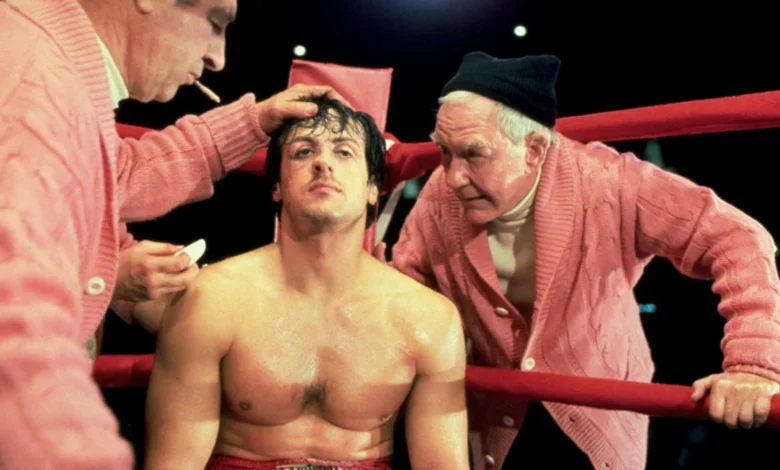
Long before Sylvester Stallone became a globally recognized cinematic icon and a three-time Academy Award nominee, he was a struggling, ambitious young actor desperately seeking the validation of a demanding father. As Stallone prepares for the release of his upcoming memoir, The Steps, scheduled to hit bookshelves on October 23, he has begun reflecting on the complex, often painful personal history that laid the foundation for his breakout 1976 masterpiece, Rocky. Among the most striking revelations from his recent media circuit is the behind-the-scenes chaos of the film’s climactic boxing match, a sequence complicated by an unexpected and volatile family cameo.
The story centers around Frank Stallone Sr., the actor’s late father, who was given a brief on-screen appearance as the ring announcer and bell ringer during the legendary bout between Rocky Balboa and Apollo Creed. What was initially intended to be a heartwarming gesture of filial pride and an olive branch between a critical father and an aspiring son quickly devolved into a bitter, cinematic confrontation.
A Desperate Bid for Parental Approval
During a candid interview with The New York Times, Stallone opened up about the emotional motivations driving his decision to include his father in the production. Rather than a calculated casting choice, the cameo was an earnest, vulnerable plea for approval.
"It was like: I just want you to love me for a little bit," Stallone explained to the publication. "Like, look what I did! Share it with me. I know you thought I was a fool my whole life, but here we are."
Growing up, Stallone endured a tumultuous domestic environment characterized by his father’s uncompromising and severe demeanor. Frank Stallone Sr. was, by his son’s account, exceedingly cold and tough, maintaining an emotional distance punctuated by explosive volatility. According to the actor, their household was defined by "constant bombastic explosions and then total silence." Disagreements frequently escalated to physical altercations, creating an atmosphere of perpetual tension that deeply influenced Stallone’s psychological development and his relentless drive to succeed against the odds.
The Breakdown of the Climax
The friction on the Rocky set reached a boiling point on the day of the climactic fight scene, a sequence requiring intense physical choreography, split-second timing, and absolute coordination between the actors, stunt coordinators, and background crew.
According to Stallone, his father failed to execute his basic cue properly. Instead of ringing the bell at the precise, predetermined moment to halt the exhausting cinematic exchange between Rocky and his opponent, played by the late Carl Weathers, Frank Sr. lost his rhythm.
"He didn’t ring the bell properly," Stallone recalled. "As I kept fighting and fighting and fighting. Everything’s choreographed. It’s one, two, three, four, bell. Not six, seven, eight, nine, ten. Carl Weathers is like, ‘What’s going on?’"

The breakdown in timing threw the entire production temporarily off balance. In the high-pressure environment of an independent film operating on a notoriously tight budget and grueling schedule, minor disruptions carried major consequences. The confusion on set quickly bled into personal friction, culminating in a heated verbal and physical altercation between father and son.
"Of course it ended up in an altercation by the end," Stallone admitted. "It got really nasty. A really bad Italian drama. But for a moment I thought, Jesus, he’d be proud."
Despite the hostility and the unraveling of the scene, the moment encapsulated the complicated dynamic that had defined their relationship for decades. The father and son did not achieve a full emotional reconciliation until shortly before Frank Stallone Sr.’s death in 2011, making these retrospective reflections particularly poignant for the actor as he compiles his life story into print.
The Broader Cultural and Cinematic Context of Rocky
The behind-the-scenes drama of Rocky adds yet another layer to the already legendary lore surrounding the 1976 sports drama. Produced on a modest budget of roughly $1 million by Irwin Winkler and Robert Chartoff, and directed by John G. Avildsen, Rocky was widely considered a massive gamble by United Artists. Stallone, who was practically unknown at the time and had penned the screenplay himself, famously refused to sell the script unless he was permitted to play the lead role.
The film went on to become a massive critical and commercial phenomenon, grossing over $225 million worldwide at the box office and capturing three Academy Awards, including Best Picture and Best Director. It launched Sylvester Stallone into the upper echelon of Hollywood stardom and established a multi-decade franchise that continues to expand.
The tumultuous production history of the original film—marked by injuries, budgetary constraints, and interpersonal friction—has only added to its enduring mythology. This legacy is further underscored by the upcoming theatrical release of I Play Rocky, a biographical drama premiering in theaters on November 6, which stars Anthony Ippolito as a young Stallone navigating the grueling struggles of writing the screenplay and fighting for his right to star in the picture.
Implications of the Memoir and Public Reception
As anticipation builds for the release of The Steps, literary critics and film historians alike are examining how Stallone’s forthcoming memoir will reframe his public persona. Known primarily for playing stoic, physically imposing action heroes in franchises such as Rambo, The Expendables, and the Creed series, Stallone’s literary work promises to peel back the layers of Hollywood toughness to reveal a deeply sensitive artist shaped by early vulnerability and familial trauma.
While Stallone noted that he deliberately omitted some of the more extreme domestic incidents from the memoir to avoid courting sympathy, the stories he has chosen to share illustrate a universal theme: the profound, sometimes destructive lengths to which children will go to secure the approval of distant parents.
The revelation of the on-set altercation with his father and Carl Weathers highlights the delicate intersection of personal life and professional art in Hollywood’s golden era of independent filmmaking. As the entertainment industry prepares for both the publication of The Steps and the release of I Play Rocky, audiences are reminded that the grit, resilience, and emotional intensity that defined Sylvester Stallone’s greatest cinematic triumphs were forged not just on the silver screen, but in the crucible of a deeply complex family life.