Hollywood Studios Tap Into Cash-Infused Marketing Stunts to Cut Through the Noise of Modern Digital Advertising

In the hyper-saturated landscape of contemporary entertainment marketing, studios face a relentless uphill battle to capture consumer attention. Long gone are the days when a simple billboard or a standard television spot could guarantee opening-weekend box office success. Today, promotional campaigns require an elaborate ecosystem of internet culture maneuvers, including clipfarming, exclusive influencer screenings, and viral meme-bait popcorn buckets. Yet, in their quest to break through the endless scroll of social media, two major Hollywood studios have chosen to bypass complex digital algorithms entirely in favor of civilization’s oldest and most direct attention-grabbing mechanism: literal cold hard cash.
Ahead of their simultaneous theatrical releases in North American markets, the marketing teams behind Amazon MGM Studios’ ensemble heist thriller How to Rob a Bank and Skydance and Paramount’s holiday-themed feature Ebenezer deployed high-profile, money-centric promotional campaigns. Rather than relying solely on conventional trailers, these studios introduced interactive, financially incentivized stunts that engaged consumers directly through physical locations and peer-to-peer payment applications. This tactical shift underscores a growing reliance on experiential, high-stakes marketing designed to convert passive social media users into active participants.
The Mechanics of the Modern Movie Heist Stunt
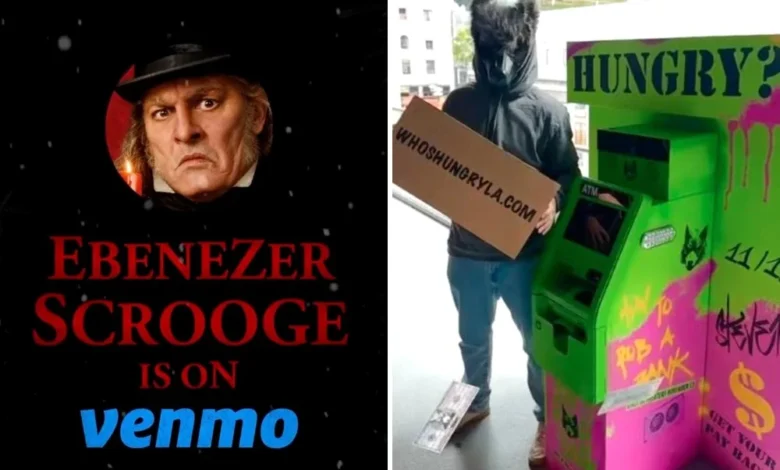
The promotional rollout for How to Rob a Bank leaned heavily into the thematic premise of the film itself, which follows a group of modern-day thieves teaching online subscribers how to reclaim funds from predatory financial institutions. To mirror this narrative in the real world, Amazon MGM Studios orchestrated a four-day mobile activation across the greater Los Angeles area.
Central to the campaign was a custom-branded ATM that moved stealthily between various multiplexes. The studio utilized its official social media channels to drop cryptic geographic clues and a specific PIN code. Cinephiles and opportunistic passersby who successfully deciphered the clues and located the machine were rewarded with a payout of a single one-hundred-dollar bill.
According to promotional materials and documentation from partner agencies, the campaign’s prize pool was carefully structured. Each designated location featured a limited distribution pool consisting of ten one-hundred-dollar bills and twenty twenty-dollar bills, alongside theater-supplied incentives such as gift cards. Witnesses and local theater staff noted that the ATM dispensed rewards through a randomized distribution sequence, heightening the urgency and excitement among participants who raced to the coordinates as soon as social media alerts went live. Despite the modest overall budget—estimated to be a fraction of traditional multi-million-dollar marketing rollouts—the physical installation generated substantial user-generated content, capturing the public imagination and media aggregation shares across platforms like X and Instagram.
The Digital Miser: Ebenezer Meets Peer-to-Peer Payments

While Amazon took to the streets of Los Angeles, Paramount Pictures adopted a purely digital, highly satirical approach for the holiday release Ebenezer, starring Johnny Depp. Tapping into the penny-pinching mythology of Charles Dickens’ classic miser Ebenezer Scrooge, the studio established an official, verified Venmo account in the character’s name.
The digital activation invited social media users to interact directly with the character by submitting requests for funds. True to the source material’s transformation arc, the account’s public transaction history displayed a hilariously strict adherence to the Scrooge persona: the only completed outbound transactions were micro-payouts of a single cent.
Despite the nominal financial return, the campaign struck a nerve with internet users. The account quickly became a viral sensation, with major film news aggregation channels reporting that the system temporarily crashed due to an overwhelming surge of incoming requests. Fans flooded the app with creative pleas, ranging from lighthearted banter to humorous requests for student loan forgiveness. Paramount amplified the engagement by teasing future generosity on Instagram, instructing followers to check back periodically because Ebenezer might unlock the digital vault once again.
The Financial Reality and Fan Engagement
An unexpected quirk of the Ebenezer Venmo campaign was its capacity to receive inbound funds from eager fans. While the public ledger showed sparse outgoing penny transactions, the account experienced a massive influx of user deposits. Industry insiders confirmed that while the volume of incoming funds could have theoretically yielded a net profit for the studio, all user deposits were meticulously tracked and returned via private peer-to-peer transactions days later.
Krystyna Ursta, a 27-year-old actress, video editor, and prominent Johnny Depp fan based in Los Angeles, documented her experience with the campaign on social media. After transferring approximately $30 to the Ebenezer account as a gesture of fan support, she received a full refund within days, accompanied by an extra penny and an invitation to an exclusive promotional screening in New York City.
"I kind of figured that they would probably return it," Ursta noted in an interview. "I’m such a big fan. I was happy to support the film."
Conversely, the stunt also invited cynical commentary regarding the commercialization of classic literature. Scott, a 35-year-old consumer based in Atlanta, engaged with the campaign after encountering it on social media, sending a penny and receiving one in return. He characterized the activation as a manifestation of modern corporate culture, drawing parallels to mass-market sweepstakes. "There’s something very boringly dystopian about it," he observed, comparing the promotional tactic to corporate fast-food giveaways that trade minor financial incentives for consumer data and engagement.

Historical Precedents in Cash-Flush Marketing
The deployment of cash-giveaway promotions represents an escalating trend within the film marketing sector, where studios attempt to tap into widespread economic anxieties and the universal fantasy of financial windfall.
In April 2025, Lionsgate executed a remarkably high-stakes campaign to promote the theatrical trailer for Now You See Me: Now You Don’t. The studio reportedly distributed approximately $250,000 in cash prizes to individuals who texted a mysterious phone number displayed on billboards in New York City’s Times Square during the hours leading up to the trailer’s debut.
Similarly, in May of the same year, independent distributor Neon launched an aggressive promotional campaign for the feature I Love Boosters. Stars Keke Palmer and LaKeith Stanfield commandeered a Shell gas station in West Pico, covering the cost of fuel to provide complimentary refills to the first seventy motorists who arrived. The timing of the stunt intentionally leveraged public frustrations surrounding skyrocketing fuel prices, which had spiked dramatically following geopolitical conflicts in the Middle East.
Industry Implications and the Economics of Viral Attention
From an economic perspective, these cash-infused marketing campaigns offer a remarkably high return on investment when compared to traditional media buys. The production overhead for digital stunts like the Ebenezer Venmo activation or localized physical setups like the How to Rob a Bank ATM requires minimal capital expenditure—often costing less than standard studio catering budgets while generating millions of organic impressions across social media platforms.
By piggybacking on existing societal anxieties regarding personal finance, inflation, and the gamification of everyday life—phenomena increasingly visible across professional sports betting, television game shows, and political promises—studios have found a reliable method to manufacture virality. As traditional advertising channels continue to experience diminishing returns due to ad-blockers and audience fragmentation, the return of tactile, high-stakes gimmicks suggests that Hollywood will continue dangling financial incentives in front of consumers whenever traditional promotional noise fails to break through the digital clutter.