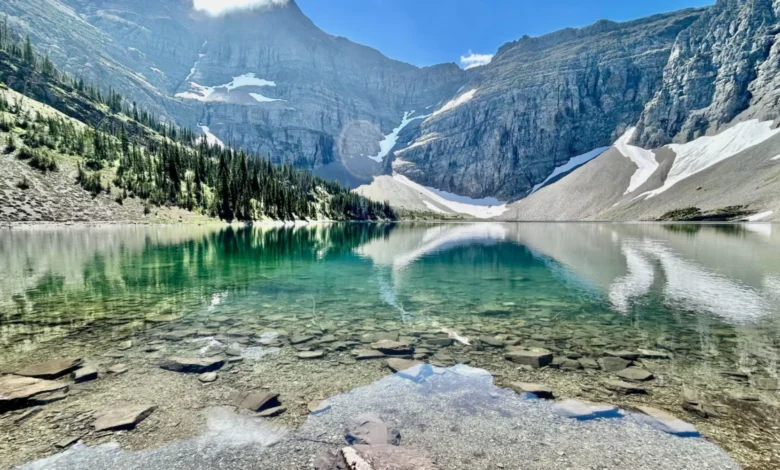
The morning sun struggles to pierce the heavy, slate-colored clouds hanging over the ridgeline of Bertha Peak in Alberta, Canada. As the ascent continues, the rhythmic crunch of boots on shale provides the only soundtrack to a solitary climb. This remote corner of the Canadian Rockies, situated within Waterton Lakes National Park, offers a stark contrast to the neighboring Glacier National Park in Montana. While the two parks share a continuous ecosystem and a history as the world’s first International Peace Park, they offer vastly different experiences in terms of accessibility, crowd density, and environmental recovery.
The Genesis of a Peace Park
Established in 1932, the Waterton-Glacier International Peace Park stands as a landmark achievement in international diplomacy and environmental stewardship. The designation was the result of a long-standing initiative by Rotary International clubs in Alberta and Montana, aimed at promoting goodwill and cooperation between Canada and the United States. Today, this model has been replicated in over 30 locations worldwide, serving as a template for transboundary conservation where ecological health is prioritized over political borders.
The integration of these two parks is not merely symbolic. Large mammals, including grizzly bears, grey wolves, and wolverines, maintain home ranges that ignore the 49th parallel. The management of these species requires a unified approach; scientists from both Parks Canada and the U.S. National Park Service engage in collaborative monitoring and data sharing to ensure the genetic connectivity of these populations.

Disparities in Visitation and Infrastructure
The statistical gap between the two parks is significant. In 2025, Glacier National Park reported an annual visitation exceeding 3 million, a figure that has placed immense strain on its infrastructure, leading to vehicle reservation requirements and frequent road closures. In contrast, Waterton Lakes National Park hosted approximately 500,000 visitors during the same period.
This disparity offers a distinct advantage for those seeking the solitude of the high alpine. Infrastructure within Waterton—such as the Red Rock Parkway—remains accessible without the complex permitting systems currently required at many American national parks. For the traveler, this translates to a more fluid experience, though it necessitates careful planning, as the townsite services in Waterton are limited compared to the bustling gateway communities of Montana.
The 2017 Kenow Wildfire: A Decade of Regeneration
As 2027 approaches, Waterton prepares to observe the ten-year anniversary of the Kenow Wildfire. In September 2017, the fire ignited by lightning rapidly consumed nearly 20,000 hectares of the park, representing approximately 38 percent of its total area. The conflagration destroyed historic structures, including the original backcountry warden station at Cameron Lake, and radically altered the landscape.
Ecological analysis conducted in the years following the fire reveals a resilient, albeit permanently changed, environment. While the loss of mature coniferous forests was significant, the fire acted as a natural catalyst for succession. Today, the park serves as a living laboratory for fire ecology. Vistas that were once choked by dense canopy are now open, revealing dramatic geological features. The proliferation of fireweed and other pioneer species has provided a nutrient-rich foundation for returning wildlife. Researchers note that the wildfire, while destructive, effectively cleared out diseased timber and reinvigorated the forest floor, a process that is essential for the long-term health of the boreal-mountain transition zone.

Architectural Heritage: The Prince of Wales Hotel
The Prince of Wales Hotel, perched on a bluff overlooking Upper Waterton Lake, remains the park’s most recognizable landmark. Built in 1927 by the Great Northern Railway—under the direction of Louis Hill—the hotel was intentionally designed to capture the burgeoning tourism market of the early 20th century.
Its history is inextricably linked to the Prohibition era. Although the hotel was completed after Alberta’s provincial prohibition ended in 1924, its construction served as a strategic play to attract American travelers who were still subject to the Volstead Act. Now a National Historic Site of Canada, the hotel is set to celebrate its centenary in 2027. Despite the passage of a century, the structure retains its original architectural integrity, acting as a reminder of the era when rail and automobile travel began to dictate the development of protected wilderness areas.
Transboundary Logistics and International Transit
The unique status of the Waterton-Glacier International Peace Park allows for unusual logistical opportunities, such as boat transit between the two nations. The Waterton Shoreline Cruise Co. operates international routes that permit visitors to travel from the Canadian townsite to the Goat Haunt Ranger Station in Montana.
However, the ease of movement is subject to strict regulatory oversight. Since the implementation of the CBP ROAM (Reporting Offsite Arrival-Mobile) application, travelers entering the United States from Canada by water must complete digital check-ins to comply with U.S. Customs and Border Protection requirements. Returning to Canada requires reporting via the Canada Border Services Agency (CBSA) by telephone. These procedures underscore that, despite the "peace park" moniker, the international boundary remains a strictly enforced legal demarcation.

Dark Sky Initiatives and Nocturnal Conservation
In 2021, Waterton Lakes was designated an International Dark Sky Park by the International Dark-Sky Association. This certification was not merely a tourism designation; it required a fundamental shift in local infrastructure. Parks Canada, in coordination with the local municipality, replaced street lighting with amber-spectrum LED fixtures designed to minimize blue-light emission.
This change has had a measurable impact on the local ecosystem. By reducing light pollution, the park has protected the circadian rhythms of nocturnal species, such as bats and moths, and provided better visibility for stargazers. Data collected by the Dark Sky Guides, a local educational collective, indicates that Waterton serves as an optimal site for viewing the aurora borealis, particularly during periods of high solar activity.
The Winter Transition: A Shift in Operations
Winter in Waterton is characterized by the closure of most commercial operations and a transition to primitive recreational use. The park’s climate is influenced by the "Waterton wind," which can reach speeds that make traditional winter activities challenging. However, for the prepared visitor, this season offers an opportunity for snowshoeing and cross-country skiing on the Red Rock Parkway, which is closed to motorized traffic during the winter months.
The Alpine Club of Canada maintains a series of backcountry cabins that provide a base for winter explorers. These facilities are essential for safety, as they allow users to avoid the high-avalanche terrain found in deeper reaches of the Rockies. Safety experts emphasize that winter travel in the park requires self-sufficiency; because grocery stores and fuel stations in the townsite suspend operations in the off-season, visitors must ensure they are fully provisioned before arrival.

Broader Implications for Conservation
The ongoing management of Waterton Lakes serves as a case study for the future of North American conservation. As climate change shifts habitat ranges and increases the frequency of extreme weather events like the 2017 fire, the model of cross-border cooperation becomes increasingly vital.
Conservationists argue that the "Peace Park" designation should be expanded to include more robust, unified management policies that address climate-resilient corridors for wildlife migration. The ability of species to move across the border is the primary defense against the fragmentation of ecosystems. In this context, the administrative wall between the two nations is the most significant barrier to environmental stability. As both countries continue to navigate political and economic shifts, the Waterton-Glacier International Peace Park remains a testament to the idea that some natural landscapes are too significant to be governed by a single nation, and that the best way to protect them is to treat the wilderness as an undivided whole.