Miles Teller Reflects on Maturity, Fatherhood, and His Evolution as an Actor in James Gray’s Cannes Hit Paper Tiger

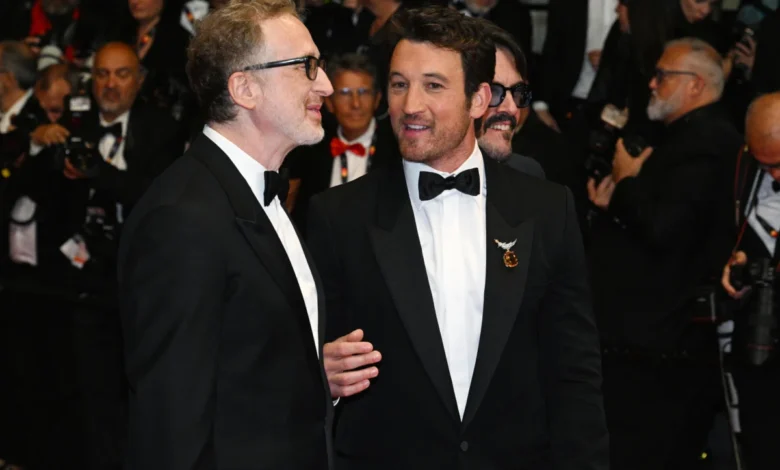
The trajectory of Miles Teller’s career has undergone a profound evolution since his feature film debut in John Cameron Mitchell’s 2010 drama Rabbit Hole. Emerging in his early twenties as a promising young talent marked by fresh-faced intensity, Teller quickly secured representation with CAA before delivering celebrated performances in critically acclaimed indies like The Spectacular Now and Damien Chazelle’s psychological masterpiece Whiplash. Over the next decade and a half, his filmography expanded to encompass major studio franchises, culminating in his breakout mainstream success as Rooster Bradshaw in the global blockbuster Top Gun: Maverick. Now, stepping firmly into roles defined by maturity, fatherhood, and complex adult responsibilities, Teller is charting a new phase of his professional life.
That evolution was underscored at the 79th Festival de Cannes, where Teller starred alongside Adam Driver and Scarlett Johansson in James Gray’s highly anticipated drama Paper Tiger. Released theatrically by Neon on November 6, the

film earned rave reviews during its world premiere on the French Riviera, drawing widespread praise for its gritty depiction of family loyalty, ambition, and the dangerous entanglement of everyday citizens with the Russian mafia. For Teller, who portrays Queens engineer and family man Irwin Pearl, the project represents a departure from the sidekick or supporting roles of his youth, cementing his status as a leading dramatic force capable of carrying heavy, character-driven cinema.
From Indie Breakout to Mature Dramatic Roles
Looking back on his career trajectory, Teller acknowledges a natural alignment between his personal growth and the types of characters he seeks to portray. While his early credits often positioned him as the wide-eyed youth or the energetic supporting player in projects like Divergent and Fantastic Four, his selection of roles in recent years reflects a deliberate pivot toward mature, adult-oriented storytelling.

In Paper Tiger, Irwin Pearl is depicted as a steady family man striving to build a legitimate business in Queens. When his older brother Gary—played by Adam Driver with a volatile, protective intensity—offers a shortcut to financial success, Irwin is drawn into an unscheduled night reconnaissance that exposes him to criminal elements far beyond his control. The dynamic between the two brothers serves as the emotional anchor of the film, supported by Scarlett Johansson’s grounded performance as Hester, Irwin’s wife.
The personal resonance of the project ran deep for Teller during production. When approached by director James Gray, the actor was dealing with significant personal upheaval, having recently lost his home in the Palisades Fire and experienced the death of his grandfather. Renting a temporary residence in Santa Barbara at the time, Teller channeled the resulting feelings of displacement, loss, and the fundamental human need for a secure home into his performance, infusing the character of Irwin with raw vulnerability and authentic emotional weight.
A Chronology of Artistic Diversification

Teller’s path to dramatic maturity has not been linear. Early in his career, actors navigating the Hollywood landscape often face institutional pressure to replicate previous successes, a phenomenon Teller experienced firsthand as casting directors attempted to pigeonhole him following his early credits.
Following his breakout in Rabbit Hole, attempts to transition into comedy were initially met with skepticism from casting executives who viewed him primarily through the lens of dramatic indie work. Conversely, stepping into comedies like Footloose created resistance when he sought to return to dramatic cinema. It required strategic choices—such as his physical and emotional transformation into five-time world champion boxer Vinny Pazienza in the 2016 sports biopic Bleed for This—to convince filmmakers of his range.
This diversification continued with high-profile television work, notably his portrayal of producer Al Ruddy in the Paramount+ limited series The Offer. Chronicling the tumultuous behind-the-scenes creation of The Godfather, the role required Teller to anchor a massive historical narrative, managing the competing egos of Francis Ford Coppola, studio executive Robert Evans, and organized crime figures. Portraying a man of decisive action and calculated risk-taking pushed Teller into territory that demanded a level of screen presence typically associated with veteran leading men.

Navigating Public Perception and Industry Longevity
As Teller reflects on his decade-and-a-half tenure in the film industry, his perspective on the broader apparatus of Hollywood has shifted significantly. Entering the industry alongside a distinct cohort of young actors that included Michael B. Jordan, Robert Pattinson, Shia LaBeouf, and Zac Efron, Teller observed the intense competitive pressures inherent to the studio system during the young-adult adaptation boom of the early 2010s.
Statistics from SAG-AFTRA consistently indicate that only a small fraction of union members earn a sustainable living from acting alone. Acknowledging this economic reality, Teller has expressed a desire to defend younger actors from public over-scrutiny regarding their career choices, noting that the pursuit of sustainable employment often dictates early project selection. Furthermore, he has addressed the enduring impact of out-of-context media profiles, pointing to past journalistic controversies as a cautionary tale about the distortion of public perception in the digital age. Despite external narratives, Teller maintains that an actor’s reputation is ultimately forged on set through professional conduct with directors, crew members, and fellow performers.

Broader Implications and Awards Season Outlook
Paper Tiger arrives at a critical juncture for original, mid-budget adult drama in the theatrical marketplace. As major studios increasingly prioritize intellectual property and globally oriented franchise tentpoles, auteur-driven films relying on star power and character-driven narratives often depend on specialty distributors like Neon to secure theatrical footprints and build momentum through the autumn festival circuit.
James Gray, whose semi-autobiographical storytelling frequently explores themes of familial regret and the immigrant experience in New York, drew inspiration for Paper Tiger from his own father’s real-life experiences in the engineering sector. The narrative’s exploration of collateral damage resulting from misguided business ambitions resonates with contemporary anxieties surrounding economic survival and family security.

Following its strong reception at the Cannes Film Festival, Paper Tiger is positioned as a formidable contender for the fall film festival circuit, with industry analysts anticipating strong awards season consideration for its principal cast. For Teller, the film represents both a continuation of his artistic collaboration with premier filmmakers and a definitive transition into the ranks of cinema’s most reliable dramatic leads.