Romesh Ranganathan: The Comedian’s Transformative Journey to Longevity and Marathon Success

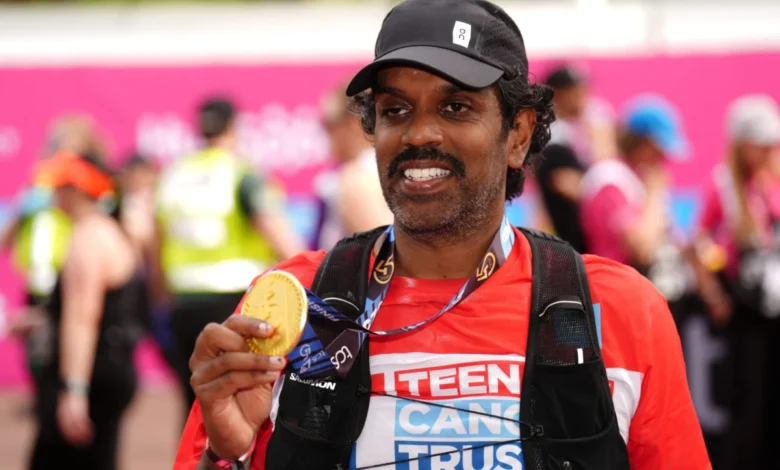
The image of British comedian Romesh Ranganathan—famed for his dry, self-deprecating humor and cynical outlook on television—has undergone a radical shift in recent years. While his public persona remains rooted in a brand of observational comedy that thrives on perceived failure, his private life has been defined by a disciplined, rigorous approach to physical health. Now 48, Ranganathan has transitioned from a self-described reluctant gym-goer to a dedicated athlete, completing back-to-back London Marathons and shedding 44 pounds in the process. His transformation offers a compelling case study on the intersection of mid-life health, the shift from aesthetic vanity to functional longevity, and the psychological benefits of structured endurance training.
A Catalyst for Change: The Medical Wake-Up Call
The shift in Ranganathan’s lifestyle was not spurred by a desire to conform to industry standards or enhance his on-screen appearance. Instead, it was prompted by a confrontation with mortality. Upon reaching the age of 40, Ranganathan underwent a comprehensive medical examination, a moment he identifies as the pivotal point in his life.
"I got a medical when I turned 40 as I started to worry about my own mortality, not for myself, but because of my kids," Ranganathan shared in an interview with On: Yorkshire Magazine. He noted that his prior attempts at fitness were largely driven by vanity—a common motivator for men in their 20s and 30s. "I’ve long since abandoned that and have accepted that I’m never going to look good. So the second half is about my reaction to that medical."
This admission highlights a broader trend among middle-aged men: the transition from "performance-based" or "aesthetics-based" fitness to "longevity-based" health. Medical professionals have long argued that the fourth and fifth decades of life are critical windows for intervention regarding metabolic health, cardiovascular capacity, and muscle mass retention, all of which are essential for long-term independence and quality of life.
Establishing a Routine: Weights, Steps, and Sustainability
Ranganathan’s fitness regimen is defined by consistency rather than extreme intensity. According to insights shared on the Wolf & Owl podcast and in discussions with health brand Huel, he has established a reliable routine that balances resistance training with cardiovascular volume.
The comedian commits to lifting weights three to four times a week, a practice supported by the American College of Sports Medicine (ACSM), which recommends at least two days of strength training per week for healthy adults to combat sarcopenia—the age-related loss of muscle mass. Beyond the weight room, Ranganathan focuses on increasing his non-exercise activity thermogenesis (NEAT) by maintaining a high daily step count.
For many individuals in high-pressure careers like television production and stand-up comedy, the challenge lies in consistency. Ranganathan’s strategy—prioritizing simple, repeatable habits over "all-or-nothing" crash diets or extreme workout protocols—has yielded a 44-pound weight loss over several years. This sustainable approach is frequently cited by nutritionists as the gold standard for long-term weight management, as it avoids the metabolic damage often associated with rapid, restrictive weight loss.
The Running Paradox: From Hating the Track to Marathon Finisher
Perhaps the most surprising aspect of Ranganathan’s fitness journey is his embrace of distance running. For years, the comedian viewed running as a source of misery. In an interview with Runner’s World, he candidly discussed his early struggles with the sport, noting that he would experience breathlessness within two minutes of starting a run, leading to a cycle of stop-start exhaustion that left him feeling "battered."
His breakthrough came through a fundamental change in technique: the realization that he was running too fast. By adopting the "slow down to go faster" philosophy—a staple of endurance training—Ranganathan was able to stabilize his heart rate and improve his aerobic threshold. This physiological adjustment transformed running from an unbearable chore into a manageable, and eventually enjoyable, component of his lifestyle.

The payoff was visible on the global stage. Ranganathan successfully crossed the finish line at the TCS London Marathon in both 2024 and 2025. The London Marathon, one of the world’s six major marathons, requires immense physical and mental preparation, involving months of cumulative mileage and the navigation of high-impact stress on the joints. By successfully completing the course twice, Ranganathan has joined a growing cohort of public figures using high-profile endurance events to raise awareness for charity and personal wellness.
The Science of Longevity: Why Mid-Life Matters
The physiological benefits of Ranganathan’s routine are grounded in well-established sports science. Strength training, as Ranganathan incorporates, plays a vital role in bone density, metabolic rate, and insulin sensitivity. As men pass the age of 40, natural testosterone levels typically begin a gradual decline, and the risk of chronic conditions such as type 2 diabetes and cardiovascular disease increases.
According to research published in the Journal of the American Medical Association (JAMA), regular physical activity in middle age is strongly correlated with a reduced risk of all-cause mortality. The specific combination of resistance training and aerobic exercise—often referred to as "concurrent training"—is considered the most effective way to improve body composition and cardiovascular fitness simultaneously.
Ranganathan’s focus on his three sons as his primary motivation is also scientifically significant. A study published in the American Journal of Health Promotion suggests that parental responsibility is a potent psychological driver for exercise adherence. When individuals frame their fitness as a means to be present for their families, they are more likely to overcome the barriers of fatigue and time constraints.
Implications for the Public and the Comedy Industry
Ranganathan’s openness about his journey serves to demystify the process of getting fit after 40. In an industry often characterized by late nights, irregular eating habits, and the physical toll of constant travel, his commitment provides a roadmap for others in high-stress professions.
Furthermore, his influence extends to his audience. By sharing the struggles—the "blowing after two minutes," the initial hatred of cardio, and the struggle to find time for the gym—he normalizes the difficulty of the process. In a digital landscape saturated with "perfect" fitness influencers and unrealistic transformations, Ranganathan’s narrative of incremental, humble progress offers a more relatable and achievable model for the general public.
The Future of His Fitness Journey
As Ranganathan continues his career, his commitment to his physical health remains a non-negotiable aspect of his life. While he maintains his self-deprecating brand of humor, his actions demonstrate a profound shift in priorities. He is no longer training for the stage or the screen; he is training for his life.
The integration of consistent weightlifting and sustained aerobic running has not only changed his physical composition but has arguably enhanced his mental resilience—an essential trait for a career in the unpredictable world of entertainment. His journey from a sedentary 40-year-old to a consistent marathon runner serves as a testament to the idea that it is never too late to recalibrate one’s health.
As the fitness landscape continues to evolve, the focus on longevity and functional strength is likely to become even more prominent. Figures like Ranganathan act as ambassadors for this shift, proving that the most sustainable health gains are found not in the pursuit of perfection, but in the quiet, disciplined work of showing up for oneself and one’s family, one step and one lift at a time.
Related posts: