Timor-Leste Achieves Historic Milestone as World Health Organization Officially Certifies Nation Malaria-Free

In a landmark achievement for global public health, the World Health Organization (WHO) has officially certified Timor-Leste as malaria-free. This designation marks the culmination of a rigorous, two-decade-long campaign by the young Southeast Asian nation to eradicate a disease that once served as a primary driver of morbidity and mortality among its population. The certification is granted only after a country provides irrefutable evidence that indigenous transmission of the parasite has been completely interrupted for at least three consecutive years. For Timor-Leste, which transitioned from over 223,000 clinically diagnosed cases in 2006 to zero indigenous cases since 2021, the milestone represents a triumph of political will, structural health reform, and community-led resilience.
The announcement positions Timor-Leste as the third country in the WHO South-East Asia region to achieve this status, following in the footsteps of the Maldives, certified in 2015, and Sri Lanka, certified in 2016. Globally, the nation now joins an elite cohort of 47 countries and one territory that have successfully eliminated the disease, signaling a shift in the regional landscape of tropical medicine and infectious disease control.
The Chronology of a Public Health Transformation
The journey toward elimination began in the shadow of the nation’s newfound independence. Following the restoration of sovereignty in 2002, the government faced a decimated health infrastructure and an overwhelming burden of preventable infectious diseases. Malaria was, at that time, a persistent and lethal threat.
In 2003, the Ministry of Health took the foundational step of establishing the National Malaria Programme (NMP). Initially operating with a skeletal staff of only two full-time officers, the program was tasked with the monumental responsibility of designing a national response strategy. By 2006, the country reached a grim peak of more than 223,000 clinically diagnosed malaria cases. This period serves as the baseline for the nation’s progress, highlighting the severity of the crisis at the outset.
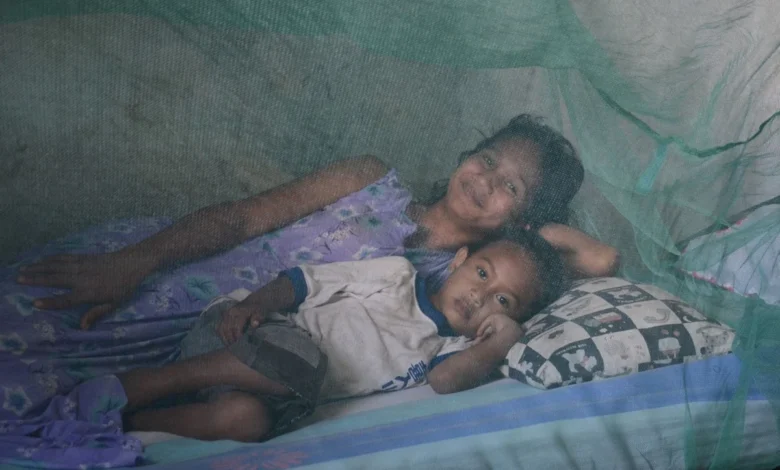
Between 2007 and 2010, the NMP underwent a rapid evolution. The government integrated rapid diagnostic tests (RDTs) and artemisinin-based combination therapies (ACTs) into the national clinical guidelines, ensuring that patients could receive accurate diagnoses and effective treatment at the point of care. In 2009, a critical partnership with the Global Fund to Fight AIDS, Tuberculosis and Malaria allowed for a massive scale-up of vector control, specifically through the mass distribution of long-lasting insecticide-treated nets (LLINs) and the implementation of indoor residual spraying (IRS).
By the mid-2010s, the focus shifted from broad control to granular surveillance. Every health post and community center was equipped to perform microscopy or utilize RDTs, creating a comprehensive safety net. The final stretch, from 2018 to 2021, was defined by rigorous monitoring, which ultimately allowed the country to report zero indigenous transmission for three consecutive years, satisfying the WHO’s stringent verification criteria.
Structural Pillars: A Three-Tier Health System
The success of the malaria elimination campaign was inextricably linked to the broader development of Timor-Leste’s health system. Recognizing that clinical interventions could not succeed without access, the Ministry of Health invested in a three-tier infrastructure: national hospitals, reference hospitals, and a widespread network of community health centers and rural health posts.
The strategy was designed to ensure that the vast majority of the population—particularly those in remote or mountainous regions—could reach a healthcare facility within an hour’s walk. This access was bolstered by a national policy of free universal healthcare, removing financial barriers that often prevent the most vulnerable from seeking treatment. Furthermore, the introduction of monthly mobile clinics and dedicated community outreach programs ensured that rural residents were not excluded from the national monitoring effort. This investment in primary care served as the backbone for the malaria surveillance system, allowing for the real-time reporting of suspected cases and rapid deployment of investigation teams to contain potential clusters.
Official Responses and International Recognition
The certification was celebrated by high-level health officials as a blueprint for other developing nations. Dr. Tedros Adhanom Ghebreyesus, the Director-General of the WHO, issued a statement praising the nation’s perseverance. "Timor-Leste’s success proves that malaria can be stopped in its tracks when strong political will, smart interventions, sustained domestic and external investment, and dedicated health workers unite," Dr. Tedros noted.
Dr. Ália António de Araújo dos Reis Amaral, the Minister of Health for Timor-Leste, characterized the achievement as a victory over a "relentless enemy." In her address to the public, she emphasized the human cost of the disease and the role of the collective: "From 223,000 cases to zero—this elimination honors every life lost and every life now saved. We must safeguard this victory with continued vigilance and community action to prevent malaria’s re-entry."
Dr. Arvind Mathur, the WHO Representative to Timor-Leste, underscored the personal sacrifices made by local health workers. "Ending transmission and maintaining zero deaths takes more than science; it takes grit. This victory protects generations, present and future, and shows what a determined country can achieve," he stated.
Implications and the Path Toward Sustained Vigilance
While the certification is a cause for celebration, public health experts emphasize that the work of malaria elimination is never truly finished. The "malaria-free" status requires a transition from an active elimination strategy to a robust maintenance and prevention strategy.
The threat of imported malaria cases, particularly through increased cross-border movement and international travel, remains a reality for Timor-Leste. To mitigate this risk, the government has maintained its integrated case-based surveillance system. This system relies on highly trained health workers who are stationed at border crossings and major entry points, ensuring that any individual entering the country with symptoms is screened, tested, and treated immediately.
The broader implications for Timor-Leste are profound. The elimination of malaria is expected to have a cascading positive effect on the national economy and social stability. By reducing the number of sick days taken by the workforce and decreasing the strain on hospital resources, the country can redirect its health budget toward addressing other emerging public health challenges, such as non-communicable diseases and maternal health.
Analytical Perspective: What Makes the Model Replicable?
The Timor-Leste model provides several key takeaways for the global health community:
- Political Prioritization: By establishing the National Malaria Programme shortly after independence, the government sent a clear signal that public health was a cornerstone of national development.
- Strategic Resource Allocation: Rather than attempting to fix every aspect of the health system simultaneously, the NMP focused on specific, high-impact interventions: RDTs, ACTs, and vector control.
- Community Engagement: The success was not top-down; it was dependent on community health workers who served as the eyes and ears of the system in rural areas, fostering trust and ensuring high compliance with treatment and net usage.
- Integrated Data Systems: The use of a real-time surveillance system allowed for data-driven decision-making. This eliminated the lag time between a case detection and the public health response, preventing localized outbreaks from turning into regional epidemics.
The certification of Timor-Leste is not merely a bureaucratic milestone; it is a profound testament to the power of national agency. As the country moves forward, it remains a focal point for researchers and policy makers studying how to replicate such rapid public health transformations in low-resource settings. With this victory, the nation has effectively closed a chapter on a disease that once defined its medical burden, marking a new era of resilience and health security for its citizens. The rigorous process conducted by the WHO—which involves the Technical Advisory Group on Malaria Elimination and Certification—ensures that this status is not merely a label, but a reflection of a deeply ingrained, sustainable system of disease prevention.