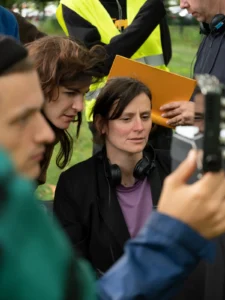
Quentin Tarantino Openly Details the Brutal Firings of Mélanie Laurent and Isabelle Huppert Prior to the Production of Inglourious Basterds


The filmmaking process of acclaimed auteur Quentin Tarantino has long been characterized by uncompromising creative visions, rigorous attention to detail, and a distinct lack of sentimentality when casting his cinematic universes. These uncompromising standards were brought into sharp focus with the release of Jay Glennie’s new behind-the-scenes book, The Making of Quentin Tarantino’s Inglourious Basterds. Within the pages of this comprehensive literary deep-dive, the director opens up with rare and brutal honesty regarding the early pre-production phases of his 2009 revisionist World War II epic. Specifically, Tarantino details his swift, unhesitating decisions to fire both French actress Mélanie Laurent and legendary European screen icon Isabelle Huppert before a single frame of the film was officially shot.
The revelations offer a fascinating glimpse into the high-stakes, pressure-cooker environment of Hollywood pre-production. For Tarantino, the initial table read with the assembled cast serves as a sacred, pivotal threshold. It marks the moment the written word transforms into living, breathing cinema. When certain actors failed to meet his exacting standards during this crucial juncture, the director demonstrated that his ultimate loyalty lies entirely with the finished film rather than professional courtesy or established reputations.
Main Facts and the Table Read Turning Point
The central revelation of Glennie’s book centers on Mélanie Laurent’s initial casting, dismissal, and subsequent redemption. In Inglourious Basterds, Laurent ultimately delivered a career-defining performance as Shosanna Dreyfus, a young French-Jewish cinema owner plotting a fiery revenge against the high-ranking Nazi officers who slaughtered her family. However, the path to securing this iconic role was fraught with near-disaster.
According to Tarantino, Laurent’s performance at the preliminary cast table read was nothing short of a catastrophe. Describing the experience with characteristic hyperbole and bluntness, the director recalled that her delivery was not merely subpar, but alarmingly inadequate. For a filmmaker who treats the table read as the closest he will ever get to experiencing his movie for the first time outside of his own imagination, a poor showing at this stage is a dealbreaker. Up until that day, Tarantino had lived with the script solely in his own head or read it aloud to close friends. The transition to a full cast reading is designed to validate the casting choices; when Laurent stumbled, Tarantino made the snap decision to terminate her employment on the spot.
Yet, the narrative took an unexpected turn due to the tenacity and resilience of the actress herself. Days after receiving the devastating news of her termination, Laurent initiated contact with the director. Recognizing the gravity of the opportunity, she confessed that she had been profoundly unwell during the initial reading—a physical and emotional state that severely hindered her performance. Demonstrating immense dedication, Laurent proposed a drastic measure: she would independently book and fund her own flights back to Germany, secure a hotel room at her own expense, and audition for the director once more from a clean slate.
Impressed by her fierce passion and refusal to back down, Tarantino agreed to reset the process. He established a strict condition that she must endure three rigorous days of intensive private rehearsals with him. Laurent accepted the challenge, and her work during those pivotal days completely transformed the director’s perspective. She won her role back entirely on merit, proving that her initial failure was an anomaly rather than an indicator of her capabilities.
Contractual Hurdles and the Ousting of Isabelle Huppert
While Laurent managed to claw her way back into the director’s good graces through sheer willpower, veteran French actress Isabelle Huppert was not afforded the same grace. Huppert had originally been cast in the role of Madame Ada Mimieux, the Parisian proprietress who shelters Shosanna during her years in hiding. However, a combination of logistical bottlenecks and a perceived lack of professional commitment sealed her fate.
Tarantino revealed that Huppert failed to appear at the essential table read—an absence that crossed a definitive red line for the director. Compounding the issue were persistent complications and delays surrounding her contract negotiations. For Tarantino, the combination of administrative stalling and a no-show at the most crucial pre-production gathering was intolerable.
Despite expressing genuine admiration for Huppert’s storied cinematic career—explicitly citing her work in Michael Cimino’s notorious 1980 western Heaven’s Gate—Tarantino did not hesitate to sever ties. Citing his hardline philosophy regarding the sanctity of the casting process, the director noted that an actor who fails to show up to the foundational table read forfeits any claim to professional courtesy. Consequently, Huppert was dropped from the production entirely.
Chronology of the Production Shuffles
To understand the cascading effect of these casting changes, it is necessary to examine the strict timeline of Inglourious Basterds’ pre-production and filming schedule. The project moved at a rapid pace once greenlit, following a years-long writing process that Tarantino frequently refined.
In the wake of Huppert’s dismissal, Tarantino moved quickly to fill the vacant role of Madame Ada Mimieux. He cast renowned Hong Kong cinema icon Maggie Cheung, celebrated globally for her mesmerising performances in films such as Wong Kar-wai’s In the Mood for Love. Cheung stepped into the production, completed her required preparations, and filmed her scenes alongside Laurent in Paris.
However, the chronology of the character’s existence in the film was ultimately cut short during the editing suite phase. As Tarantino meticulously assembled the footage, he realized that the entire subplot involving Madame Ada Mimieux and the specifics of how Shosanna acquired her cinema were entirely redundant. He determined that contemporary audiences did not require an exhaustive, scene-by-scene explanation of Shosanna’s interim years.
As a result, all scenes featuring Cheung were systematically excised from the final cut of the film. The narrative transition was instead streamlined via a simple title card reading “Four Years Later,” accompanied by a brief piece of dialogue where Shosanna explains that she inherited the historic theater from her aunt. While Cheung’s performance was reportedly exceptional, the demands of cinematic pacing and narrative economy rendered her entire storyline obsolete.
Supporting Data and Box Office Legacy
The high-stakes decisions made during the volatile pre-production phase ultimately culminated in one of the most commercially successful and critically lauded films of Quentin Tarantino’s career. Inglourious Basterds world premiered in May 2009 at the prestigious Cannes Film Festival, where it competed for the Palme d’Or and immediately generated intense critical discussion.
The film’s ensemble cast received widespread acclaim, most notably Austrian actor Christoph Waltz, whose terrifying yet charismatic portrayal of Nazi Colonel Hans Landa earned him the Best Actor award at Cannes, setting the stage for an eventual Academy Award sweep later that year.
Commercially, Inglourious Basterds performed exceptionally well upon its theatrical release in August 2009. Backed by a production budget estimated at approximately $70 million, the film grossed a staggering $321 million at the worldwide box office. It firmly established itself as a major financial win for The Weinstein Company and Universal Pictures. For Mélanie Laurent, the redemption arc proved to be career-defining; her portrayal of Shosanna Dreyfus remains widely regarded as her signature international role, permanently etching her name into modern cinema history.
Directorial Philosophy and Broader Implications
The candid admissions found within Jay Glennie’s book shed light on a broader, unapologetic directorial philosophy that has defined Tarantino’s decades-long career. Unlike filmmakers who prioritize diplomacy or maintain long-term loyalty pacts with specific talent agencies and actors, Tarantino operates under a singular, uncompromising mandate: the integrity of the film supersedes all personal feelings.
Reflecting on his freewheeling, often cutthroat approach to casting changes, Tarantino articulated a clear ethical boundary regarding his obligations to performers. He explicitly stated that he possesses no moral compass when distributing roles beyond the absolute necessity of finding the exact right fit for the cinematic universe he has engineered. In his view, professional pleasantries take a back seat to artistic execution. If an actor cannot deliver or fails to meet the logistical and creative demands of the production, termination is viewed as a pragmatic necessity rather than a personal slight.
This uncompromising stance carries significant implications for the broader entertainment industry. In an era where casting decisions are frequently scrutinized through the lenses of risk aversion, public relations, and contractual security, Tarantino’s approach represents a throwback to a more autocratic, auteur-driven style of filmmaking. It demonstrates that visionary directors are often willing to burn bridges, disrupt schedules, and risk professional friction to achieve their desired aesthetic outcomes.
Furthermore, the publication of these anecdotes via Glennie’s book illustrates a growing appetite among cinephiles and industry analysts for granular, unvarnished accounts of the creative struggles behind modern masterpieces. By willingly pulling back the curtain on the near-misses and volatile behind-the-scenes drama of Inglourious Basterds, Tarantino reminds audiences that cinematic greatness is rarely achieved through smooth sailing alone. Instead, it is frequently forged through high-stakes gambles, strict accountability, and the relentless pursuit of perfection, regardless of the casualties left in the editing room or the audition chair.