Sandra Wollner Reimagines the Anatomy of Grief in Her Cannes-Winning Feature Film Everytime

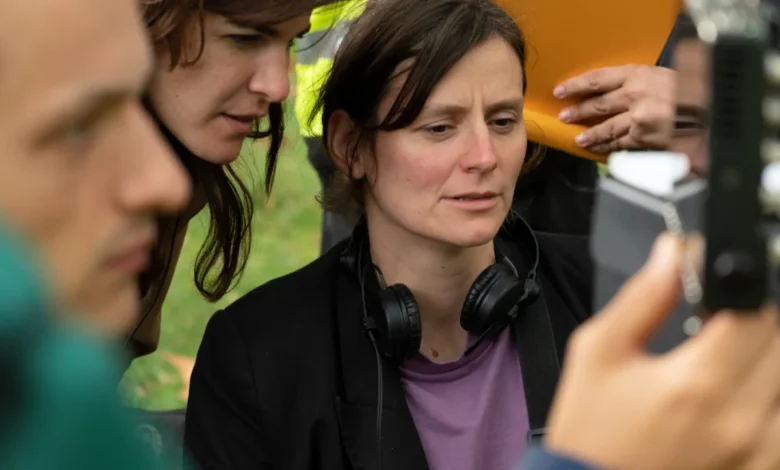
The cinematic landscape has long explored the human experience of bereavement, mapping the linear stages of loss from denial to acceptance. Yet, German filmmaker Sandra Wollner’s third feature film, Everytime, approaches this universal emotion through a uniquely disorienting and unconventional lens. Winner of the Un Certain Regard prize at the prestigious Cannes Film Festival, the movie subverts traditional dramatic tropes by blending real-world domestic trauma with digital memorials, expansive virtual world-building, and an unflinching examination of memory. Released by 1-2 Special, the feature has sparked considerable critical acclaim for its elastic interpretation of grief, culminating in a limited theatrical run ahead of a wider release scheduled for February 2027.

Narrative Framework and Plot Dynamics
At its narrative core, Everytime follows an unconventional family unit attempting to navigate the devastating void left by the death of teenager Jessie, portrayed by Carla Hüttermann. Following her fatal fall from a high-rise building—witnessed by her boyfriend Lux, played by Tristán López—Jessie leaves behind a complex web of survivors. These include her grieving mother Ella, brought to life by Birgit Minichmayr, and her younger sister Melli, played by Lotte Shirin Keiling. Rather than plunging the audience immediately into the raw, chaotic aftermath of the tragedy, Wollner strategically sets the majority of the film roughly one year later. This temporal distance allows the narrative to bypass melodramatic histrionics, focusing instead on the quiet, lingering friction of daily existence.
The surviving trio forms a fragile and dependent dynamic. Ella requires Lux to help process her grief, while Lux seeks absolution and forgiveness from Ella. The emotional architecture of the film is further enriched by subtle, everyday sensory triggers—such as the distinct echo of footsteps in an apartment hallway or a banal melody from a kitschy resort toy—that weaponize ordinary memories against the characters. By grounding the narrative in mundane details rather than cinematic overstatement, Wollner creates a more authentic portrayal of long-term trauma that defies neat emotional categorization.

The Digital Afterlife: Video Games as Memorials
What fundamentally distinguishes Everytime from contemporary drama is its innovative integration of digital spaces. Early in the film, Wollner layers in cut scenes and aesthetic markers inspired by the sandbox video game Vintage Story—a title she likens to an early version of the eerie "Backrooms" internet phenomenon. While audiences might initially mistake the blocky environments for the more mainstream Minecraft, Wollner intentionally harnesses the minimalist, ambient, and eerie-yet-soothing soundscapes of virtual world-building to mirror psychological isolation.
In the film, Jessie leaves behind a virtual world of her own creation, an online digital environment where her avatar continues to exist independently. Melli’s exploration of this digital landscape serves as a modern form of memorialization, highlighting an increasingly relevant cultural phenomenon where digital footprints and virtual avatars outlive their creators. Wollner has noted that this concept originated from observing how online gaming communities preserve the presence of deceased members, allowing digital avatars to forge an autonomous online existence.

Production and Technical Execution
The production of Everytime involved meticulous technical planning, particularly regarding its most shocking sequence: Jessie’s fatal fall. Rather than filming the tragedy from a conventional, close-up perspective, Wollner and her longtime partner, cinematographer and writer Timm Kröger, utilized an extreme long-shot lens. Operating from a building roughly half a mile away from the actors, the crew employed a massive 3,000-millimeter consumer camera. This extreme focal length created a voyeuristic, forbidden perspective—simulating an indifferent universe that witnesses a tragedy from a vast distance while remaining entirely powerless to intervene.
The physical fall itself was captured under controlled studio conditions by Carla Hüttermann and subsequently integrated into the exterior long-shot footage by visual effects supervisor Kariem Saleh. Despite comprehensive safety measures, Hüttermann noted that the immersive nature of the production left a lingering psychological impact. The audio design for this sequence underwent rigorous iteration, culminating in a restrained acoustic palette punctuated by a subtle sound upon impact. When the film premiered at Cannes, this calculated sonic restraint successfully evoked visceral audience reactions, validating Wollner’s bold directorial choices.

Personal Milestones and Real-World Infuences
The thematic depth of Everytime was further heightened by personal milestones in Wollner’s own life. While editing the feature, the director gave birth to her daughter, an experience that fundamentally reshaped her perspective on motherhood and existence. This real-world transition resonated profoundly during the production’s second-half sequences shot in Tenerife, Spain. In these scenes, the grieving trio encounters a toddler who physically resembles baby Jessie playing in the exact same resort location featured in home videos. This coincidence bridges the gap between past memory and present reality, capturing the profound astonishment of new parenthood.
Furthermore, Wollner’s direction of young actress Lotte Shirin Keiling avoided traditional, highly emotive acting exercises. Collaborating with kids’ coach Juli Neuhaus, Wollner encouraged Keiling to process scenes through drawing, allowing the young performer to approach her role through natural curiosity and playfulness. By relying on framing, negative space, and environmental absence rather than forced tears, the film communicates Melli’s internal sorrow organically.

Critical Reception and Broader Implications
As Everytime continues its theatrical rollout following its successful festival run, film critics and industry analysts have hailed it as a masterclass in tonal elasticity. The movie’s baffling, surreal third act pushes the boundaries of traditional narrative cinema, leaving viewers to parse the boundaries between reality, memory, and the supernatural. Wollner maintains that the ambiguous climax remains entirely grounded in truth for her characters, refusing to offer simplistic resolutions to complex psychological wounds.
By examining how contemporary society memorializes the departed through both physical trauma and digital permanence, Everytime expands the emotional vocabulary of the modern grief drama. Backed by stellar performances from Minichmayr, López, Hüttermann, and Keiling, Wollner’s third feature cements her reputation as one of European cinema’s most daring and innovative voices.