NASA Unveils New Perseverance Sample Retrieval Architecture to Revive Troubled Mars Return Mission

The long-standing ambition of returning pristine geological samples from the surface of Mars to Earth has faced numerous hurdles, prompting NASA to initiate a fresh strategic framework.
NASA is officially kickstarting a newly formulated initiative aimed at rescuing its troubled Mars Sample Return (MSR) program. Dubbed the Perseverance Sample Retrieval Architecture (PSRA), this updated framework is designed to establish a viable, cost-effective strategy for gathering the high-priority samples currently being collected by the Perseverance rover and transporting them across interplanetary space back to Earth laboratories.
The unveiling of the PSRA initiative took place during a virtual meeting of the Mars Exploration Program Analysis Group (MEPAG). Tiffany Morgan, director of the NASA Mars Exploration Program (MEP), formally introduced the concept to the scientific community, outlining a timeline that aims to restructure how the space agency approaches one of its most technologically complex and scientifically vital endeavors.
The Journey of Perseverance in Jezero Crater
The operational backdrop of the PSRA initiative relies entirely on the remarkable success of NASA’s Perseverance Mars rover. Having successfully touched down within the ancient, 28-mile-wide (45 kilometers) Jezero Crater in February 2021, the car-sized, nuclear-powered robot has spent years methodically exploring a terrain that once held a sprawling lake and river delta system.
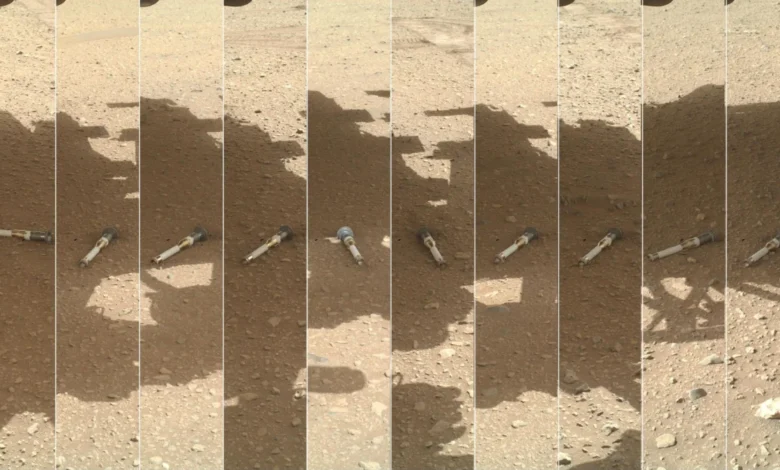
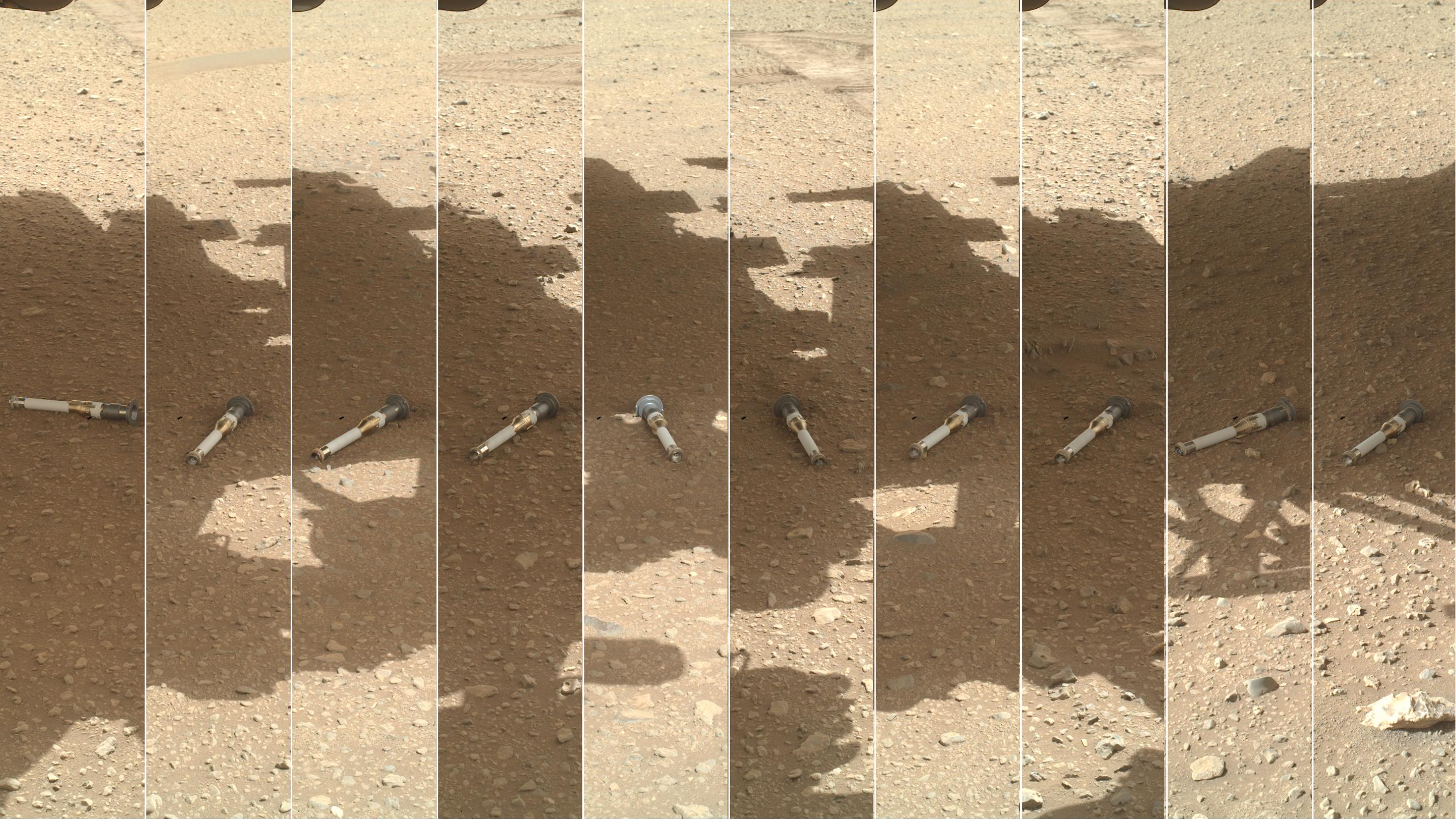
Perseverance has been actively drilling into Martian rock, extracting core samples, sealing them in specialized ultra-clean metallic tubes, and meticulously characterizing the mineralogy of its surroundings. While many of these samples are stored securely within the belly of the rover for future robotic transfer, a significant collection has been deposited directly onto the Martian surface. The rover completed a dedicated cache known as the Three Forks sample depot, creating a collection of titanium tubes resting on the dusty orange soil that could potentially hold definitive biosignatures—microscopic or chemical evidence of ancient, extinct Martian life.
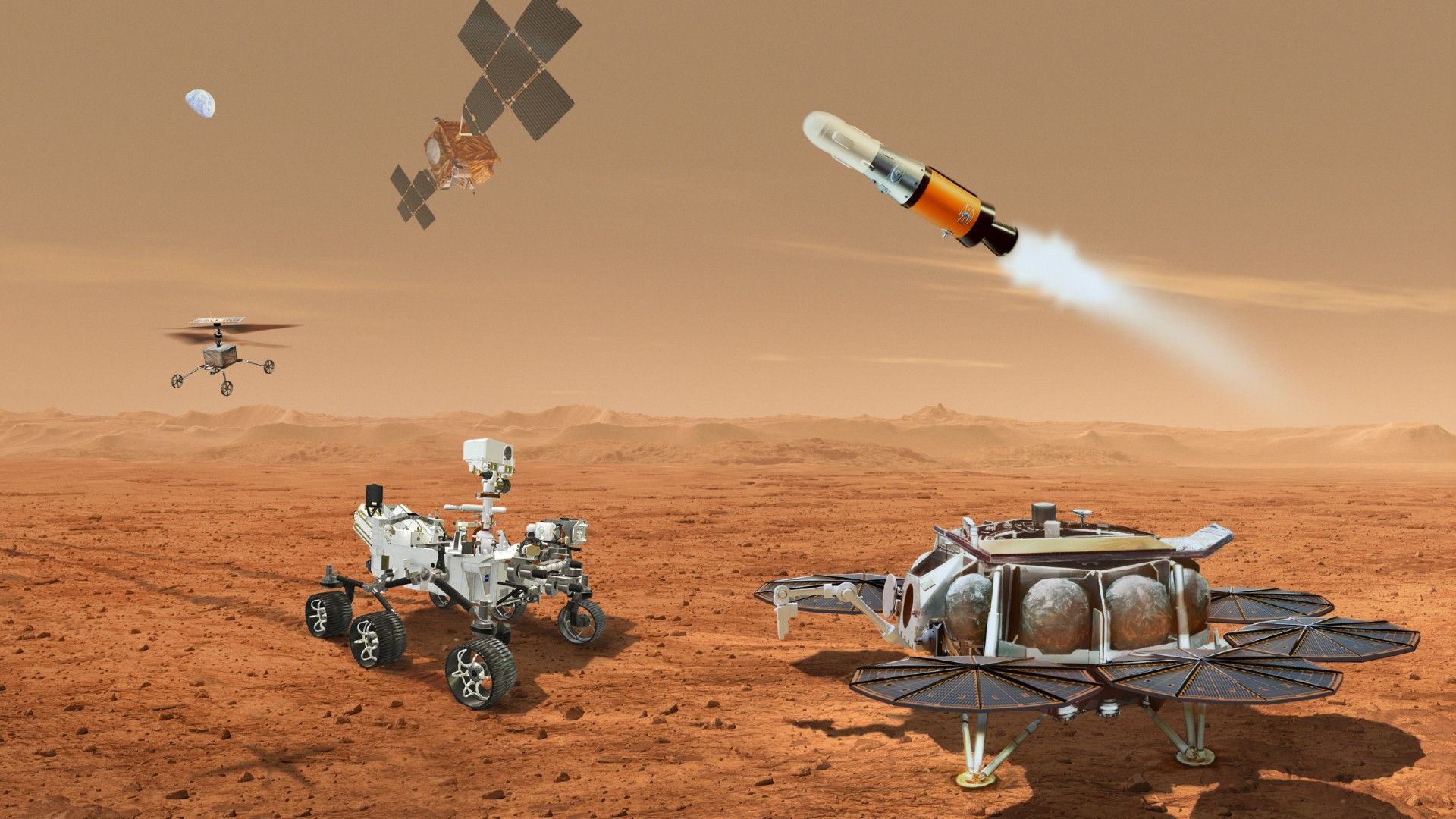
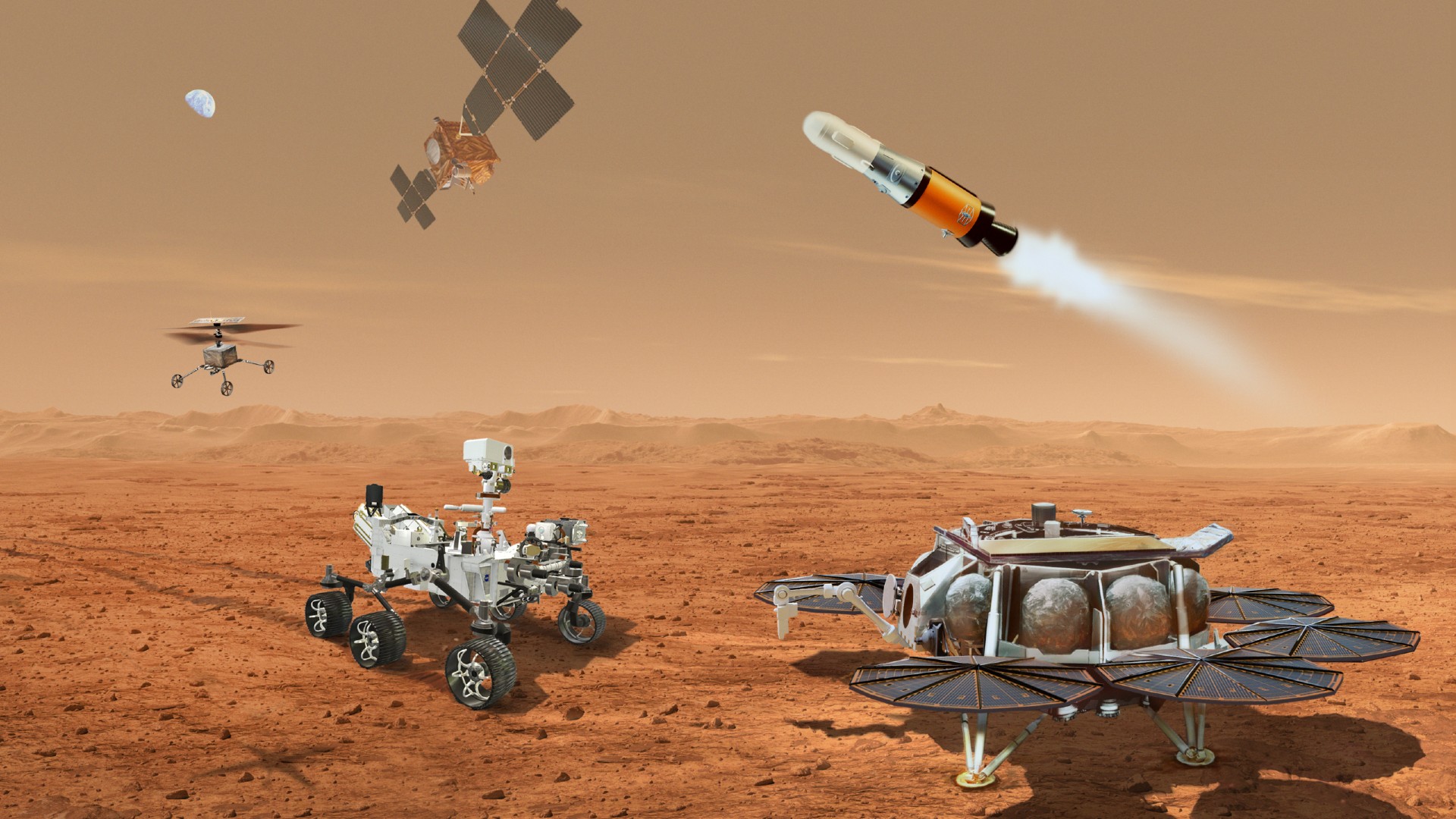
For years, NASA and the European Space Agency (ESA) have collaborated on conceptualizing advanced multi-spacecraft campaigns. These blueprints envisioned sending a specialized lander to Mars, equipped with a robotic retrieval arm and a small rocket known as the Mars Ascent Vehicle (MAV). The MAV would lift the container of collected samples into Martian orbit, where a European orbiter would capture the payload and execute a high-speed trajectory back toward Earth for a controlled landing in the Utah desert.
Financial Realities and Historical Sticker Shock
Despite the profound scientific allure of analyzing Martian material with state-of-the-art instruments on Earth—equipment far too massive and complex to ever launch aboard an interplanetary spacecraft—the MSR program has repeatedly collided with budgetary and political realities.
Independent review boards and internal NASA assessments have scrutinized the program’s mounting complexities, resulting in severe "sticker shock." Earlier iterations of the MSR architecture projected costs soaring to an astronomical $11 billion, with a scheduled return date pushed out as far as 2040. Agency leadership quickly deemed these projections financially untenable and temporally unacceptable, forcing a comprehensive pause and a complete restructuring of the enterprise.
Alternative independent appraisal groups subsequently evaluated scaled-down concepts, suggesting that returning the samples as early as 2035 might be feasible under a leaner, streamlined mission architecture carrying a price tag closer to $8 billion. How the newly minted PSRA strategy team will reconcile these budgetary constraints, manage mission risk, and balance technological innovations remains one of the most critical questions facing planetary scientists today.
According to program timelines outlined by Morgan, the agency will formally initiate the PSRA strategy team in January 2027. This specialized group will conduct intensive evaluations, trade studies, and architectural assessments, culminating in a comprehensive final report slated for release in the winter of 2027 to 2028.
Mitigating Risks for Future Human Explorers
While the primary driver of the MSR program has historically been astrobiology—searching for traces of ancient Martian life—scientists and mission planners increasingly emphasize its vital role in preparing for human exploration.
During the same MEPAG virtual gathering, Bruce Jakosky, a senior researcher at the Laboratory for Atmospheric and Space Physics at the University of Colorado Boulder and a faculty member at the University of Washington, underscored the necessity of integrating robotic sample return with human mission planning. Jakosky highlighted findings from a specialized workshop organized last May by Explore Mars, Inc., which produced a comprehensive report evaluating how robotic sample returns directly reduce the risks facing future human astronauts.
"The purpose is to understand the risk to astronauts and to hardware," Jakosky explained during his presentation. He pointed out that the Martian regolith is not an inert sandbox; rather, it contains highly reactive chemical compounds that could pose severe health hazards if inhaled or brought into a pressurized habitat.
"This includes perchlorates and chloromethanes that have been identified already, and detection of other species that might be present," Jakosky noted. Beyond chemical toxicity, abrasive Martian dust poses mechanical threats, capable of accelerating wear and tear on space suits, seals, rover mechanisms, and life-support infrastructure. Analyzing returned samples in containment facilities on Earth allows engineers to design robust filtration and mitigation systems long before human boots ever touch the Red Planet.
The International Landscape and China’s Tianwen-3 Mission
Internal budgetary pressures and programmatic delays at NASA are not occurring in a vacuum. A major forcing factor compelling NASA to reevaluate and accelerate its sample return timeline is the rapid progress being made by international space agencies, most notably China.
The China National Space Administration (CNSA) is advancing steadily with its ambitious Tianwen-3 Mars Sample Return mission. According to technical outlines provided by Chinese space officials, the Tianwen-3 mission architecture is remarkably comprehensive, featuring a complex mission profile that includes a lander, an ascender vehicle, a service capsule, an orbiter, and a dedicated Earth reentry module.
Current schedules indicate that China is targeting a launch window around 2028. The mission plans to utilize two powerful Long March-5 heavy-lift carrier rockets lifting off from the Wenchang Space Launch Site on Hainan Island. If successful, Tianwen-3 aims to retrieve roughly 500 grams (about 1.1 pounds) of Martian surface material and successfully parachute the package back to Earth by 2031.
This impending geopolitical and scientific milestone adds a palpable sense of urgency to NASA’s internal deliberations. As space-faring nations inch closer to establishing permanent robotic pipelines between Earth and Mars, the outcome of NASA’s Perseverance Sample Retrieval Architecture study will determine whether the United States maintains its historic leadership in planetary exploration or finds itself following a path forged by international competitors. For now, the global scientific community waits anxiously for the convening of the PSRA strategy team in 2027, hoping it will finally chart a clear, sustainable course to bring the treasures of Jezero Crater home.
Related posts: