Starfleet Reaches Orbit: European Space Agency Astronaut Sophie Adenot Celebrates Star Trek’s 60th Anniversary Aboard the International Space Station

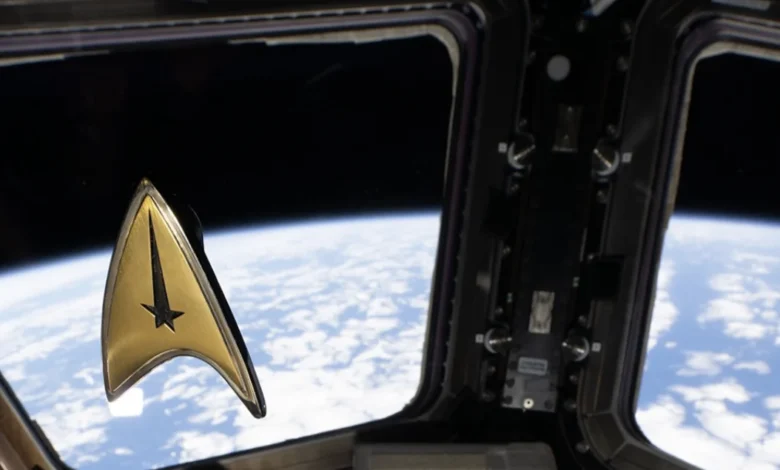
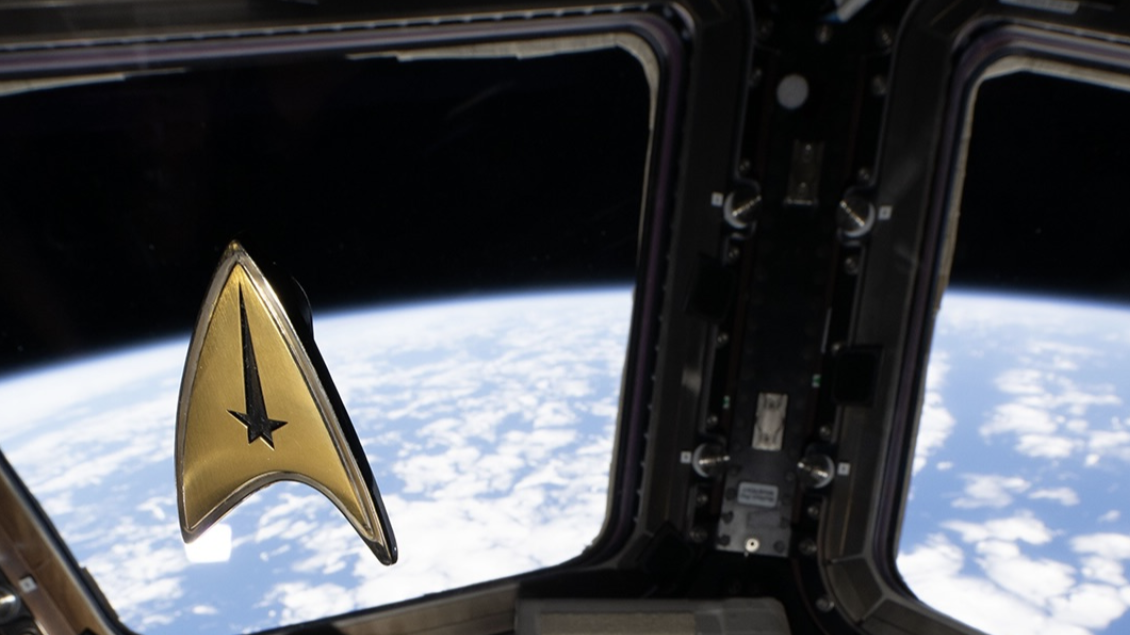
The intersection of science fiction and scientific reality merged in low-Earth orbit as European Space Agency (ESA) astronaut Sophie Adenot commemorated the 60th anniversary of the iconic franchise Star Trek from aboard the International Space Station (ISS). Floating more than 250 miles above the planet, Adenot proudly displayed a golden Starfleet delta badge—a piece of memorabilia from the contemporary series Star Trek: Strange New Worlds—highlighting the enduring cultural and philosophical impact of Gene Roddenberry’s visionary universe upon generations of real-world scientists, engineers, and spacefarers.
The tribute, shared globally through official ESA and franchise media channels, highlights a profound synergy between the fictional voyages of the USS Enterprise and the ongoing multinational cooperation required to maintain humanity’s continuous presence in space. As the ISS circles the globe, the parallel between television’s most famous fictional crew and the international teams working in microgravity serves as a poignant reminder of how speculative fiction can actively inspire real-world technological and societal achievements.
Mission Chronology and Orbital Operations
Sophie Adenot’s journey to the orbiting laboratory began on February 13, when she lifted off from launch facilities in Florida aboard a SpaceX Falcon 9 rocket. Riding inside a SpaceX Crew Dragon capsule on NASA’s Crew-12 mission, Adenot joined the orbital outpost as a flight engineer for ISS Expedition 75.
As a first-time spaceflyer representing ESA, Adenot’s tenure on the station has been marked by rigorous scientific research, maintenance operations, and public engagement. Her mission is scheduled to conclude in the coming weeks, pending the arrival of the SpaceX Crew-13 mission aboard a newly arriving Dragon spacecraft. Prior to her return to Earth, Adenot recorded a special video message from inside the station’s European-built Columbus laboratory module, wearing the Starfleet insignia on her standard-issue ESA shirt and drawing a direct line between the collaborative spirit of space exploration and the core tenets of the science fiction franchise.
The decision to bring the Starfleet badge to space was more than a mere novelty; it represented a bridge between pop culture iconography and the practical realities of modern human spaceflight. In an official statement accompanying imagery of the golden badge floating against the backdrop of Earth viewed through the station’s multi-window Cupola, ESA encapsulated the shared ethos of both worlds: "From the crew of the USS Enterprise to the crews on the International Space Station, the mission hasn’t really changed. Explore. Discover. Do it together."
The Legacy of Gene Roddenberry and the Philosophy of Star Trek
Since its television debut on September 8, 1966, Star Trek has transcended its origins as a 1960s television series to become a foundational pillar of modern global pop culture. Created by television writer and producer Gene Roddenberry, the franchise deliberately utilized science fiction as a socially progressive vehicle to address terrestrial conflicts, civil rights, international diplomacy, and the potential evolution of human morality.
Roddenberry envisioned a utopian future where humanity had moved past war, poverty, and systemic prejudice, uniting under a single planetary government and channeling its collective energy toward peaceful exploration and scientific discovery. This philosophy was famously articulated by Roddenberry himself in the 1976 spoken-word audio release The Star Trek Philosophy.
"The whole show was an attempt to say that humanity will reach maturity and wisdom on the day that it begins not just to tolerate, but to take a special delight in differences in ideas and differences in life forms," Roddenberry stated. "If we cannot learn to actually enjoy those small differences—take a positive delight in those small differences between our own kind—here on this planet, then we do not deserve to go out into space and meet the diversity that is almost certainly out there."
For decades, this optimistic framework has resonated deeply within the aerospace community. Numerous astronauts, aerospace engineers, and astrophysicists have openly cited Star Trek as a primary catalyst that initially sparked their childhood curiosity and ultimate career paths in science, technology, engineering, and mathematics (STEM).
Bridging Fiction and Reality: The Intersection of Space Agencies and Pop Culture
The integration of science fiction memorabilia into actual space missions is part of a long-standing tradition of cultural exchange between space agencies and creators of speculative media. NASA, ESA, and other international space partners have frequently collaborated with filmmakers, authors, and television studios to foster public interest in space exploration and STEM education.
During her time in orbit, Adenot emphasized the vital importance of international cooperation and curiosity-driven exploration. In her video address from the Columbus module, she noted that the true value of spaceflight lies in collective human endeavor and the application of acquired knowledge for the betterment of society.
"For me, exploration and science are about curiosity and cooperation, daring to go a little farther together, learning from what we discover and build, and turning that knowledge into a better future for everyone," Adenot said.
This sentiment mirrors the mission statements of major space agencies worldwide, which increasingly rely on international partnerships—such as the multi-national framework governing the ISS and the developing Artemis lunar program—to achieve feats that no single nation could accomplish independently.
Broader Implications and Societal Impact
The symbolic gesture aboard the ISS arrives at a critical juncture for international space exploration. As the International Space Station approaches its eventual retirement later in the next decade, global space agencies are pivoting toward sustained lunar exploration through the Artemis program and preparing for eventual crewed missions to Mars. These complex, multi-decade undertakings require unprecedented levels of geopolitical cooperation, technical standardization, and shared resources.
By invoking the cooperative ethos of Star Trek, space agencies effectively leverage cultural touchstones to communicate the complex value proposition of space exploration to a broader public. While the physical payloads sent to the station typically consist of critical life-support hardware, biological experiments, and technological demonstrations, small symbolic items like Adenot’s Starfleet badge serve a vital psychological and inspirational function. They remind humanity that the physical act of leaving Earth is inextricably linked to our philosophical evolution.
As ESA summarized in its tribute to the franchise’s diamond anniversary, the boundary between imaginative storytelling and tangible engineering is porous: "Science fiction imagines the future. We build it." Through the daily operations of astronauts like Sophie Adenot aboard the International Space Station, that future continues to be constructed, one cooperative orbit at a time.
Related posts: